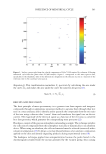
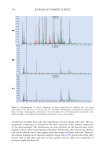
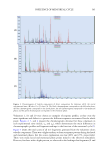
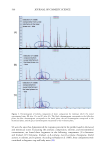
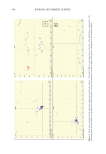
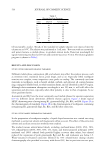
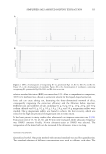
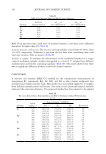
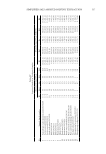
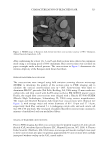
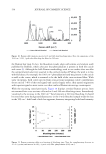
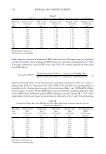
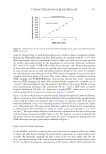
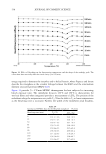
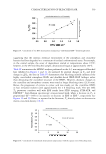
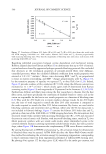
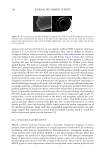
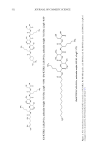
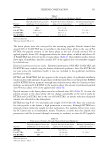
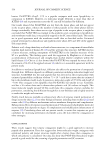
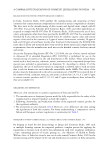
514 JOURNAL OF COSMETIC SCIENCE Chromatographic analysis. Ten μL of the standard or sample solution were injected into the column set at 30°C. The elution was performed at 1 mL min−1 flow rate with an acetonitrile and water mixture as mobile phase, in gradient elution mode. Detection wavelength for signal monitoring was fixed at 203 nm and runtime was set at 76 min. The elution gradient program is shown in Table I. RESULTS AND DISCUSSION STUDY OF THE CHROMATOGRAPHIC VARIABLES Different mobile phase composition, pH, and solvents may affect the analysis process, such as retention time, resolution factor, peak shape, and so on. Especially when toothpaste matrixes are complex, many impurities cause peaks to overlap. The commonly used raw materials in toothpaste, such as benzyl alcohol, sorbitol, and glycerol, all contain benzene ring, conjugated double bond, or other transition forms, and are absorbed in the UV region. Although their maximum absorption wavelength is not 203 nm, it will still affect the separation and detection, especially when their polarity is close to that of saponins. So we chose gradient elution. Acetonitrile and H 2 O are the most commonly used mobile phases for saponins separation (10–11), different ration determines different elution capacity. Figure 2 shows typical HPLC chromatograms of notoginseng R1, ginsenoside Rg1, Re, Rb1, and Rd. Figure 2A is the chromatogram of standards. Figure 2B is the chromatogram of toothpastes containing notoginseng R1, ginsenoside Rg1, Re, Rb1, and Rd after extraction. STUDY OF THE SAMPLE PREPARATION VARIABLES In the preparation of toothpaste samples, a liquid–liquid extraction was carried out using methanol as extraction solvent and magnesium sulfate as assist. The effect of the extraction solvent and auxiliary extraction methods were studied. We studied various solvent/water blends, including methanol/water (100%, 85%, 50%, v/v), ethanol/water (100%, 85%, 50%, v/v), water, and water-saturated n-butanol. 100% methanol and 100% ethanol both provided higher recovery than others, but ethanol reduced the separation of peak ginsenoside Rg1 and Re, and resolution was below 1.5. Water-saturated n-butanol extraction followed by 70% ethanol/water eluting column chromatography also provided a recovery with above 85%, but its precision was too poor, Table I Elution Gradient Program t/min H2O/% Acetonitrile/% 0 81 19 17 81 19 60 64 36 70 64 36 70.1 10 90 75 10 90 75.1 81 19 76 81 19

515 SIMPLIFIED SALT-ASSISTED SOLVENT EXTRACTION relative standard deviation (RSD) was more than 12%. After a comprehensive comparison, 100% (v/v) methanol was chosen as extractant solvent for the liquid–liquid extraction. Ionic salt can cause salting out, destroying the three-dimensional network of silica, consequently improving the extraction efficiency and the filtration before injection. Different ions and additives of salt, including 0.1 g, 0.2 g, 0.5 g, 1.0 g, 2.0 g, and 5.0 g sodium chloride and 0.1 g, 0.2 g, 0.5 g, 1.0 g, 2.0 g, and 5.0 g magnesium sulfate were studied. One g magnesium sulfate was found to achieve the best recovery, which was related to the high ion potential of magnesium ions to some extent. It has been proven in many studies that ultrasound can improve extraction rate (13,14). Extraction time of 15, 30, 45, 60, and 90 min were evaluated, while ultrasonic frequency was 35kHZ constant. Finally, 30 min ultrasonic-assist at 35kHZ was selected. The temperature of the water bath can be increased if the ultrasonic time is too long. METHOD VALIDATION Quantificated method. One point method with external standard was used for quantification. Two standard solutions of different concentrations were used to calibrate each other. The A B Figure 2. HPLC chromatograms of notoginseng R1 (1), ginsenoside Rg1 (2), Re (3), Rb1 (4), and Rd (5). Figure 2A is the chromatogram of standards Figure 2B is the chromatogram of toothpastes containing notoginseng R1, ginsenoside Rg1, Re, Rb1, and Rd after extraction.
Purchased for the exclusive use of nofirst nolast (unknown)
From: SCC Media Library & Resource Center (library.scconline.org)