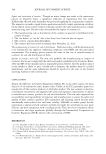
526 JOURNAL OF COSMETIC SCIENCE heating ramp, and the sample-mass change in response to the modulation is recorded. The response provides an empirical tool for studying the kinetics of sample volatilization and/or decomposition. Discrete Fourier transform of the response allows kinetic parameters such as activation energy and pre-exponential factors to be calculated on a continuous basis. Unused snippets (4–6 mg) from the HPDSC experiments were loaded onto clean platinum TGA pans and the following protocol was used to denature and pyrolyze the samples: the furnace was equilibrated at 40°C high-resolution sensitivity = 1.00 modulation temperature amplitude = 5°C period = 200 s high-resolution ramp = 5°C/min to 300°C and resolution = 6.0. The hair fibers were denatured and pyrolyzed in a dry nitrogen environment (flow rate = 25 mL/min). DVS OF 5-μm HAIR FIBER CROSS-SECTIONS Water vapor absorption curves were obtained using a DVS Advantage I sorption analyzer (Surface Measurement Systems NA, Allentown, PA, USA) and microtomed cross-sections of virgin and bleached European dark brown hair (see “Hair Cross-Section Preparation” section). All experiments were conducted at 25°C with a nitrogen gas flow of 200 mL/min. The 5-µm thick microtomed cross-sections (4–6 mg) were loaded into a stainless steel mesh sample pan, and the following sorption-desorption procedure was applied: 1. Initial drying: 60°C and 0% RH for 1 h. 2. Isothermal equilibration: 25°C and 0% RH for 15 min. 3. Absorption curve: the microtomed fibers were subjected to increasing humidity in 10% RH steps from 0% to 90% RH with dm/dt = 0.002%/min for 15 min. 4. Desorption curve: after the absorption sequence, the water vapor was progressively desorbed from the sample by lowering the humidity in 10% RH steps from 90% to 0% RH with dm/dt = 0.002%/min for 15 min. SPECTROFLUORESCENCE MEASUREMENTS OF HAIR TRESSES Tryptophan levels in chemically treated hair were determined by carrying out fluorescence measurements using a Horiba Jobin Yvon (Edison, NJ, USA) FluoroMax-4 steady-state spectrofluorometer equipped with a bifurcated fiber optic probe. Spectra were collected directly from the surface of hair, approximately 1 in from the bottom of the wax portion of the hair tress (corresponding to the area of the tress proximal to the root). The emission and excitation slits were set at 5-nm bandpasses. The measurements were performed in emission mode, where tryptophan emission spectra were obtained by irradiating hair at 290 nm and monitoring the fluorescence emission at 339 nm. Data were provided in units of counts per second (cps), and the emission at 339 nm was normalized by taking the height ratio of tryptophan to kynurenine fluorescence (I 339 /I 440 ), or the height ratio of kynurenine to tryptophan fluorescence (I 440 /I 339 ). Average values were obtained by taking three measurements in neighboring zones of one hair tress. SPECTROCOLORIMETRY OF HAIR TRESSES To quantify the degree of color changes resulting from bleaching treatment in hair, we used a HunterLab ColorQuest XE spectrocolorimeter (Hunter Associates Laboratory, Inc.,

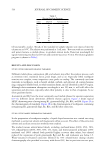
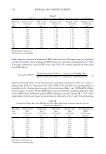
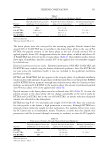
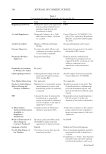
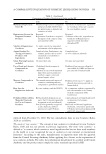
527 CHARACTERIZATION OF BLEACHED HAIR Reston, VA, USA). The use of the spectrocolorimeter enabled us to obtain the tristimulus (L, a, b) values, which were utilized to calculate discoloration parameters for describing color changes in the bleached hair. The data are reported in terms of the total color difference: ∆ = ∆ + ∆ + ∆b)2 E L)2 a ( ( )2 ( (1) Like the spectrofluorescence studies, three measurements obtained from one hair tress (approximately 1 in below the wax tab) represent the average reported values. RESULTS AND DISCUSSION In the current work, chemical bleaching was carried out on large (10 × 8 in) European dark brown hair tresses for a total of 4 h. At designated time intervals, including 15, 30, 45, 60, 90, 120, 180, and 240 min of continuous oxidative bleaching, samples were taken from the larger tress to assess the relationship between bleaching application times and changes to the chemical components of the hair fiber. For each sample, various spectroscopic and thermal analyses were conducted on whole fibers, short fiber snippets, and cryotomed fiber cross-sections. As much of this study utilized vibrational spectroscopy for insights into the molecular and kinetic aspects of hair bleaching, Table I (16–19) provides some convenient and relevant mid-IR and Raman shift band assignments. We report an EDF parameter that indexes the degree of damage to cystine residues (-S—S-) in hair (19). The EDF parameter is based on the 1040 cm−1 symmetric -S = O sulfonate (-SO 3 − ) stretching vibration band. However, as the intensity of individual FTIR-ATR spectra may vary, the 1040 cm−1 band intensity must be normalized to another invariable band in the mid-IR spectrum of the protein to ensure meaningful sample-to-sample comparisons. One approach is to ratio the 1040 cm−1 band to the 1080 cm−1 band (cystine monoxide stretch) in the mid-IR region. A potential difficulty in choosing the 1080 cm−1 band for normalization is that confounding Table I Mid-IR and Raman Band Assignments Pertinent to Hair Bleaching Band assignment Mid-IR (cm−1)(16,19) Raman shift (cm−1)(16–18) Amide I, α-helix 1650 1652 (16), 1671 (cuticle) and 1666 (cortex) Sulfonate, S–O symmetrical stretch 1040, 1042 (19) 1040 Cystine monoxide (R–SO–S–R) 1075–1080 — Sulfonate, S–O asymmetrical stretch 1175 — Cystine dioxide (R–SO2–S–R) 1229 — Amide III (N–H stretch) 1247 1245 (cuticle) and 1243 (cortex) CH2 scissoring 1448–1454 1440 (16), 1451 and 1465 (cuticle) and 1448 (cortex) (18) Amide II (C–N stretch, α-helix) 1547–1548 — Amide I (C = O stretch, α-helix) 1650–1655 1652 (α-helix) (16), 1671 (cuticle) and 1659 (cortex) N–H (primary amine) 3315 — -S—S- — 505 (cuticle) (17) and 507–509 (cortex) -C—S- — 664 (cuticle and cortex) Phenylalanine of keratin — 1004 (16), 1001–1003 (cuticle and cortex)
Purchased for the exclusive use of nofirst nolast (unknown)
From: SCC Media Library & Resource Center (library.scconline.org)