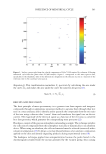
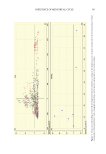
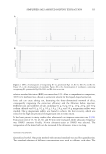
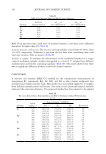
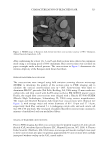
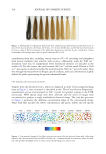
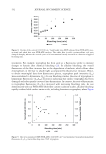
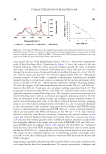
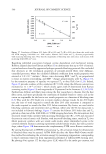
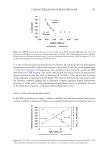
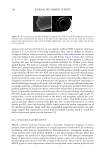
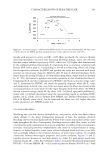
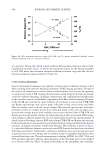
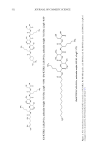
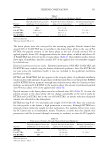
544 JOURNAL OF COSMETIC SCIENCE area intensity. Noting that dm/dt control with hair fibers produces kinetical and not fully equilibrated outcomes, Figure 22 details the maximum regains for the bleached samples at 90% RH, where the maximum adsorption difference between virgin and the 240 min bleached sample was approximately 6% (w/w) (30). CONCLUDING REMARKS Several instrumental techniques were applied to monitor physicochemical changes in hair fibers resulting from repetitive bleaching treatments. FTIR imaging provided a 2D map of the cysteic acid composition across the volume of individual fiber cross-sections. By operating in transmission mode, FTIR imaging demonstrated a visual footprint of chemical damage caused by oxidative bleaching, including compositional and conformational modifications to the cuticular, cortical, and medullar components of the fiber, while leveraging all aspects of the mid-IR spectrum for the entire thickness of each discrete cross-section. FTIR-ATR and Raman spectroscopy were used to probe collections of hair cross-sections and whole fibers for average cysteic acid and cystine changes. Marrying the spectroscopic techniques presented a means to correlate spectra from individual pixels in the cortex of single cross- sections with average spectra from multiple cross-sections obtained from FTIR-ATR and Raman spectroscopy studies. Further, by simply glancing at the concatenated FTIR image, color changes in adjacent panels were used to qualitatively describe the spatial progress of timed chemical bleaching, whereas EDF indices from FTIR-ATR and Raman spectroscopy facilitated quantitative associations between global chemical changes and thermomechanical outcomes, including correlations with Fickian diffusion. Most striking, as shown in Figure 8, is the stark difference between cuticle and cortex EDF kinetics that have been elucidated with these experiments. Additionally, colorimetry and fluorescence spectroscopy were used to quantify hair tress color changes and to correlate oxidative tryptophan degradation with increased bleaching time. Thermal measurements, including HPDSC, dry DSC, TGA, and DVS provided supportive physical characterization of the bleaching process and allowed us to better resolve the effects of chemical bleaching on the amorphous and crystalline Figure 22. DVS maximum moisture regain (90% RH) and TD against normalized disulfide content (normalized Raman 509 cm−1 band area intensity).

545 CHARACTERIZATION OF BLEACHED HAIR phases of the hair. When conditioned in dry ambient environments, cysteic acid moieties in keratin appear to bond ionically with proteinaceous residues, where the resultant physical cross-links within the fiber matrix are quite strong. Hence, many moderate-humidity thermomechanical measurements may not straightforwardly distinguish the effects of oxidative physiochemical fiber damage. However, in the wet state, water solvates hydrogen and ionic physical cross-links within the cortex and the residual thermomechanical strength is bestowed to the durability of the remaining disulfide bonds. Consequently, results from wet thermal and wet mechanical testing protocols accurately describe oxidative chemical damage however, in the dry state, the effects of cystine oxidation may not directly correlate with results from routine mechanical testing. ACKNOWLEDGMENTS The authors would like to acknowledge Dr. Guojin Zhang for the virtual ISys lessons T-bone Schiess, William Thompson, and Fan Wu of Ashland LLC and Geddy Lee of Rush. Special thanks to Dr. Crisan Popescu for any results that we properly interpreted. REFERENCES (1) C. R. Robbins, Chemical and Physical Behavior of Human Hair, 4th Ed. (Springer-Verlag, New York, 2002), pp. 360–435. (2) E. P. Everaert, S. Zhang, D. Tran, B. Kroon, G. Zhang, W. T. Thompson, and R. L. McMullen, 2015. Strengthening the hair fiber from within: repairing the cortex of damaged hair, Zurich, Switzerland, 21–23 Sept 2015. 23rd IFSCC Conference accessed April 1, 2021, http://tst.pg2.at/abstracts/data/full_ papers/full_paper_90.pdf. (3) L. J. Wolfram, K. Hall, and I. Hui, The mechanism of hair bleaching, J. Soc. Cosmet. Chem., 21, 875–900 (1970). (4) A. J. Grosvenor, S. Deb-Choudhury, P. G. Middlewood, A. Thomas, E. Lee, J. A. Vernon, J. L. Woods, C. Taylor, F. I. Bell, and S. Clerens, The physical and chemical disruption of human hair after bleaching— studies by transmission electron microscopy and redox proteomics, Int. J. Cosmet. Sci., 40, 536–548 (2018). (5) W. W. Edman and M. E. Marti, Properties of peroxide-bleached hair, J. Cosmet. Sci., 12, 133–145 (1961). (6) C. Popescu (June 16, 2016), The internal structure of hair and its interpretation by tensile strength and DSC measurements, The Cosmetic Chemist, accessed March 13, 2021, http://www.thecosmeticchemist.com/ education/hair_care_technology/the_internal_structure_of_hair.html. (7) C. Popescu and C. Gummer, DSC of human hair: a tool for claim support or incorrect data analysis, Int. J. Cosmet. Sci., 38, 433–439 (2016). (8) D. Istrate, C. Popescu, and M. Möller, Non-isothermal kinetics of hard alpha-keratin thermal denaturation, Macromol. Biosci., 9, 805–812 (2009). (9) F.-J. Wortmann, C. Popescu, and G. Sendelbach, Non-isothermal denaturation kinetics of human hair and the effects of oxidation, Biopolymers, 83, 630–635 (2006). (10) F.-J. Wortmann, G. Sendelbach, and C. Popescu, Fundamental DSC investigations of alpha-keratinous materials as basis for the interpretation of specific effects of chemical, cosmetic treatments on human hair, J. Cosmet. Sci., 58, 311–317 (2007). (11) F.-J. Wortmann, C. Springob, and G. Sendelbach, Investigations of cosmetically treated human hair by differential scanning calorimetry in water, J. Cosmet. Sci., 53, 219–228 (2002). (12) F.-J. Wortmann and H. Deutz, Characterizing keratins using high-pressure differential scanning calorimetry (HPDSC), J. Appl. Polym. Sci., 48, 137–150 (1993). (13) D. Istrate, “Heat induced denaturation of fibrous hard alpha-keratins and their reaction with various chemical reagents.” PhD thesis, RWTH Aachen. 2011. (14) F.-J. Wortmann, G. Wortmann, J. Marsh, and K. Meinert, Thermal denaturation and structural changes of alpha-helical proteins in keratins, J. Struct. Biol., 177, 553–560 (2012). (15) F.-J. Wortmann, A. Hullman, and C. Popescu, Water management of human hair, Int. J. Cosmet. Sci., 30, 388–389 (2008).
Purchased for the exclusive use of nofirst nolast (unknown)
From: SCC Media Library & Resource Center (library.scconline.org)