546 JOURNAL OF COSMETIC SCIENCE (16) G. Zhang, R. L. McMullen, R. Mendelsohn, and O. Musa, “Applications of Vibrational Spectroscopic Imaging in Personal Care Studies,” in Computational Optical Biomedical Spectroscopy and Imaging, S. M. Musa. Ed. (CRC Press, New York, 2015), pp. 1–26. (17) A. Kuzuhara, Analysis of structural change in keratin fibers resulting from chemical treatments using Raman spectroscopy, Biopolymers, 77, 335–344 (2005). (18) P. D. Pudney, E. Y. Bonnist, K. J. Mutch, R. Nicholls, H. Rieley, and S. Stanfield, Confocal Raman spectroscopy of whole hairs, Applied Spectroscopy, 67, 1408–1416 (2013). (19) V. Signori and D. M. Lewis, FTIR investigation of the damage produced on human hair by weathering and bleaching processes: implementation of different sampling techniques and data processing, Int. J. Cosmet. Sci., 19, 1–13 (1997). (20) A. Barth, Infrared spectroscopy of proteins, Biochim. Biophys. Acta., 1767, 1073–1101 (2007). (21) R. McMullen, D. Laura, S. Chen, D. Koelmel, G. Zhang, and T. Gillece, Determination of physicochemical properties of delipidized hair, J. Cosmet. Sci., 64, 355–370 (2013). (22) R. L. McMullen, S. Chen, and D. J. Moore, Spectrofluorescent characterization of changes in hair chemistry induced by environmental stresses, J. Cosmet. Sci., 62, 191–202 (2011). (23) R. L. McMullen and G. Zhang, Investigation of the internal structure of human hair with atomic force microscopy, J. Cosmet. Sci., 71, 117–131 (2020). (24) C. Barba, M. Martí, J. Carilla, A. M. Manich, and L. Coderch, Moisture sorption/desorption of protein fibres, Thermochim. Acta, 552, 70–76 (2013). (25) C. Robbins and C. J. Kelly, Amino acid analysis of cosmetically altered hair, J. Cosmet. Sci., 20, 555–564 (1969). (26) M .L. Tate, Y. K. Kamath, S. B. Ruetsch, and H.-D. Weigmann, Quantification and prevention of hair damage, J. Cosmet. Sci., 44, 347–371 (1993). (27) C. Popescu and E. Segal, Critical considerations on the methods for evaluating kinetic parameters from nonisothermal experiments, Int. J. Chem. Kinet., 30, 313–327 (1998). (28) T. Ozawa, Kinetic analysis of derivative curves in thermal analysis, J. Therm. Anal. Calorim., 2, 301–324 (1970). (29) D. Istrate, M. E. Rafik, C. Popescu, D. E. Demco, L. Tsarkova, and F.-J. Wortmann, Keratin made micro-tubes: the paradoxical thermal behavior of cortex and cuticle, Int. J. Biol. Macromol., 89, 592–598 (2016). (30) T. A. Evans, “Adsorption Properties of Hair,” in Practical Modern Hair Science, T. A. Evans and R. R. Wickett. Eds. (Allured Books, Carol Stream, IL, 2012), pp. 333–365.

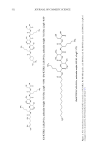
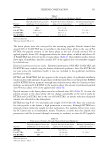
547 Address all correspondence to Hamid Reza Moghimi, hrmoghimi@sbmu.ac.ir Terpene Conjugation: A Novel Approach for Topical Peptide Delivery SEYEDEH MARYAM MORTAZAVI, FARZAD KOBARFARD, ALI MANAFI, HOWARD I. MAIBACH AND HAMID REZA MOGHIMI Department of Pharmaceutics and Nanotechnology, School of Pharmacy, Shahid Beheshti University of Medical Sciences, Tehran, Iran (S.M.M, H.R.M.) Department of Medicinal Chemistry, School of Pharmacy, Shahid Beheshti University of Medical Sciences, Tehran, Iran (F.K.) Department of Surgery, School of Medicine, Iran University of Medical Sciences, Tehran, Iran (A.M.) Department of Dermatology, School of Medicine, University of California, San Francisco, California, USA (H.I.M.) Protein Technology Research Center, Shahid Beheshti University of Medical Sciences, Tehran, Iran (H.R.M) Accepted for publication August 2, 2021. Synopsis Peptides are poor candidates for skin permeation. KTTKS is not an exception and cannot permeate skin in therapeutic amounts. However, chemical modification could be a good approach to overcome this problem. In our study, we used citronellic acid and perillic acid terpenes to synthesize Cit-KTTKS and Per-KTTKS, and KTTKS and Pal-KTTKS for comparison. We studied the aqueous stabilities of the compounds. Peptides permeations through a membrane model of n-hexadecane and human epidermis permeations of KTTKS, Pal-KTTKS, and Cit-KTTKS were determined. The results revealed that the aqueous solution of compounds remained stable at 32°C for 48 h. The membrane model permeation studies showed that KTTKS and Per- KTTKS were not detected in receptor phases, but Pal-KTTKS and Cit-KTTKS passed across the membrane model and showed estimated kp of 17×10–4 cm/h and 2.9×10⁻⁴ cm/h, respectively. The epidermis studies showed that KTTKS and Pal-KTTKS did not pass across the epidermis in detectable amounts, whereas Cit- KTTKS permeated epidermis with kp of 7.3×10⁻⁴ cm/h. The donor phase assay and mass-balance studies showed that Pal-KTTKS was trapped by about 48% in the epidermis and 20% in the model membrane. Based on these results, terpenes appear to be good candidates for peptide conjugation to increase the skin permeation. INTRODUCTION Signal peptides are main categories of topical peptides. This type of peptide triggers the cellular process and consequently increases the dermal remodeling. KTTKS, a signal peptide, is recognized for its anti-wrinkle properties. KTTKS stimulates the extracellular J. Cosmet. Sci., 72, 547–556 (September/October 2021)
Purchased for the exclusive use of nofirst nolast (unknown)
From: SCC Media Library & Resource Center (library.scconline.org)