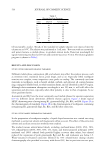
500 JOURNAL OF COSMETIC SCIENCE launched every day and is increasingly searching for a more stable and reliable performance (1,2). The concern about long-lasting perfume requires more elaborate research regarding factors that affect performance when applied. Many raw materials may be used in perfumery, which can be classified as natural (vegetal and animal) or synthetic (artificially produced). They can be divided into 13 olfactive groups: herbal, aldehydic, green, fruity, floral, spice, wood, leather, animal, musk, amber, and vanilla (3). A perfume can be defined as a homogeneous hydro-alcoholic dispersion containing 12%–30% of essential oils or aromatic compositions. The aromatic composition combines the raw materials to create a product that attends to consumers’ expectations (4). The structure of an aromatic composition is formed by three parts based on volatility: top, body, and bottom notes. Top notes are the first impression of the perfume and present the most volatile components. They remain on the skin for around 15 min. Body notes determine the identity of the composition and present intermediate volatility. They remain on the skin for 15 min to 4 h. Bottom notes represent the last step of the composition, with lowest volatility. They last between 4 and 8 h on the skin (5). The hormonal fluctuation during the menstrual cycle is characterized by cyclical differences in luteinizing, follicle stimulating, and estrogen and progesterone hormone concentrations. Estradiol secretion increases in the plasma during the preovulatory phase causing vasodilation. Progesterone secretion increases in the postovulatory phase, inducing higher baseline body temperatures compared to the preovulatory phase due to its thermogenic effect. These changes affect skin physiology and can modify the duration of fragrances on skin (6,7). Recent studies have shown that sex hormones (estrogen and progesterone) express several biological and immunological effects on skin (8,9). We observed fluctuations in perfume intensity perception along the cycle, but results were inconclusive (7,10–16). Fragrance components can behave differently on skin. Their durability and characteristics change based on the mixture of numerous components containing functional groups such as ketones, aldehydes, esters, amides, and alkenes, which can be affected when changing the substrate on which they are applied (2,5,16,17). Therefore, this study aimed at analyzing the variation of volatile components of the assessed aromatic composition after application on female volunteers’ skin during the four phases of the menstrual cycle (follicular, ovulatory, luteal, and menstrual) by the dynamic headspace technique and gas chromatography/mass spectrometry (GC/MS). MATERIAL AND METHODS INVESTIGATIONAL PRODUCT The floral, fresh, woody aromatic composition Ciclo® (Ciclo Cosméticos, São José, Brazil) 1910 used for this study was created by a perfumer from Givaudan® (Givaudan, Vernier, Switzerland) following International Fragrance Association (IFRA) norms. It is composed mainly of base olfactory notes (less diffusive) that deliver greater substantivity of perfume on the skin. The floral (body notes) and fresh (top notes) fractions are in lesser quantity and represent perfume identity.

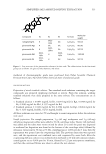
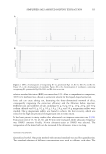
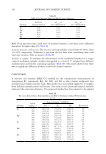
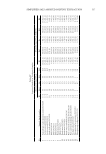
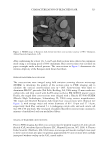
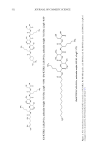
501 INFLUENCE OF MENSTRUAL CYCLE The total fragrance consisted of 116 components in which the major constituents were: γ-methyl ionone (1.5%), 16-oxacyclohexadecan-1-one (Thibetolide® [Firmenich, Geneva, Switzerland], 2.6%), linalool (3.5%), linalyl acetate (4.4%), 1,4-dioxacycloheptadecane-5,17- dione (8.8%), 7-acetyl-1,2,3,4,5,6,7,8-octahydro-1,1,6,7-tetramethyl naphthalene (14.2%, Iso E Super® [International Flavors & Fragrances, New York, NY] major component) and methyl dihydrojasmonate (21.7%, Hedione® [Firmenich, Geneva, Switzerland] main component). INVESTIGATION CENTER The experiment was conducted at a research institute located in São Paulo, Brazil. ETHICAL ASPECTS The study protocol was previously approved by the ethics committee of the University of São Paulo, and was in accordance with Brazilian legislation, norms of International Conference Harmonization, Good Clinical Practice, and the Helsinki declaration. All participants signed informed consent terms before participating in the study. PARTICIPANTS’ VISITS Twenty-nine female volunteers aged between 18 and 40 years old with regular menses (28–30 d) participated in the study. They did not use oral contraceptives for at least 6 mo before the study and fulfilled all inclusion and noninclusion criteria described in the ethics committee approved protocol. Each female participant went to the institute for four visits according to the menstrual cycle phases. On the first visit (D1), ovulatory phase was detected using a noninvasive method through vaginal secretion smear to assess the format of oxalate crystals (5). Then, the investigational product was applied on the skin on a marked study site on the volar forearm during the morning period. After that, we collected headspace of the emitted volatiles on the study site at the following times: initial (immediately after product application), 1 h 30 min, 3 h, 4 h 30 min, and 6 h after product application (respectively t 0 , t 1h30min , t 3h , t 4h30min , and t 6h ). We repeated this procedure on each visit (D2, D3, and D4) to assess all four phases of the menstrual cycle. CHEMICAL ANALYSIS We submitted the volatiles collected from the volunteers to composition determination by the dynamic headspace technique according to the methodology described by Baydar, Mcgee, and Purzicky (1995). This technique quantifies the individual partition of the components of skin fragrance in the air and translates the information for an “olfactory perception profile” (18,19). We applied 40 µL of the investigational product on the defined test site on the volunteers’ forearm. Then, we added ethanol with a microsyringe to allow the fragrance to dry faster.
Purchased for the exclusive use of nofirst nolast (unknown)
From: SCC Media Library & Resource Center (library.scconline.org)