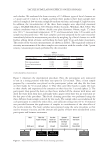
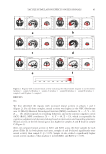
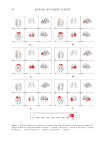
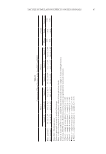
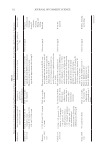
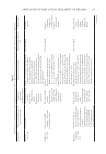
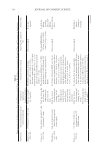
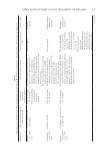
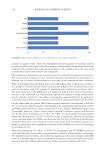
89 Tactile Stimulation Effects on EEG Signals were higher in the left hemisphere, whereas during unpleasant emotions, they were higher in the right hemisphere.20 Therefore, we inferred that the tactile stimulation elicited by samples A and B induced more pleasant feelings in the participants, while sample C evoked more unpleasant feelings. Similarly, the salivary cortisol tended to increase from the baseline in response to sample C, while it slightly decreased after using samples A and B, although the changes with each sample before and after treatment were not significant. It has been reported that salivary cortisol levels decrease during relaxation21,22 and increase under stressful conditions23,24 therefore, we inferred that the tactile stimulation and facial cleansing experience with sample C (with high viscosity) were more stressful than those with samples A and B. Conversely, samples A and B (with low and moderate viscosity, respectively) seemed to evoke more pleasant feelings. Previous studies reported that pleasant tactile stimuli cause a significant increase in neural activity in the OFC (9) and ACC.25 The EEG measurements in the current study demonstrated that the neural activity in BA11 and BA32 was significantly higher in both phases using samples A and B than with sample C. Therefore, we conclude that the tactile stimuli of samples A and B evoked more pleasant emotions than those of sample C. We further found that upon stimulation with sample A, the recorded neural activity in both BA11 and BA32 was significantly higher in phase 2 than in phase 1. This suggests that participants’ emotions changed between perceiving the foam on their hands and perceiving the foam on faces. BA11 responds to sensory input and generates value representations by encoding combinations of stimuli, leading to motivated behavior.16 In addition, BA32 (the ACC region) is also involved in generating value representations, and its emotional processing function is generally considered to induce motivation. The ACC plays an important role in inferring and judging current and future situations based on extrinsic experiences from the external environment, leading to appropriate behavior.26 This information may help us understand the effects observed upon foam application to the face. During the foam application to the cheeks in phase 2, before spreading it upon the whole face, neural activity in these brain regions may have been stimulated by enhanced motivation toward the act of washing the face, based on the positive experience of tactile stimulation in phase 1. However, the reason this tendency was observed only with sample A remains unclear. This study has several limitations: first, the number of participants was small (n =12), and only females were included. Future studies should enroll a greater number of participants, including males. Second, in addition to its viscosity, other properties of the foam were not considered. Thus, subsequent studies should investigate the effects of other relevant characteristics on participants’ emotions, such as foam density and shape retention. Third, we only examined some aspects of face-washing. In the future, it will be necessary to examine changes in neurophysiological indices throughout the whole face- washing procedure. Despite these limitations, our results indicate that the potential emotional changes evoked by different tactile stimulation according to foam viscosity can be captured via neurophysiological indices, and that these emotions can change during specific segments of the face-washing procedure. We believe that our findings will provide valuable information for developers of facial cleansers and hand soaps. They will also be useful for investigating other foam characteristics and in designing research to develop products that improve the users’ physical and emotional experience.

90 JOURNAL OF COSMETIC SCIENCE CONCLUSION This study investigated the effects of foam with different viscosities used as tactile stimuli, on the emotions of healthy female adults using neurophysiological indices. The tactile stimulation-induced changes in these indices in relation to the foam viscosity indicate that pleasant feelings were evoked by low and medium viscosity foams and more stressful emotions were associated with the high viscosity foam. These results also suggest that neurophysiological indices, such as EEG and salivary cortisol, can be useful for comparing user experiences across different products. ACKNOWLEDGMENTS K.I., M.K., and T.K. are employees of the FANCL Corporation (Yokohama, Kanagawa, Japan). A.G., T.K., T.U., and K.H. declare no potential conflict of interest. This research was funded by the FANCL Corporation. DATA AVAILABILITY The data generated and/or analyzed during the current study are available from the corresponding author on reasonable request. REFERENCES (1) Corniani G, Saal HP. Tactile innervation densities across the whole body. J Neurophysiol. 2020 124(4):1229–1240. (2) Taneja P, Olausson H, Trulsson M, Svensson P, Baad-Hansen L. Defining pleasant touch stimuli: A systematic review and meta-analysis. Psychol Res. 2021 85(1):20–35. (3) Wijaya M, Lau D, Horrocks S, McGlone F, Ling H, Schirmer A. The human “feel” of touch contributes to its perceived pleasantness. J Exp Psychol Hum Percept Perform. 2020 46(2):155–171. (4) Björnsdotter M, Löken L, Olausson H, Vallbo A, Wessberg J. Somatotopic organization of gentle touch processing in the posterior insular cortex. J Neurosci. 2009 29(29):9314–9320. (5) Russo V, Ottaviani C, Spitoni GF. Affective touch: A meta-analysis on sex differences. Neurosci Biobehav Rev. 2020 108:445–452. (6) Basdogan C, Giraud F, Levesque V, Choi S. A review of surface haptics: enabling tactile effects on touch surfaces. IEEE Trans Haptics. 2020 13(3):450–470. (7) Lee Y, Ahn JH7. Biomimetic tactile sensors based on nanomaterials. ACS Nano. 2020 14(2):1220–1226. (8) Yasaka K, Mori T, Yamaguchi M, Kaba H. Representations of microgeometric tactile information during object recognition. Cogn Process. 2019 20(1):19–30. (9) Kida T, Shinohara K9. Gentle touch activates the anterior prefrontal cortex: an NIRS study. Neurosci Res. 2013 76(1-2):76–82. (10) Greco A, Guidi A, Bianchi M, Lanata A, Valenza G, Scilingo EP. Brain dynamics induced by pleasant/unpleasant tactile stimuli conveyed by different fabrics. IEEE J Biomed Health Inform. 2019 23(6):2417–2427. (11) Ohmura K, Minami T, Yanagi M, Mori N, Nakamura T, Masubuchi Y. Characterization of transitional behavior of the facial wash foams via dynamic viscoelastic measurements. Nihon Reoroji Gakkaishi. 2015 43(3_4):71–75. (12) Pourtois G, Grandjean D, Sander D, Vuilleumier P. Electrophysiological correlates of rapid spatial orienting towards fearful faces. Cereb Cortex. 2004 14(6):619–633.
Purchased for the exclusive use of nofirst nolast (unknown)
From: SCC Media Library & Resource Center (library.scconline.org)