94 JOURNAL OF COSMETIC SCIENCE (4) patients with psychiatric disorders (5) alcohol or drug abuse (6) patients with systemic diseases or severe skin conditions (7) and history of photosensitivity or keloid disease. RANDOMIZATION AND BLINDING The statistician, who was independent of this clinical trial, generated a random sequence of 80 random numbers using a seed in R3.5 and generated a random assignment table. Double-blinding was set up by a nurse independent of this study, who pre-labeled identical looking, unmarked Yashaer Polypeptide Creams and Yashaer Base Creams with numbers according to the randomly generated assignment table. The blind code envelope was also prepared by the nurse. Unless the blind code was opened urgently (the blind breaking rate must be less than 20%), the blind code envelope would not be opened before the end of the test. Neither the statistician nor the nurse was involved in this clinical trial, and no one involved in the study had access to the randomized data until the study was completed and the database was locked. EXPERIMENT PROCEDURES AND EVALUATION METHODS After facial cleansing, the subjects evenly applied Yashaer Polypeptide Hydrating Cream or Yashaer Base Cream (without active ingredients) to the face, once in the morning and once in the evening. Both groups of subjects evenly applied sunscreen (Yashaer Icy Spring Isolation Emulsion) to the face, once in the morning and once after noon. For each application, a dosage of 1 fingertip unit (.5g) was taken, dabbed on the face, and spread carefully and evenly with the finger. The treatment period lasted 8 weeks and the followup period lasted 4 weeks. Subjective physician evaluation and non-invasive skin examination were performed at week 0 (pretreatment), at treatment weeks 2, 4, 6 and 8, and then 4 weeks after treatment was complete. For the subjective physician evaluation, Chung’s standardized wrinkle6 (grade 0-7) was used to rate subjects for wrinkles. For the noninvasive skin examination, the dermoscopy Photoaging Scale (DPAS) was measured by dermoscopy (DERMOSCOPY-II, Beijing Dermat Speedy Recovery T&D Co., Ltd., Beijing, China) and the total score of DPAS7 was calculated. Next, six indicators (panoramic (RGB) spots, RGB pores, RGB roughness, RGB wrinkles, ultraviolet (UV) acne, and UV pigmentation) of the frontal, left, and right views of the subjects’ faces were measured by a computerized magic mirror skin analyzer-1200 (FS-1200, CBS Taiwan Medical Skin Analysis, Taiwan, China). The indicators of frontal, left, and right views were then averaged. STATISTICAL ANALYSIS Statistical analysis was performed (IBM SPSS Statistics 26.0, IBM, Armonk, New York, USA). The Mann-Whitney U test was used for baseline analysis to compare the balance of the basic data between the two groups. Mean ± standard deviation or median (interquartile range) were used for continuous variables, and rank mean was used for grade data. For the comparisons of continuous variables in the efficacy analysis between the test group and the control group, the independent t-test was used for data with a normal distribution and

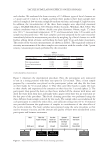
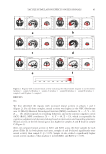
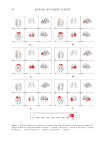
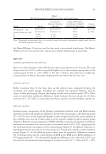
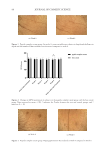
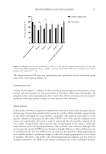
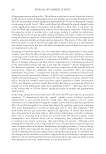
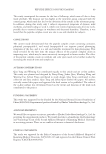
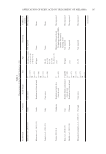
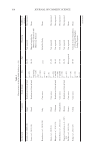
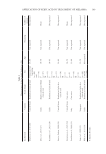
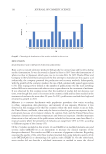
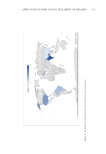
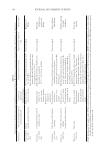
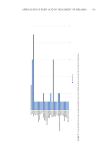
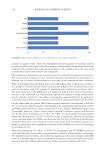
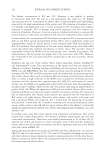
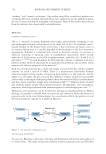
95 Peptide Effects on Photoaging the Mann-Whitney U test was used for data with a non-normal distribution. The Mann- Whitney U test was used for the comparisons between both groups of grade data. RESULTS GENERAL INFORMATION AND ANALYSIS Data were collected from a total of 80 female subjects aged between 45–55 years. The total dropout rate was 6.25%, with a marginally higher rate in the treatment group than in the control group (10.0% vs. 2.5%, Table 1). For the 5 subjects who were lost to follow-up, missing values in efficacy data were imputed with outcomes from the last visit. BASELINE ANALYSIS Before treatment (day 0), the basic data on the subjects were compared between the treatment and control groups, including age, outdoor sun exposure duration, and the degree of skin photoaging (Glogau photoaging classification standard (grade I-IV)). There were no statistically significant differences found between the two groups for all three indicators (P .05, Table 1), indicating that efficacy analysis could be properly carried out. EFFICACY ANALYSIS Between-group comparisons of the Chung’s standardized wrinkle scale and RGB wrinkle showed no statistically significant differences between the two groups at all follow-up points (P .05). Decrease in the length and depth of coarse wrinkles and decline in the number of fine wrinkles were noticed in some subjects of the peptide complex cream treatment group (Figure 1). Between-group comparison of DPAS identified a statistically significant difference between the treatment and control groups at treatment week 8 (P=.047), suggesting that the treatment group was superior to the control group (Figure 2). In addition, reduction in hyperpigmentation was noticed in some subjects of the peptide complex cream treatment group (Figure 3). At all follow-up points, there were no significant differences between the treatment group and the control group in RGB spots, RGB pores, RGB roughness, or UV pigmentation (P .05). Statistically significant differences were observed in UV acne between the treatment and control groups at treatment weeks 2 (P=.046) and 4 (P=.027). Table I Baseline Characteristics of Subjects in Test and Control Groups Group Age (y) Outdoor Sun Exposure Duration (min/day) Glogau Photoaging Classification Standard Grade I–IV (rank mean) dropout rate (n,%) Test group (n =40) 48.00 (3.75) 40.00 (18.75) 40.50 4(10.0%) Control Group (n =40) 49.50 (4.75) 45.00 (23.75) 40.50 1(2.5%) Z –1.800 –1.410 0.000 P 0.072 0.159 1.000 Note: Nonnormal measurement data are described using the median (interquartile range) grade data are described using the rank mean.
Purchased for the exclusive use of nofirst nolast (unknown)
From: SCC Media Library & Resource Center (library.scconline.org)