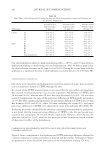
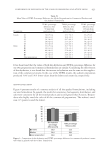
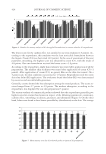
JOURNAL OF COSMETIC SCIENCE 412 physical discomfort. The symptoms of AD are dry skin, pruritus, and numerous defects in the skin structure—which can often be accompanied by asthma and allergic rhinitis (4). A whole range of these factors reduces the natural immune response of the skin, which causes problems with its regeneration. The clinical symptoms of AD consist in a disorder in the normal functioning of the skin barrier manifested by dry skin and excessive transepidermal water loss (TEWL). It occurs because of the damage of the epidermis and abnormalities in its structure. Reconstruction of the skin barrier is said to be the most important factor in preventing recurrence and progression of infl ammatory processes (6,7). A factor that has a signifi cant effect on epidermal barrier defect is the genetic disorder of structural proteins and stearic proteases and their inhibitors. It has been found that by the mutation of the fi laggrin gene, the defi ciency of these proteins in the skin is observed. Their defi ciency causes abnormalities in the shape of corneocytes, while simultaneously affect- ing the degeneration of lipid grouping. The consequence of these mutations is not only the natural moisturizing factor (NMF) defi ciency and reduced hydration of the stratum corneum but also increased TEWL. Moreover, the mutation results in an increased skin pH because of the heightened stearic protease activity and impairment of enzymes affect- ing lipid metabolism (6,8). Another determinant of the epidermal defect is a total lipids reduction in the epidermis, both in altered and unchanged skin. One of the abnormalities of lipid barrier composi- tion is the reduction in polyunsaturated fatty acids in the epidermis and increase in monounsaturated fatty acids. Oleic acid adversely affects the proper functioning of the epidermis. In the atopic skin, there are also higher cholesterol levels with regard to the concentration of this component in the unaltered skin (9). Defects in individual components of the lipid barrier include a reduced amount of ceramides (mainly one and three) in the epidermis, resulting in the incorrect production of laminar lamellas. In effect, excessive skin dryness and increase in TEWL are observed. Defi ciency of these compounds minimizes the con- tent of sphingosine, the key metabolite of ceramides (9). Both moisturizing substances and emollients are used to improve the atopic skin’s comfort. These compounds help to alleviate symptoms, restore normal epidermal barrier function, and replenish ceramide defects and valuable unsaturated fatty acids in the skin. The aim of the study was to propose a new emulsion product composition containing inter- esterifi ed fat for atopic skin care. The assumption was to obtain a model system based on interesterifi ed fat containing a minimum amount of the remaining components respon- sible for the system stability. Properties of own formulation and common commercial prod- ucts for atopic skin care were compared. MATERIAL During chemical interesterifi cation, the following chemicals were used: sodium methoxide (Merck, Darmstadt, Germany), diethyl ether (Chempur, Piekary Śląskie, Poland), phosphoric acid (Chempur), and magnesium sulfate (Chempur). The emulsion (own formulation) was prepared using the following components: distilled water, sesame oil (Oleofarm, Wroclaw, Poland), Mutton Tallow (Meat-Farm,

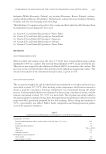
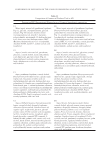
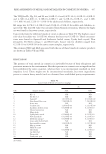
COMPARISON OF EMULSIONS IN THE CARE OF DEMANDING AND ATOPIC SKINS 413 Stefanów–Wólka Kosowska, Poland), soy lecithin (Hortimex, Konin, Poland), carboxy- methylcellulose (Barentz, Hoofddorp, Netherlands), sodium benzoate (Galfarm, Kraków, Poland), and aloe vera leaf pulp (own breeding). The following 10 commercial products (fi ve creams and fi ve balms) for AD obtained from local pharmacies and drugstores were used: (a) Cream (C1) and balm (B1) producer: Pierre Fabre (b) Cream (C2) and balm (B2) producer: DermaProfi l (c) Cream (C3) and balm (B3) producer: Nepentes (d) Cream (C4) and balm (B4) producer: Oceanic (e) Cream (C5) and balm (B5) producer: Pierre Fabre METHODS FATS INTERESTERIFICATION Mutton tallow and sesame oil in the ratio 2:3 (w/w) were interesterifi ed using sodium methoxide (0.6%) as a catalyst. The reaction was performed at 90°C (in an oil bath) for 2 h. The process was stopped by the addition of diluted H3PO4 to neutralize the catalyst. The fats were extracted with diethyl ether and dried with anhydrous magnesium sulfate. The detailed description of the aforementioned procedure is given in (10). EMULSION PREPARATION The accurately weighed fat and lecithin blend was transferred to a beaker and heated in a water bath to about 50°–55°C. After melting of the components, the blend was mixed to obtain a uniform consistency. Constant temperature was maintained during the whole process. Carboxymethylcellulose was dispersed in water using a mechanical stirrer, and the solution was heated to about 50°–55°C in a water bath. The oil phase was slowly added to the aqueous phase by manual stirring then, homogenization was performed. The aloe vera leaf pulp was added, previously prepared by aloe leaf crushing. After cooling the emulsion to 30°C, a preservative was added. Table I shows composition and homogenization param- eters of the prepared emulsion. Table I Composition and Homogenization Parameters of the Prepared Emulsions Component (% w/w) Interesterifi ed mutton tallow with sesame oil in the ratio (2:3 w/w) 30.0 Lecithin 5.2 Carboxymethylcellulose 1.0 Water Up to 100.0 Aloe vera 0.8 Sodium benzoate 0.3 Homogenization parameters Time (min) 4.0 Speed (rpm × 1,000) 18.5
Purchased for the exclusive use of nofirst nolast (unknown)
From: SCC Media Library & Resource Center (library.scconline.org)