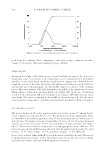
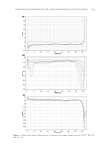
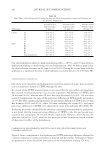
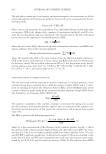
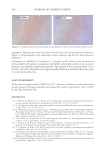
JOURNAL OF COSMETIC SCIENCE 414 DROPLET SIZE MEASUREMENTS Microtrac Particle Size Analyzer (Leeds and Northrup, Philadelphia, PA) was used to deter- mine droplets’ size and their distribution of our own formulation. The measurement was based on dynamic laser diffraction and performed 24 h after the emulsion preparation (the emulsion was stored at 7°C). The result was given as an average of three measurements. TURBISCAN TEST Stability of our own preparation was evaluated using Turbiscan Lab (Formulaction, Toulouse, France). The device enables to detect invisible, unfavorable physicochemical changes occurring in a sample. The instrument uses pulsed near infrared light (880 nm) and measures the intensity of transmitted and backscattered light as a function of sample height (11). Our own formulation was divided into three samples stored for the same time (1 mo) in different conditions (8°C, 40°C, and room temperature). The results were presented as a delta backscattered light intensity (ΔBS) in the reference mode (ΔBS = BSt - BS0). SKIN HYDRATION MEASUREMENTS Skin hydration (skin capacitance) was measured by means of Cutometer MPA (Multi Probe Adapter) using Corneometer probe (CM 825 Courage & Khazaka, Cologne, Ger- many). The device is used to determine the degree of stratum corneum hydration up to 0.45 μm of skin depth (12). Measurements are carried out by means of a capacitive method, based on a dielectric constant of water and other substances (usually 7). Corne- ometer shows variations of skin capacitance depending on moisture level changes. The measurements were performed under standard conditions of temperature and humidity (T°C = 20°–22°C, humidity 40–60%), away from direct sunlight. A control point was pure skin without any preparation. The test included measurements performed immediately after a time t 30 min, 60 min, and 120 min of product application (~0.01 g) on a forearm skin fragment. Ten women participated in the test, with no special symptoms of atopic skin but having dry and sensitive skin because of the fact that presented own preparation was model emulsion. Research was conducted by a trained person. To have valid results, the readout was always taken three times. To obtain the results of skin hydration percentage difference, the following formula was used: 0 % (SC SC ) SH SC0 % q100% t ΔSH%—skin hydration percentage difference (%), SCt—skin capacitance after a time t (AU), and SC0—skin capacitance of the control point (AU). The results are presented as a mean value of skin hydration percentage increase for all the respondents after t for each commercial product and the authors’ formulation. TEWL MEASUREMENTS Transepidermal water loss was determined by means of Cutometer MPA using Tewameter probe (TM 300 Courage & Khazaka). The measurement was based on Fick’s diffusion

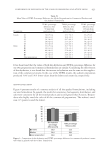
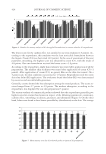
COMPARISON OF EMULSIONS IN THE CARE OF DEMANDING AND ATOPIC SKINS 415 law. Two sensors (thermometer and hygrometer) were placed in the open chamber of the measuring probe collect data from the density gradient of the water evaporation. The measurements were performed under standard conditions of temperature and hu- midity (T°C = 20°–22°C, humidity 40–60%), away from direct sunlight. A control point was pure skin without any preparation. The test included measurements per- formed immediately after 30 min, 60 min, and 120 min of application of the product (~0.01 g) on forearm skin fragments. Ten women participated in the test, with no special symptoms of atopic skin but having dry and sensitive skin because of the fact that presented own preparation was model emulsion. Research was conducted by a trained person. To have valid results, the measurement was performed in triplicate. To obtain the results of TEWL percentage difference, the following formula was used: 0 % 0 (TEWL TEWL ) TEWL TEWL % q100% t ΔTEWL%—transepidermal water loss percentage difference (%), TEWLt—transepidermal water loss after t (g/h/m2), and TEWL0—transepidermal water loss of the control point (g/h/m2). The results are presented as a mean value of TEWL percentage difference for all the re- spondents after t for each commercial product and the authors’ formulation. SENSORY EVALUATION The sensory parameters evaluation was conducted by nine previously trained volunteers— students at Kazimierz Pulaski University in Radom, Poland, using a 5-point scoring scale (0—lowest and 5—highest). The volunteers were asked to fi ll in a questionnaire assessing the sensory attributes of the tested products, without knowledge about evalu- ated product type. The acceptability of 10 commercial products and our own prepara- tion was assessed in constant and proper laboratory conditions. Sensory attributes were evaluated between two fi ngers or when applied on the forearm skin, using a 5-point scoring scale (0—lowest and 5—highest). The products were evaluated for the follow- ing sensory characteristics: consistency (density and cohesion of the product), homoge- neity (absence of clots or air bubbles), cushion effect (palpability of the product when rubbed between two fi ngers), distribution (ease of spreadability on the skin), smooth- ing (smoothing effect on the skin), stickiness (degree of palpable viscosity left on the skin), greasiness (the greasy feel perceived after product application), absorption (the moment when the product is no longer felt on the skin), color, and odor. The detailed procedure and questionnaire with instructions of the sensory evaluation are described in (13). STATISTICS Statistics were performed using Excel software (Microsoft Inc., Redmond, WA).
Purchased for the exclusive use of nofirst nolast (unknown)
From: SCC Media Library & Resource Center (library.scconline.org)