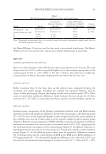
93 Peptide Effects on Photoaging The peptide complex cream used in this study is Yashaer Polypeptide Hydrating Cream (Zhuhai Yasha Biotechnology Co., Ltd., Zhuhai, Guangdong, China). The core ingredients include carnosine, palmitoyl pentapeptide-4, and acetyl hexapeptide-8. All 3 core ingredients are present in the cream at a concentration of 2%. Carnosine is a dipeptide (β-alanyl-L- histidine) that induces skin rejuvenation and anti-aging via telomere shortening inhibition, antioxidant activity, and anti-glycosylation (carbonyl scavenging).3 Palmitoyl pentapeptide (Lys-Thr-Thr-Lys-Ser, pal-KTTKS) promotes the production of the extracellular matrix (ECM) along with type I and type III collagen.4 Acetyl hexapeptide-8, also known as Argireline (Ac-Glu-Glu-Met-Gln-Arg-ARG-NH 2 ),has an anti-wrinkle effect similar to that of botulinum neurotoxin, which relaxes muscles and reduces wrinkle formation.5 This study utilized a randomized, double-blind, placebo-controlled, parallel-group method to investigate whether the peptide complex cream had the capability to improve facial wrinkles, pigmentation, roughness, and pores in order to understand the tolerance and adverse reactions of the subjects to the peptide complexes. MATERIALS Yashaer Polypeptide Hydrating Cream, Yashaer base cream, and Yashaer Icy Spring Isolation Emulsion (Zhuhai Yasha Biotechnology Co., Ltd., Zhuhai, Guangdong, China). METHODS SUBJECTS Subjects were enrolled from March 2021 to September 2021. The study was approved by the ethics committee of the Second Affiliated Hospital of Kunming Medical University, and all enrolled subjects signed the informed consent form. In the treatment group, Yashaer Polypeptide Hydrating Cream and sunscreen (Yashaer Icy Spring Isolation Emulsion) were applied to the face. In the control group, Yashaer base cream and sunscreen (Yashaer Icy Spring Isolation Emulsion) were applied to the face. This study was a placebo-controlled superiority clinical trial and the improvement rate of facial wrinkles in the subjects was the primary endpoint of the study. Based on a review of literature and clinical experience, the improvement rate of facial wrinkles was 10% in the control group and 40% in the treatment group. Using a one-sided test with a significance level of α =0.05 and a power of 90%, the total sample size for the two groups was calculated to be N =64. Considering a potential 20% dropout rate, a sample size of N1 =64/0.8 =80 was required. Thus, at least 40 subjects were required in each group for a 1:1 assignment. The inclusion criteria for subjects were: (1) participates in the study voluntarily, is able to provide written informed consent, and is able to voluntarily accept and comply with the trial treatment, follow-up, and assessment requirements (2) meets the diagnostic criteria for photoaging with a Glogau grade of II–III (3) female, aged from 45–55 years (4) indoor workers with no history of prolonged exposure to the sun within the last month (e.g., traveling, visiting the beach, hiking snowy mountains, etc.). The exclusion criteria for subjects were: (1) received relevant cosmetic treatments (e.g., laser, radiofrequency, photons, botulinum toxin injection, hyaluronic acid injection, chemical peeling, etc.) within the last month (2) use of oral or topical use of relevant medications (e.g., tretinoin, steroids, etc.) that can affect test results within the last month (3) pregnant or breastfeeding females

94 JOURNAL OF COSMETIC SCIENCE (4) patients with psychiatric disorders (5) alcohol or drug abuse (6) patients with systemic diseases or severe skin conditions (7) and history of photosensitivity or keloid disease. RANDOMIZATION AND BLINDING The statistician, who was independent of this clinical trial, generated a random sequence of 80 random numbers using a seed in R3.5 and generated a random assignment table. Double-blinding was set up by a nurse independent of this study, who pre-labeled identical looking, unmarked Yashaer Polypeptide Creams and Yashaer Base Creams with numbers according to the randomly generated assignment table. The blind code envelope was also prepared by the nurse. Unless the blind code was opened urgently (the blind breaking rate must be less than 20%), the blind code envelope would not be opened before the end of the test. Neither the statistician nor the nurse was involved in this clinical trial, and no one involved in the study had access to the randomized data until the study was completed and the database was locked. EXPERIMENT PROCEDURES AND EVALUATION METHODS After facial cleansing, the subjects evenly applied Yashaer Polypeptide Hydrating Cream or Yashaer Base Cream (without active ingredients) to the face, once in the morning and once in the evening. Both groups of subjects evenly applied sunscreen (Yashaer Icy Spring Isolation Emulsion) to the face, once in the morning and once after noon. For each application, a dosage of 1 fingertip unit (.5g) was taken, dabbed on the face, and spread carefully and evenly with the finger. The treatment period lasted 8 weeks and the followup period lasted 4 weeks. Subjective physician evaluation and non-invasive skin examination were performed at week 0 (pretreatment), at treatment weeks 2, 4, 6 and 8, and then 4 weeks after treatment was complete. For the subjective physician evaluation, Chung’s standardized wrinkle6 (grade 0-7) was used to rate subjects for wrinkles. For the noninvasive skin examination, the dermoscopy Photoaging Scale (DPAS) was measured by dermoscopy (DERMOSCOPY-II, Beijing Dermat Speedy Recovery T&D Co., Ltd., Beijing, China) and the total score of DPAS7 was calculated. Next, six indicators (panoramic (RGB) spots, RGB pores, RGB roughness, RGB wrinkles, ultraviolet (UV) acne, and UV pigmentation) of the frontal, left, and right views of the subjects’ faces were measured by a computerized magic mirror skin analyzer-1200 (FS-1200, CBS Taiwan Medical Skin Analysis, Taiwan, China). The indicators of frontal, left, and right views were then averaged. STATISTICAL ANALYSIS Statistical analysis was performed (IBM SPSS Statistics 26.0, IBM, Armonk, New York, USA). The Mann-Whitney U test was used for baseline analysis to compare the balance of the basic data between the two groups. Mean ± standard deviation or median (interquartile range) were used for continuous variables, and rank mean was used for grade data. For the comparisons of continuous variables in the efficacy analysis between the test group and the control group, the independent t-test was used for data with a normal distribution and
Purchased for the exclusive use of nofirst nolast (unknown)
From: SCC Media Library & Resource Center (library.scconline.org)