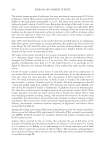
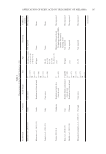
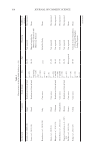
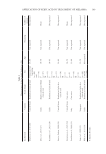
99 Peptide Effects on Photoaging This study investigated the reasons for the loss of follow-up, which were all due to busy work schedules. The dropout rate was higher in the treatment group compared with the control group, which may also lead to the deviation of the results in the treatment group. In addition, during this study, only 2 subjects experienced symptoms of dryness, mild erythema, and mild scaling at week 2, which were resolved spontaneously after one week, possibly due to seasonal changes in windiness and decreased humidity. Therefore, it was found that the peptide complex cream was safe to use and tolerable for subjects. CONCLUSIONS The current study demonstrated that the peptide complex cream containing carnosine, palmitoyl pentapeptide-4, and acetyl hexapeptide-8 can improve partial photoaging symptoms of the face, and it is a safe and tolerable treatment for skin photoaging. This study revealed for the first time the unique efficacy of the peptide complex cream in improving acne, which may be more extensively investigated in future studies. The effect of the peptide complex cream on wrinkles and color spots needs to be further studied by increasing the research time and sample size. AUTHOR CONTRIBUTIONS Qiao Tang and Wenting Cao contributed equally to this article and are co-first authors. This study was planned and designed by Danqi Deng, Jiehao Qian, Wenfang Wang and Wenting Cao. Jichun Yang contributed to study design. Qiao Tang contributed to data collection and data analysis. Qiao Tang and Jiehao Qian drafted this paper. All authors critically revised this paper and approved the final version to be published. The order of the co-first authors was determined based on the extent and duration of the work each contributed to the project. FUNDING STATEMENT This work was supported by the Funded by the National Natural Science Foundation of China (81960568). Experimental products Funded by Zhuhai Yasha Biotechnology Co., Ltd. ACKNOWLEDGMENTS We would like to express our sincere gratitude to Zhuhai Yasha Biotechnology Co., Ltd. for providing the experimental products. We would also like to acknowledge the Dermatology and Venereology Team of the Second Affiliated Hospital of Kunming Medical University in recruiting patients. There are no conflicts of interest or financial disclosures. ETHICAL STATEMENTS The study was approved by the Ethics Committee of the Second Affiliated Hospital of Kunming Medical University (S-PJ-2020-147) and registered on the Chinese Clinical Trial Registry (ChiCTR2100042842).

100 JOURNAL OF COSMETIC SCIENCE PATIENT CONSENT FOR PUBLICATION STATEMENT All enrolled subjects signed the informed consent form. REFERENCES (1) Csekes E, Račková L. Skin aging, cellular senescence and natural polyphenols. Int J Mol Sci. 2021 22(23). (2) Antiaging products-market study by Global Industry Analysts, Inc. [internet]. Accessed February 5 2022. https://www.strategyr.com/market-report-anti-aging-products-forecasts-global-industry-analysts- inc.asp. (3) Hipkiss AR, Baye E, de Courten B. Carnosine and the processes of ageing. Maturitas. 2016 93:28–33. (4) Tałałaj U, Uścinowicz P, Bruzgo I, Surażyński A, Zaręba I, Markowska A. The effects of a novel series of KTTKS analogues on cytotoxicity and proteolytic activity. Molecules. 2019 24(20). (5) Raikou V, Varvaresou A, Panderi I, Papageorgiou E. The efficacy study of the combination of tripeptide- 10-citrulline and acetyl hexapeptide-3. A prospective, randomized controlled study. J Cosmet Dermatol. 2017 16(2):271–278. (6) Chung JH, Lee SH, Youn CS, et al. Cutaneous photodamage in Koreans: influence of sex, sun exposure, smoking, and skin color. Arch Dermatol. 2001 137(8):1043–1051. (7) Isik B, Gurel MS, Erdemir AT, Kesmezacar O. Development of skin aging scale by using dermoscopy. Skin Res Technol. 2013 19(2):69–74. (8) Guaitolini E, Cavezzi A, Cocchi S, Colucci R, Urso SU, Quinzi V. Randomized, placebo-controlled study of a nutraceutical based on hyaluronic acid, L-carnosine, and methylsulfonylmethane in facial skin aesthetics and well-being. J Clin Aesthet Dermatol. 2019 12(4):40–45. (9) Garre A, Martinez-Masana G, Piquero-Casals J, Granger C. Redefining face contour with a novel anti-aging cosmetic product: an open-label, prospective clinical study. Clin Cosmet Investig Dermatol. 2017 10:473–482. (10) Granger C, Brown A, Aladren S, Narda M. Night cream containing melatonin, carnosine and Helichrysum italicum extract helps reduce skin reactivity and signs of photodamage: ex vivo and clinical studies. Dermatol Ther (Heidelb). 2020 10(6):1315–1329. (11) Robinson LR, Fitzgerald NC, Doughty DG, Dawes NC, Berge CA, Bissett DL. Topical palmitoyl pentapeptide provides improvement in photoaged human facial skin. Int J Cosmet Sci. 2005 27(3):155–160. (12) Kluczyk A, Ludwiczak J, Modzel M, et al. Argireline: needle-free Botox as analytical challenge. Chem Biodivers. 2021 18(3):e2000992. (13) Wang Y, Wang M, Xiao S, Pan P, Li P, Huo J. The anti-wrinkle efficacy of argireline, a synthetic hexapeptide, in Chinese subjects: a randomized, placebo-controlled study. Am J Clin Dermatol. 2013 14(2):147–153. (14) Palmieri B, Noviello A, Corazzari V, Garelli A, Vadala M. Skin scars and wrinkles temporary camouflage in dermatology and oncoesthetics: focus on acetyl hexapeptide-8. Clin Ter. 2020 171(6):e539–e548.
Purchased for the exclusive use of nofirst nolast (unknown)
From: SCC Media Library & Resource Center (library.scconline.org)