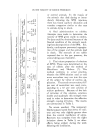
CARRAGEENIN AND. CARRAGEENATES 285 cordingly, there has been an in- creasing trend toward use of more highly refined extracts from these marine plants. The fact thus dem- onstrated that in a great number of instances far better results could be obtained with refined extracts of Carrageen rather than by using the plants in their original form, and the further fact that the improve- ment in results obtained is gener- ally in direct relation to the degree of purity of the extract, has led, during the past 20 years or so, to the development of a growing amount of industry for the manu- facture of these extracts, or car- rageenins as they are properly called. Increasing use of these carra- geenins and of seaweed extracts generally, and increasing awareness of further potential uses inevitably resulted in modifications and refine- ments of manufacturing methods and acted as a stimulus for further research, so that considerable addi- tional knowledge of the chemistry, the functions and the potential uses of these seaweed colloids has been gained in recent years. These studies are being pushed to- day more intensively than ever. In launching into a detailed de- scription of the nature and chemical composition of these seaweed c61- 1oids, or phycocolloids as they have been aptly called by some of the authorities in the field (from the Greek "phykos," meaning seaweed), let it first be stated that they are polysaccharides and not nitrogenous compounds, the presence of any nitrogenous matter being attrib- utable entirely to insufficient or imperfect extraction methods. These polysaccharides are chiefly cell wall constituents, and in this respect their character may be compared to that of the pectins of terrestrial plants. Some of them are polyuronides, some others con- sist of one or several types of saccharide units. Among the first type the best known is algin, composed entirely of mannuronic acid units, alkali soluble, the two carboxyl functions of which may be translated into a large number of salts of varying properties. Reference to algin is, however, merely being made for the sake of completeness since this article is to deal primarily with the carrageenins. These together with agar constitute the second of the categories referred to above. The name "carrageenin" was given by Stanford [E. C. C. Stanford, •. Soc. Arts,' 10, 105 (1862)], to the extracts prepared from the seaweed Chondrus crispus, also known as Carrageen, Carra- gheen, or Carrigeen, often used in conjunction with the word "Moss," and popularly known as Irish Moss. This diversity of names has resulted in a similarly varied nomenclature by the manufacturers and users of the extract, and even by the scien- tists engaged in research on this intriguing polysaccharide, with names such as Carrageen Extract, Irish Moss Extract, Irish Moss Mucilage, Gelose and Chondrus Polysaccharide being used. Yet,

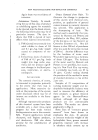
286 JOURNAL OF THE SOCIETY OF COSMETIC CHEMISTS the designation carrageenin adopted by Stanford appears as the most logical, concise, and scientifically fitting, and it is by this name we shall call the product in the pres- ent treatise. Carrageenin was isolated for the first time by Carl Schmidt in 1844. In certain respects, notably its gel- forming characteristics, it is similar to agar. However, its ash content is higher than that of agar, carra- geenin gels have a lower melting 'point than agar gels and at equal concentration usually have a some- what lower degree of rigidity. Haas (1921) suggested that the formula for carrageenin might be represented as: R O--SO=--O•ca QO--SO2--O in which R stands for the poly- saccharide complex. Harwood (1923) using a different method concluded that the formula should be R--O•SO2--O-Nc a R--O---SO,•--O j Each of these formulas has had its proponents and its critics among the ranks of other investigators and it is not within the scope of this article to furnish a bibliographical record of these discussions. How- ever, it should be pointed out that both Haas and Harwood were in- clined to consider carrageenin as an ethereal sulfate of calcium. Haas and Hill, in 1921, were the first to observe that the substance obtained from the carrageen plant by extraction in hot water is composed of at least two constituents. One of these is soluble in cold water, thereby producing viscous solutions. The other constituent is soluble only in hot water and will produce gels upon cooling of the solution. These two constituents are conveniently referred to as cold extract and ]lot extract. They differ not only in their physical properties but also in their chemical composition, the percentage of ash in the cold extract being higher than that in the hot extract, say 21 to 27 per cent for the former as against 15 to 17 per cent for the latter. Nor is the dif- ference in ash content limited only to percentages but it extends to the nature of the, ash itself. Haas, in 1921, studied these two extracts and demonstrated that the behavior of these two substances is different both toward salt solu- tions and by their colorimetric reactions with alcoholic solutions of a-naphthol and sulfuric acid. Russell-Wells in 1922 found the cold extract to consist of calcium and ammonium ethereal sulfates. Subsequently, Butler in 1934, found evidence that the original concep- tion by Haas and by Harwood of a single calcium ethereal sulfate was erroneous and that carrageenin should be considered as a mixture of acid and of potassium and calcium salts. It may thus be seen that no really definite answer to the question of the exact composition of carra- geenin has as yet been found. It seems fairly obvious that the vat-
Purchased for the exclusive use of nofirst nolast (unknown)
From: SCC Media Library & Resource Center (library.scconline.org)