302 ' JOURNAL OF THE SOCIETY OF COSMETIC CHEMISTS SI•MMARY AND CONCLUSIONS •1. The single dose toxicity of sodium perborate monohydrate (SPM) has been investigated in rats and rabbits orally, and in cats and rabbits intravenously. 2. Up to the limit of solubility of the SPM and the capacity of the stomach (25 cc. per kilo) the chemi- cal proved relatively innocuous. Some hyperemia of the gastric mucosa and occasionally super- ficial ulceration were found on serial autopsy up to 48 hours after ad- ministration of a saturated solution. 3. Intravenously administered to anesthetized cats, there was no ef- fect on blood pressure until deep cyanosis occurred. Given to rab- bits, the I.V. LD50 was 78 mg. per kilo, if given within 5 minutes. 4. No systemic pathological changes were found, except for certain non-specific liver lesions which healed promptly and did not- cause illness or death in rats (oral administration) or accounted for the acutely lethal effect in rabbits (intravenous administration). 5. It is concluded that if the whole pint of the 0.85 per cent solu- tion of SPM used as a neutralizer following a permanent hair Waving application were taken at one time (4.2 gm. of SPM), no dire conse- quences should follow. This con- centration is not irritating to the stomach and the 'total dose of 2.5 gm. of perborate is lower than the toxic dose of 5 to 6 gin. of boric acid in children. REFERENCES (1) Hirschfeld, I., "Vincent's Infection of Mouth," •. ,4m. Dent. ,4ssoc., 21, 768 (1934). (2) Miller, S.C.. Sorrin, S., Greenhut, W. H., and PelzSr, R. H., "Hydrogen Per- oxide and Sodium Perborate: Their Comparative Oral Irritant Action," Ibid., 25, 1957 (1938). (3) The Toni Company, Chicago, Ill. (4) (a) Editorial, "Neutralizers in Home Permanent Waving Kits," y. ,4m. Med. ,4ssoc., 144, 397 (1950). (b) Dunsky, I., "Potassium Bromate Poisoning," ,4m. y. Diseases Children, 80, 730 (1950). (5) Lehr, D., "Stomach Tube Feeding of Small Laboratory Animals," y. Lab. & Clin. Med. 30, 977 (1945). (6) Reed, L. J., and Muench, H., "Simple Method of Estimating 50 Percent End- points," ,4m. y. Hygiene, 27, 493 (1938). (7) Hirschhorn, H., and Mulinos, M. G., "The Pharmacology of Inflammation, I. Technic," Proc. Soc. Exper. Biol. Med., 28, 168 (1930). (8) Editorial, "Boric Acid Poisoning," Lan- cet, I, 216 (1950).

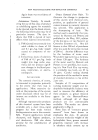
NEW POLYOXYALKYLENE NON-IONICS FOR COSMETICS* By CARL PACiriCO, M. G. KRAMER, and R. M. ABBOTT Research and Development Division, I4•yandotte Chemicals Corp., l•yandotte, Mich. INTRODUCTION THE COSMETIC and allied industries have evaluated a great many surface-active agents in the past. Their applications research laboratories may indeed be weary of evaluating surfactants that differ from each other only in minor changes in chemical structure or, perhaps, only in trade name. It may, therefore, be something of a surprise to find that it has been possible to develop an entirely new class of surfactants. The products described in this paper are com- pletely new. In some ways the properties of these products will be similar to those of existing surf- actants in others, they are unique. COMPOSITION The development of the products was based on the observation that as the molecular weight of poly- propylene glycol increases, the glycol passes from a water soluble to rela- tively water-insoluble material. At molecular weights above about 900 it is sufficiently water insoluble to be * Presented at the May 15, 1952, Meeting, New York City. a suitable hydrophobic base for non-ionic surface-active agents. Sur- face activity is obtained by con- densing ethylene oxide on the poly- oxypropylene base.t Figure 1 pre- HO(C=H40)•(CaH60)b(C=H40)cH Figure 1.--Simplified structure. sents the theoretical configuration of these products, showing the hydrophilic and hydrophobic por- tions. It should be noted that there is no random mixing of the ethylene oxide and propylene oxides. Products containing a random mixing of oxides have been prepared experi- mentally in our laboratories, but were found to be deficient as surface- active agents. As may be seen, the system pre- sented here has the outstanding ad- vantage of inherent flexibility. The molecular weight of either the hy- drophobic base or the hydrophilic portion can be varied in small in- crements over a wide range. It is therefore possible to prepare a prod- uct to meet any requirement of t Products of this type are offered com- mercially by Wyandotte Chemicals Corp. under the trade name "Pluronics." 3O3
Purchased for the exclusive use of nofirst nolast (unknown)
From: SCC Media Library & Resource Center (library.scconline.org)