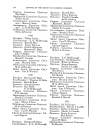
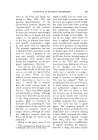
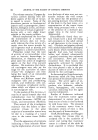
306 JOURNAL OF THE SOCIETY OF COSMETIC CHEMISTS TABLE 4--REPEATED Dose TOXXCXTXES oF SOME SUR. FACTANT$ Composition Subject Level Duration Effect Pluronic F68 Dog 0.1, 0.05 6 months No symptoms of toxicity gm./kg./day Rat 1.0% of food Rat 5.0% of food Rat 0.25-4% of food Guinea 0.2% of food pig Sodium alkyl sulfate Sodium alkyl sulfate Sodium alkyl sulfate Arylalkyl ether 160 days 67% mortality '5 days Died 30 days Minor damage, no death 180 days No damage The recent controversy concern- ing the eye-irritating properties of surface-active agents in shampoos emphasized the importance of this property. The liquid products, L44, L62, and L64 were tested on the eyes of rabbits by the method sug- gested by Draize. In no case, even when the non-ionics were used at 100 per cent active agent concen- tration, was there any permanent damage. The irritating effect was found to be of about the same order for L44, L62, and L64 and, as expected, proportional to the con- centration. Irritation is negligible at common use concentrations. These results indicate that L44, L62, and L64 may be used safely in formulations for shampoos so far as eye irritation is concerned. F68 was not studied in this man-- ner, but 5 and 10 per cent solutions were applied to the conjunctival sac of rabbits. No irritation could be detected grossly or by histological examination. Other data in the literature on surface-active agents are for more dilute solutions, so that direct comparison is not pos- sible. Hopper, et al. (6) have shown that a relationship appears to exist between acute oral toxicity in mice and irritation produced in the rabbit's eye. Further studies on irritation ef- fects showed that: 1. Five and 10 per cent aqueous solutions and a heavy paste of F68 applied to the gums of rabbits and dogs produced no hyperemia or irritation. 2. A 50 per cent aqueous solution of F68 applied to skin wounds on the abdomen of rabbits did not significantly influence healing time. 3. Skin sensitivity studies of F68 on dogs, rabbits, guinea pigs, and man showed no evidence of skin irritation or of hyper- sensitivity reaction. 4. Patch tests on L44, L62, and L64 made on human beings in our laboratories indicated no evidence of irritation or sen- sitizing effect. Preliminary work was done by the prophetic test method (8) with 5 and 85 per cent solutions of Pluronic L44, L62, and L64 applied to 12 men and 12 women. No irrita- tion was observed. Thirteen days later similar patches were placed in the same place on 19 of the 24 subjects available.

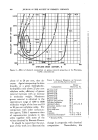
NEW POLYOXYALKYLENE NON-IONICS FOR COSMETICS 307 Again there was no evidence of irritation. ]ntravenous Toxicity. In consid- ering the use of this class of product as solubilizing agents for materials to be injected into the blood stream, the following information may be of particular interest. The data in- dicate that F68 is devoid of toxic effects when injected intravenously. 1. F68 injected intravenously into adult rabbits in doses of 1.0 and 0.1 gm./kg. body weight caused no symptoms of tox- icity. 2. Intravenous doses of solutions of F68 of 0.5 gm./kg. body weight into dogs under anes- thesia did not produce signifi- cant changes in the blood pres- sure, respiration, or electro- cardiogr am. APPLICATIONS The cosmetic chemist, of course, is interested in properties primarily to the extent that they lead to applications. More extensive de- tails on the properties of the system under discussion which may be of interest are available in the litera- ture (9). Although representative products of this chemical system have been available only a short time, rapid progress has been made toward finding extensive use in the cosmetic field. Typical applications include shampoos, oral hygiene products, and deodorants. F68 also shows promise for the solubilization of antibiotics. Grease Removal from Hair. To illustrate the change in properties of this system with chemical com- position, an application of general current interest to cosmetic chemists was selected. This application is the shampooing of hair. The method used is essentially that pre- sented by Barnett and Powers and published in the May, 1951, edition of the JOURNAI. OF THe: SOC•:TY OF Cosx4E•rm CHEMXS•rS (1). One dif- ference is that 100 mi. of petroleum ether was used for extraction instead of 200 mi. Another difference may be the hardness of water used. Wyandotte tap water has a hardness of about 120 ppm. The hardness of the water used by Barnett and Powers is not specified, but assum- ing it is New York City tap water, it is probably less hard, say 25 to 50 ppm. Careful testing showed the precision of the method in terms of standard deviation to be within 2 per cent. Samples of 21 compositions of w•rying molecular weight and hy- drophobic-hydrophilic balance were used to measure the efficiency of these products as grease removal agents by the Barnett-Powers method, although all of these products are not commercially available. The results are shown graphically in Fig..2. Some lines of "constant grease removal" have been drawn to emphasize the data. In general, at constant molecular weight of the hydrophobic base, grease removal properties improve with increase in ethylene oxide content up to
Purchased for the exclusive use of nofirst nolast (unknown)
From: SCC Media Library & Resource Center (library.scconline.org)