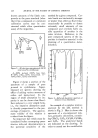
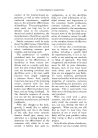
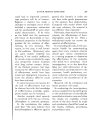
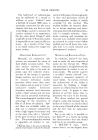
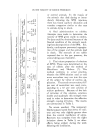
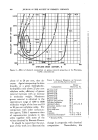
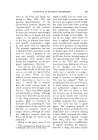
CARRAGEENIN AND CARRAGEENATES 289 geenate solution was thereupon coagulated by isopropanol and this was followed by four successive redissolutions in warm water of the coagulum and recoagulation by isopropanol. The coagulum was then dehydrated by immersion in three successive baths of isopro- panol at 99 per cent, then drained and dried under vacuum. Test for ash revealed a content of 18.91 per cent. In order to obtain the greatest possible degree of uniformity in polymerization of the two products, a number of small batches of carra- geenin and sodium carrageenate were prepared so as to permit selec- tion of products at a degree of polymerization as closely identical as possible, based on viscosity readings obtained in 1 per cent concentration at 40 ø C. 4000 2000 lOOO 8OO 600 400 From the finished products, solu~ .tions at 1 per cent and at 1.5 per cent concentration were made both of the carrageenin and of the sodium carrageenate. The viscosity of these solutions at two different rates of concentration was then measured at different temperatures, the viscosity con- trols being effected by use of a MacMichael viscosimeter equipped with a large inner cup and disc plunger, the cup being regulated to a speed of 20 r.p.m. Wires 26, 24, and 22 were used according to viscosity, all wires being calibrated with the aid of viscosity oils as furnished by the Bureau of Stand- ards in order to obtain for each wire an exact coefficient, which, when multiplied by the figure show- ing on the dial would give the proper reading in centipoises. 2OO 100 0 • A--Sodium Carrageenate 1.5 % -- • GELLED B-- Carrageenin 1.5 % -- (•)•,•,•'• C-- Sodium Carrageenate 1% '•'•_ D--Carrageenin 1% 10 20 30 40 50 60 70 80 90 100 TEMPERATURE, øC

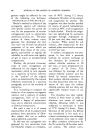
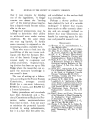
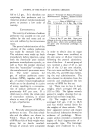
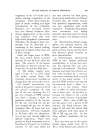
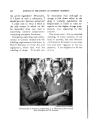
290 JOURNAL OF THE SOCIETY OF COSMETIC CHEMISTS The result of these viscosity tests is shown in the graph. . In studying the curves shown on this graph (running from right to left and starting at a temperature of 100øC.) it will be noted that the respective viscosities' of the carra- geenin solution and the sodium carrageenate solution are almost identical at temperatures above 30 to 35øC. It will be further observed that once this temperature has been reached by the cooling of a solution originally heated at 100øC., the sodium carrageenate solution remains fluid and shows a continued increase in viscosity at progressively lower temperatures. On the other hand, the carra- geenin solution will turn into a gel when a temperature of 30 to 35øC. has been reached, the rigidity of the gel increasing rapidly to the extent that the temperature is lowered further. It is pertinent to state at this point that sodium carrageenate is completely soluble in distilled water at 10øC., as established by khe homogeneity of the solution and by comparative readings of the viscosity factor taken first at 10øC. and then retaken upon heating the solution to $0øC. and cooling back to 10øC. CONCLUSION While uses of carrageenin have become fairly widespread and well established in recent years, com- paratively little has been done with respect to manufacture and utiliza- tion of the carrageenates. A study of the characteristics of these carra- geenates as exemplified by the tests carried out with sodium carrageenate as herein described prompts the conclusion that these products, with their highly interesting properties, should rapidly find highly useful applications in many fields of indus- try. Thus, it seems obvious that the elimination of a certain number of difficulties inherent in the use of a product such as carrageenin, with a variable balance of cations induced by the varying chemical constit- uents of the original plant, which cannot be completely overcome by any known method of manufacture, should automatically make one or the other of these carrageenates and principally the sodium carrageenate, eligible for many uses in which carrageenin does not at present provide either uniform or adequate results. Manufacturing methods with re- spect to production of properly con trolled and uniform carrageenates are today at a point where their production on an industrial scale does not present any particular problem or difficulty. It is likewise altogether possible that further studies of carrageenic acid may reveal interesting proper- ties and may open up new fields of application. Although agar, algin, and carra- geenin have been produced for a number of years, the extraction of algin and carrageenin is still a comparatively young industry. By
Purchased for the exclusive use of nofirst nolast (unknown)
From: SCC Media Library & Resource Center (library.scconline.org)