CARRAGEENIN AND CARRAGEENATES 287 ious researchers have not sufficiently recognized the fact that the original plants serving as bases for their studies may not always have been identical, and that the name carra- geen has been used to identify a certain number of plants of close similarity. The investigators may also have failed to make sufficient allowances for the variations in the chemical compositions of the plants as well as the resulting extracts, which are brought about by differ- ences in the locality of the growth of the plants and the periods during which they are harvested. Yet it is well known that the processes of synthesis of the seaweed polysac- charides are subject to variations induced by topographical and geo- graphical factors and by the differ- ences in the character and degree of pigmentation activity attributable to varying water depths and varying exposure to sunlight. The last- named factor is of course subject to considerable fluctuations not only from year to year and according to seasons but also according to lat- itudes, water temperatures, cur- rents, in other words a multitude of factors, making it impossible for anyone to be absolute in ques- tions of the degree of polymeriza- tion of the colloid in situ or on its exact composition with respect to certain ions and particularly the cations. We have also seen that Haas, Hill, and Russell-Wells established the existence of two different ethe- real sulfates in the carrageen depending on the temperature used in the extraction processes, and it may be said that generally speaking, the extraction processes result in a mixture of these two ethereal sul- fates. It thus seems logical to conclude that carrageenin is not a single chemical compound but rather a mixture of a certain number of substances, salts of a sulfuric ester complex, on which various cations such as calcium, potassium, or ammonium, or sodium may be fixed. The structure of the carra- geenin molecule was established in 1943 by Buchanan, Percival and Percival, showing that this polysac- chadde contains galactose residues joined by 1.3 linkages and that these galactosidal linkages form- ing the residues appear to be the g-type. They also established that the sulfuric ester group is attached to carbon atom 4. Although knowledge of the acid is still imperfect, it would seem that its existence can be logically admit- ted and that the term "carrageenic acid" may be properly applied to it. It seems also admissible to state that carrageenin is a mixture of carrageenates, principally those of potassium, calcium, and sodium. Butler (1934) prepared by dialysis of a carrageenin against potas- sium chloride, a potassium carra- geenate free of other cations. Sub- sequent ash analysis provided re- sults in what practically amounts to a quantitative ratio for K and SO4, and according to Butler the composition of potassium carra-

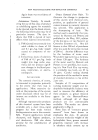
288 JOURNAL OF THE SOCIETY OF COSMETIC CHEMISTS geenate might be reflected by one of the following two formulas: (R[O.SO2.O,K.]=)n or (R[O. SO=.O.K.]a)n Butler's method by dialysis of the carrageenin against salt solutions with specific cations has paved the way for the preparation of various carrageenates such as ammonium, aluminum, calcium, etc. The prep- aration of these various carra- geenates has developed the fact that each one of them has physical properties of its own which are different from those of the carra- geenin, particularly as regards the solubility in cold water and rigidity of gel at equal or predetermined temperatures. Further, the physical character- istics of each carrageenate are influenced by the degree of poly- merization, which in turn depends on a quantity of factors inherent in the •"quality" of the original plant, as determined by the natural influences mentioned in a previous paragraph, and on the methods of extraction. It is interesting to compare the behavior of an aqueous carrageenin solution and a solution of sodium carrageenate, both of as nearly identical a degree of polymeriza- tion, and in identical concentration at identical temperature. For such a test it is of course essential first of all to prepare both products from specimens of Chon- drus crispus that are as uniform and as identical as possible. In this test the carrageenin was prepared by hot extraction from the Chondrus crispus at a tempera- ture of 90øC. during 11/2 hours, subsequent filtration of the extract and coagulation by alcohol. The coagulum was then further purified by means of several redissolutions in water at 40øC. and recoagulation in fresh alcohol. Finally the coagu- lum was dehydrated by successive passages through isopropanol at 9.9 per cent and then dried under a vacuum. When tested for ash content, after preparation by this method, ashes were found to amount to 19.27 per cent. A sodium carrageenate was pre- pared, fn line with a patented method, by osmotic exchange of the chondrus by immersion in sodium chloride solutions at 20 per cent, at room temperature for a period of 24 hours. This was followed by drainage of the sodium chloride solution and fol- lowed by several immersions in fresh sodium chloride solutions. It was then found that after ten treat- ments of this type the sodium chloride solution did not show any appreciable residual traces of cal- cium. The chondrus was then rapidly washed in fresh water in order to eliminate any excess of sodium chloride, following which it was subjected to extraction in water at 75øC. during li/2 hours. Upon filtration of the extract the tiltrate was transferred in hot state to a column containing an ion exchanger of the phenolic resin type in order to effect complete substitution by the Na cation for all the other resid- ual cations. The sodium carra-
Purchased for the exclusive use of nofirst nolast (unknown)
From: SCC Media Library & Resource Center (library.scconline.org)