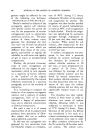
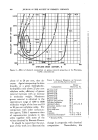
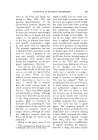
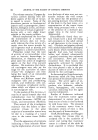
308 JOURNAL OF THE SOCIETY OF COSMETIC CHEMISTS t • ! ß •17..6 .•9.2 4•.•3 ,42.• 2400 / / I ! 2100 18• •o ß I / / I .5.2 / ' •.• I ß • j ß •o 0 25 50 75 •0 ETH•ENE OXIDE CONTENT, Figure 2.--Effect of chemical composition on grease removal properties of the Pluronics, 0.25% concentration about 15 to 20 per cent, then de- crease. Again interpreting the data broadly, at a given hydrophobic- hydrophilic ratio above 25 per cent ethylene oxide, efficiency of grease removal increases with an increase in molecular weight. Maximum grease removal is obtained in the approximate range of 1200 to 1800 molecular weight of the base and 10 to 20 per cent ethylene oxide. For comparison with other surface-ac- tive agents, Table 5 represents data of representative products in this series together with some of the values obtained by Barnett-Powers. It should be noted that the pur- pose of this work is to illustrate the TABLE 5--GREASE REMOVAL or SURFACT- aNTS (0.25% ACTIVE AGENT) Grease Composition Removal, Pluronic L50 49.1 Pluronic L51 93.7 Pluronic L54 58.1 Pluronic L62 83.9 Pluronic L64 74.5 Pluronic F68 39.8 Sodium alkyl sulfate 98.2 Alkylaryl sulfonate 92.2 Alkylaryl ethers 92.3, 69.1, 56.8 Potassium coconut soap 90.3 Fatty ether 57.2 Fatty acid ester 53.0 Water 17.0 Cationics --8.5 to -12.7 Commercial shampoos* -0.8 to +90.0 * Tested at 0.5%. change in properties with chemical composition. Nevertheless, the

NEW POLYOXYALKYLENE NON-IONICS FOR COSMETICS 309 data do indicate it may be possible to prepare products which would be very suitable shampoos from the standpoint of grease removal, from this chemical system. In fact, it should be possible to prepare a product that leaves any desired percentage of the initial oil on the hair. The relative absence of eye irritation is an important feature. In this range of composition these products are not good foamers, a deficiency which may need to be overcome by formulation tech- niques. SUMMARY To sum up, there is now available to the cosmetic chemist a new series of non-ionic products. These prod- ucts consist of a hydrophobic por- tion of polypropylene glycol of any given molecular weight, preferably over 900, with a hydrophilic portion of ethylene oxide condensed on both ends of the hydrophilic unit. The system is characterized by great flexibility. Four representative products of this type are now offered commercially. Physical and surface-active prop- erties vary with the composition. Of special importance is the com- mercial availability of a freerflowing, relatively non-hygroscopic, flake non-ionic. This product has an unusually low order of toxicity. All products tested in this series have shown very low order of eye irritation and no skin irritating or sensitizing properties. Data on the grease removal properties of representative prod- ucts, as measured by the Barnett- Powers method, have been presented indicating that the flexibility of the system can be utilized to prepare products which may be suitable shampoos. BIBLIOGRAPHY (1) Barnett, G., and Powers, D. H. "A Quantitative Method for the Evalu- ation and Study of Shampoos," J. Soc. Cos•tv. Tm Cx•EmsTs, 2, 219 (1951). (2) Carr, C. J., "Acute Toxicity Studies with Pluronic F68," Report dated June 29,1951. (3) Cart, C. J., "Acute Toxicity Studies with Pluronics L44, L62 and L64," Re- port dated Nov. 30, 1951. (4) Cart, C. J., "Condensed Summary Re- port on F68," April 9, 1952. (5) Draize, J. H., Woodard, G., and Cal- very• H. O.,"Method for Study of Irrita- tion and Toxicity of Substances Applied Topically to the Skin and Mucous Mem- branes," )e. Pharmacal., 82, 377-390 (1944). (6) Hopper, S. H., Hulpieu, H. R., and Cole, V. V., "Some Toxicological Prop- erties of Surface Active Agents," 5 t. Am. Pharm. Assoc., 38, 428-432 (1949). (7) Shelanski, H. A., "Eye Irritation Stud- ies on L44, L62, L64," April 4, 1952. (8) Swartz, L., and Peck, S., "The Patch Test in Contact Dermatitis," Public Health Repts., 59, 546 (1944). (9) Vaughn, T. H., Suter, H. R., Lundsted L., and Kramer, M. G., "Properties of Some Newly Developed Nonionic De- tergents," 5 t. Am. Oil Chem. Soc., 28 (7), 294-299 (1951). (10) Woodard, G., and Calvery, H. O., "Toxicological Properties of Surface Active Agents," Proc. Sci. Sect. Toilet Goods Assoc., No. 3, 1-4 (1945).
Purchased for the exclusive use of nofirst nolast (unknown)
From: SCC Media Library & Resource Center (library.scconline.org)