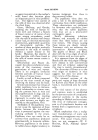
ON THE TOXICITY OF SODIUM PERBORATE 299 mogeneity of the cell nuclei and a darker staining coagulation of the cytoplasm. There were various de- grees of cloudy swelling and slight vacuolization of the cytoplasm. However, our untreated control rats also showed moderate albu- minous degeneration of the central and midzonal liver cells with slight focal peripheral cytonecrosis. Therefore, the change in liver mor- phology may be described as a worsening of the control finding, being one in degree rather than one of basic change. From the larger doses of SPM, the most severe lesions occurred between 24 and 48 hours after the dose. The severity of the lesions diminished to become minimal be- tween the 7th and the 10th days. (c) The kidney weights aver- aged 1.73 gin. (1.3 to 2.15) which was within normal limits. Mi- croscopic examination revealed no change from the untreated controls. (d) Careful examination was made of the gastric mucosa of all of the animals autopsied. In only one of the rats receiving the 1.3 per cent strength of SPM solution was there a change, a slight hy- perhemic condition of the mucosa. Of the rats receiving the 2.6 per cent strength 60 per cent of those autopsied after 24 hours had nor- mal stomachs. Of those autopsied at 48 hours after the administra- tion 45 per cent showed slight but definite hyperemia. There were grossly no frank ulcerations and no free blood in the gastric or intestinal cavities. In two cases where 2.6 per cent solution has been given, postmortem examination at 24 hours revealed that the fundic mucosa had epithelial degeneration, while one was associated with frank ulceration. Evidently, theselesions were uncommon and healed promptly since they were not found when autopsy was delayed several days. (e) Examination of heart, lungs, spleen, the adrenal, thymus and thyroid glands, the intestinal and genito-urinary tracts, and the brain and pituitary gland revealed no gross abnormalities. 2. Intravenously administered SPM to cats: Sodium perborate monohydrate, in 1.3 per cent solu- tion was injected into cats anes- thetized with nembutal. The blood pressure and heart rate of each ani- mal were recorded by a mercury manometer connected with a carotid artery in the usual manner. A 3 per cent SPM solution was injected intravenously from a buret at a rate of 1 cc. per minute. There was no effect on either blood pres- sure or heart rate. As the dose in- creased, the blood in the carotid artery canula became increasingly cyanotic. After a dose of 600 mg. per kilo given over a period of 30 minutes, the blood pressure then began to fall until the animal died from asphyxia with total doses of 700 to 90C rag. per kilo. At this time, artificial respiration did not avail. Five cats were run in this series. Lethal doses varied from 20 to 30 cc. of the 3.0 per cent solution of

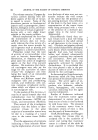
300 JOURNAL OF THE SOCIETY OF COSMETIC CHEMISTS SPM. The longer the total time of the injection, the greater the total amount of SPM solution that could be injected. It is believed that the animals died from anoxia because of the increased respiratory effort and the very dark color of the blood which could not be accounted for by any fall in the blood pressure. At death, a complete autopsy was made and sections of the liver and kidneys were examined microscopi- cally. There was practically no glycogen storage in the centers of the liver lobules but considerable deposits were evident at the pe- riphery. The kidneys and other organs were negative. On gross inspection only a generalized vasodi- lation and cyanotic tinge were evi- dent in the viscera. 3. Intravenously administered SPM to rabbits: Sodium perborate monohydrate was injected intra- venously into unanesthetized rab- bits, the data being shown in the appended Table 2. The release this mechanism because the injec- tion of doses of sodium metaborate much larger than would result from lethal doses of SPM proved in- nocuous. The LD50 of SPM cal- culated according to the method of Reed and Muench (6) lies at 78 mg. per kilo. Sodium metaborate, either as "spent" perborate or as the pure chemical, was given intravenously in doses up to 300 mg. per kilo without toxic effects. Rabbits that did not die during or within 15 minutes following the injection of the SPM, survived indefi- nitely. Serial autopsies were per- formed on such animals from a few hours to several days after the in- jection of either SPM or of sodium metaborate. There were no dis- tinctive gross or microscopic patho- logical findings. The liver distur- bance which was found in rats after oral doses was not so evident in the rabbits despite the intra- venous route of administration. TABLE 2--ToxICITY 01• SODIUM PEKBORATE MOIVOHYDRATE INTRAVENOUS ADMINISTRATION TO RABBITS Weight Time to Dose,* Range, Inject, Injected Died Died,j' Mg. X Kg. Kg. Min. No. No. % 22 3.6 1.5 1 0 0 50-56 3.2-3.4 2.5-4.5 3 1 6 60-68 2.1-4.5 2.54.5 11 3 22 70-80 2.9-4.8 3.0-5.5 9 3 54 * 2.0% solution. t Method of Reed and Muench (6) LD5078 mg. X Kg. of hydrogen peroxide caused the oxidative formation of methemo- globin which resulted in deep cyano- sis and asphyxial death. It is believed that death was due to Microscopic examination of the liver revealed some granularity of the liver cells but only slightly greater in the SPM-injected ani- mals than in the sodium metaborate
Purchased for the exclusive use of nofirst nolast (unknown)
From: SCC Media Library & Resource Center (library.scconline.org)