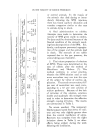
NEW POLYOXYALKYLENE NON-IONICS FOR COSMETICS* By CARL PACiriCO, M. G. KRAMER, and R. M. ABBOTT Research and Development Division, I4•yandotte Chemicals Corp., l•yandotte, Mich. INTRODUCTION THE COSMETIC and allied industries have evaluated a great many surface-active agents in the past. Their applications research laboratories may indeed be weary of evaluating surfactants that differ from each other only in minor changes in chemical structure or, perhaps, only in trade name. It may, therefore, be something of a surprise to find that it has been possible to develop an entirely new class of surfactants. The products described in this paper are com- pletely new. In some ways the properties of these products will be similar to those of existing surf- actants in others, they are unique. COMPOSITION The development of the products was based on the observation that as the molecular weight of poly- propylene glycol increases, the glycol passes from a water soluble to rela- tively water-insoluble material. At molecular weights above about 900 it is sufficiently water insoluble to be * Presented at the May 15, 1952, Meeting, New York City. a suitable hydrophobic base for non-ionic surface-active agents. Sur- face activity is obtained by con- densing ethylene oxide on the poly- oxypropylene base.t Figure 1 pre- HO(C=H40)•(CaH60)b(C=H40)cH Figure 1.--Simplified structure. sents the theoretical configuration of these products, showing the hydrophilic and hydrophobic por- tions. It should be noted that there is no random mixing of the ethylene oxide and propylene oxides. Products containing a random mixing of oxides have been prepared experi- mentally in our laboratories, but were found to be deficient as surface- active agents. As may be seen, the system pre- sented here has the outstanding ad- vantage of inherent flexibility. The molecular weight of either the hy- drophobic base or the hydrophilic portion can be varied in small in- crements over a wide range. It is therefore possible to prepare a prod- uct to meet any requirement of t Products of this type are offered com- mercially by Wyandotte Chemicals Corp. under the trade name "Pluronics." 3O3

304 JOURNAL OF THE SOCIETY OF COSMETIC CHEMISTS molecular weight or of hydrophobic- hydrophilic balance. For convenience in discussing this series of products, liquids will be designated L and flake products will be designated F. Two digits are used to identify the composition. The first digit will identify the molecular weight range of the hydrophobic unit, the higher the number the greater the molecu- lar weight. The second digit will refer to the percentage, by weight, of the hydrophilic unit in the mole- cule. The numeral 2, for example, indicates the ethylene oxide content is 20 to 30 per cent of the molecule, 6 is 60 to 70 per cent and so on. PRO PERTIES Molecular 1/I/eight. One of the factors that contributes to the unique properties of the products of this system is the unusually high molecular weight. This is illus- trated in the following table of ap- proximate molecular weights of surfactants. TABLE 1--TYPICAL MOLECULAR WEIGHTS or SURfAcE-AcTIVE AGENTS Alcohol sulfates ............ 250 Alkylaryl sulfonates ........ 350 Oleic acid amides .......... 425 Alkylaryl ethers ........... 625 Pluronic L62 .............. 2000 Pluronic F68 .............. 7500 As may be expected, many of the properties of the system described here vary with change in molecular weight and chemical composition. For example, at any given mo- lecular weight of the hydrophobic unit, increasing the ethylene oxide content raises the melting point. Starting with a suitable base, a point is reached where, for the first time, a 100 per cent active agent, non-ionic, of reasonably good de- tergency properties, may be ob- tained in flake form. Since flake 100% active agent surfactants are rather scarce re- gardless of type, the properties of one of the products in this system, designated Pluronic F68 in our code, has been investigated rather thor- oughly. Hygroscopicity. One of the first questions might be, "How hygro- scopic is it in that form? Does it tend to become gummy?" Sur- prisingly enough, as shown in Table 2, this product is relatively non- hygroscopic. TABLE 2--HYGROSCOPICITY or TYPICAL SUR- fAcE-AcTIVE AOENTS Room Temperature, 80% R.H., 30 Days Active Increase in Product Agent, % Weight, % Pluronic L44 100 4.7 Pluronic L62 100 4.6 Pluronic L64 100 7.3 Pluronic F68 100 5.6 Fatty acid ester 100 8.6 Alkylaryl ether 100 17.4 Alkylaryl sulfonate 40 20.0 It will be noted that typical non- ionics are much less hygroscopic than the alkylaryl sulfonates. The contrast is especially sharp for the flake non-ionic compared with the flake anionic, taking into considera- tion that the latter is only a 40 per cent active agent. At higher proportions of active agent, alkyl- aryl sulfonates become increasingly hygroscopic.
Purchased for the exclusive use of nofirst nolast (unknown)
From: SCC Media Library & Resource Center (library.scconline.org)