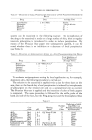
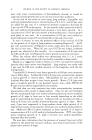
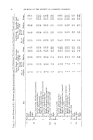
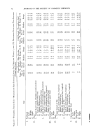
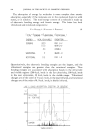
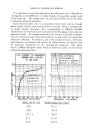
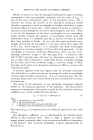
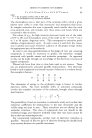
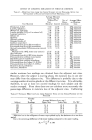
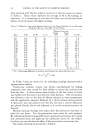
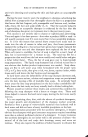
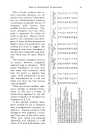
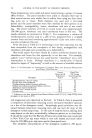
ROI.E OF DETERGENTS IN SHAMPOOS 121 hard water are shown in Table 4. These data indicate that, while many detergents show good solubility in hard water at higher concentrations, they precipitate out on dilution or during rinsing. Undoubtedly, the heavy metal salts of many of these detergents are insoluble per se in water but are solubilized in an excess of the soluble detergent salt. Where detergents precipitate in hard water they will be potential hair dulling agents. TABLE 4--SOLUBILITY CHARACTERISTICS OF SELECTED DETERGENTS IN 350 P.P.M. HARD WATER* DeterRent Solubility as Judged by Clarityj' of Solution at 0.5% level:J: 0.1% level+ + Triethanolamine "lauryl" sulfate Triethanolamine lauryl beta amino propionate Triethanolamine dodecyl benzene sulfonate Protein fatty acid condensate Sodium octyl phenoxy polyethoxy sulfonate Sodium lauroyl sarcosinate Sodium lauryl polyethoxy sulfate Sodium caproyl imidazoline carboxylate Ammonium lauroyl isethionate Sodium "coco" methyl taurate Triethanolamine coconut soap Clear Very cloudy Clear Clear Slightly cloudy Cloudy Clear Clear Slightly cloudyõ Cloudyõ Clear Very cloudy Clear Clear Cloudy Cloudy Cloudy Cloudy Clear Clear Very cloudy Very cloudy * Prepared by dissolving 0.259 grams of calcium chloride (anhydrous) and 0.281 grams of magnesium chloride (hexahydrate) in 1 liter of distilled water. j' Clarity was judged five minutes after solution was prepared. :]: Percentage refers to anion. õ This deterRent is slightly cloudy at these concentrations in distilled water. A comparison between panel opinions as to latherability and laboratory test data, using the Barnett-Powers lathPromPter, is presented in Table 5. The correlation is not too good when one considers the laboratory data obtained with soft or hard water. However, it is very enlightening to see what a close correlation is obtained when synthetic sebum is used as part of the laboratory test. TABLE 5--A COMPARISON OF LABORATORY LATHERABILITY DATA* fOR SELECTED DETERGENTS WITH PANEL TEST RESULTS DeterRent .... Laboratory Latherability--- ß Panel Test (ml. of Lather) Results In In 175 In Soft Water (% Voting Soft p.p.m. Hard Containing 2% Good Water Water Synthetic Sebum Lather) Atkyl sulfate 86 94 203 100 Triethanolamine dodecyl benzene sul- fonate 52 70 150 86 Sodium octyl phenoxy polyoxyethyl- ene sulfonate 57 55 92 50 Protein fatty acid condensate 73 130 100 79 Sodium caproyl imidazoline carboxyl~ ate 47 57 120 81 Soap 49 44 399 92 * These data, obtained from reference No. 2 Tables 1 and 4, are based on 3% solutions of deterRent.

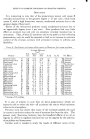
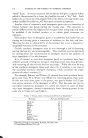
122 JOURNAL OF THE SOCIETY OF COSMETIC CHEMISTS At the present time there are no adequate techniques published for measuring hair manageability and ease of wet combing. Mills, Ester and Henkin (11) described a technique for measuring static charge developed on hair. This technique was excellent for measuring reduction of static charge on the hair after the application of creme rinses but was inadequate for distinguishing difi:erences in the action of detergents on the hair. When adequate tests are developed for reliably measuring hair manage- ability, we will have taken a giant step forward toward being able to pre- dict with the aid of laboratory tests the potential consumer acceptance of a new shampoo The study of shampoos continues to show that many factors contribute to their acceptance or rejection. When synthetic detergents are formulated without additives, we discover again that cleansing action is not the whole story in a shampoo. As better and more extensive laboratory tests are available, we are coming closer to the time when we can predict a cosmeti- cally acceptable and successful shampoo from laboratory tests. , REFERENCES (1) Zussman, H. W., Proc. Sci. Sec. Toilet Goods •lssoc., No. 19, 58 (1953). (2) Barnett, G, and Powers, D. H., [bid., No. 24, 24 (1955). (3) Harris, J. C., •lm. Pe•f. Essenl Oil Rev., 48, 54 (1948). (4) Barnett, G., and Powers, D. H., )e. Soc. Cosmetic Chemists, 2, 219 (1951). (5) Ester, V. C., Henkin, H., and Longfellow, J. M., Proc. Sci. Sec. Toilet Goods •lssoc., No. 20, 8 (1953). (6) Barnett, G., and Powers, D. H., [bid., No. 15, 16 (1951). (7) Consumers Research, October (1951). (8) "A Study of the Effect of the New Detergents on the Skin," Thomas Hedley and Co., Ltd., Newcastle Upon Tyne, Dec., 1955. (9) Sagarin, E., "Cosmetics: Science and Technology," New York, Interscience Publishers, Inc. (1957). (10) Harry, H. G., "The Principles and Practice of Modern Cosmetics," Vol. I in "Modern Cosmeticology," London, Leonard Hill, Ltd. (1955). (11) Mills, E. M., Ester, V. C., and Henkin, H., )e. Soc. Cosmetic Chemists, 7, 466 (1956). THE COSMETIC INDUSTRY IN DENMARK By ERIK THOMSEN* Summary of Paper Presented September 17, Z955, International Symposium, Copenhagen, Denmark SINCE 1940 we have had a cosmetic tax of 25 per cent of the retail price (including tax), increased to 30 per cent in 1956. From the revenue, the total turnover is calculated (soap, toothpaste and shampoo are not taxed and therefore not included). * Kronebakken 49, Virum, Denmark.
Purchased for the exclusive use of nofirst nolast (unknown)
From: SCC Media Library & Resource Center (library.scconline.org)