122 JOURNAL OF THE SOCIETY OF COSMETIC CHEMISTS At the present time there are no adequate techniques published for measuring hair manageability and ease of wet combing. Mills, Ester and Henkin (11) described a technique for measuring static charge developed on hair. This technique was excellent for measuring reduction of static charge on the hair after the application of creme rinses but was inadequate for distinguishing difi:erences in the action of detergents on the hair. When adequate tests are developed for reliably measuring hair manage- ability, we will have taken a giant step forward toward being able to pre- dict with the aid of laboratory tests the potential consumer acceptance of a new shampoo The study of shampoos continues to show that many factors contribute to their acceptance or rejection. When synthetic detergents are formulated without additives, we discover again that cleansing action is not the whole story in a shampoo. As better and more extensive laboratory tests are available, we are coming closer to the time when we can predict a cosmeti- cally acceptable and successful shampoo from laboratory tests. , REFERENCES (1) Zussman, H. W., Proc. Sci. Sec. Toilet Goods •lssoc., No. 19, 58 (1953). (2) Barnett, G, and Powers, D. H., [bid., No. 24, 24 (1955). (3) Harris, J. C., •lm. Pe•f. Essenl Oil Rev., 48, 54 (1948). (4) Barnett, G., and Powers, D. H., )e. Soc. Cosmetic Chemists, 2, 219 (1951). (5) Ester, V. C., Henkin, H., and Longfellow, J. M., Proc. Sci. Sec. Toilet Goods •lssoc., No. 20, 8 (1953). (6) Barnett, G., and Powers, D. H., [bid., No. 15, 16 (1951). (7) Consumers Research, October (1951). (8) "A Study of the Effect of the New Detergents on the Skin," Thomas Hedley and Co., Ltd., Newcastle Upon Tyne, Dec., 1955. (9) Sagarin, E., "Cosmetics: Science and Technology," New York, Interscience Publishers, Inc. (1957). (10) Harry, H. G., "The Principles and Practice of Modern Cosmetics," Vol. I in "Modern Cosmeticology," London, Leonard Hill, Ltd. (1955). (11) Mills, E. M., Ester, V. C., and Henkin, H., )e. Soc. Cosmetic Chemists, 7, 466 (1956). THE COSMETIC INDUSTRY IN DENMARK By ERIK THOMSEN* Summary of Paper Presented September 17, Z955, International Symposium, Copenhagen, Denmark SINCE 1940 we have had a cosmetic tax of 25 per cent of the retail price (including tax), increased to 30 per cent in 1956. From the revenue, the total turnover is calculated (soap, toothpaste and shampoo are not taxed and therefore not included). * Kronebakken 49, Virum, Denmark.

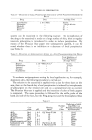
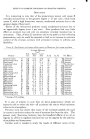
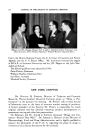
CHICAGO CHAPTER NEWS 123 Inflation and increasing population explain half of the rise, so that the turnover today is about double per capita of that in 1941, but still it is as low as DK. 20.00 a year. 1941 ...... 23.6 1942 ...... 33.6 1943 ...... 40.8 1944 ...... 54.4 1945 ...... 58.4 1946 ...... 49.6 Million DanishKroner (7Kroner = $1.00 approx.) 1947 ...... 54.8 1953 ...... 71.6 1948 ...... 54.8 1954 ...... 77.2 1949 ...... 49.6 1955 ...... 82.8 1950 ...... 56.8 1956 ...... 90.0 (notexact) 1951 ...... 53.2 1957 ...... 96.2 1952 ...... 61.6 The products sold in Denmark are for the greater part manufactured here under foreign trade names, while a few are pure Danish with only a little being imported. The number of cosmetic producers (including importers, drug stores and beauty shops manufacturing on a small scale) was in 1944, 450 and re- cently 350. The loss is explained by certain circumstances during the war. The approaching elimination of tariff walls in Europe will probably result in a strangling of the smaller manufacturers. The evolution has already been seen in the Danish soap industry. The reason for the tendency towards internationalization of the market and elimination of purely national industries can be found in the lack of national proudness in the people of the smaller countries. Against what could be expected, the Danish pharmaceutical industry has not been able to give inspiration to the cosmetic industry. The only Danish innovation in cosmetics, the emulsified lipstick, was created by an autodidakt. No great news can be expected from the Danish cosmetic industry, not because of a lack of ability among the chemists, but because of the small economic power for research as well as for advertising of Danish firms. CHICAGO CHAPTER NEWS TI4E J^su^R¾ 13th meeting featured Fred S. Lockwood who spoke on "What the Chemist Should Know About Patent Law." Mr. Lockwood is a partner in the firm of Cromwell, Greist and Warden, Patent and Trade Mark lawyers. He is a member of the American Chemical Society, Tau Beta Pi, Pi Mu Epsilon, the American Bar As- sociation, the American Patent Law Association and the Chicago Bar Association and has been admitted to practice before the U.S. Supreme
Purchased for the exclusive use of nofirst nolast (unknown)
From: SCC Media Library & Resource Center (library.scconline.org)