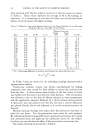
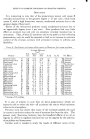
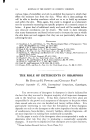
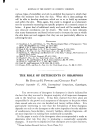
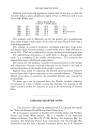
CHICAGO CHAPTER NEWS 123 Inflation and increasing population explain half of the rise, so that the turnover today is about double per capita of that in 1941, but still it is as low as DK. 20.00 a year. 1941 ...... 23.6 1942 ...... 33.6 1943 ...... 40.8 1944 ...... 54.4 1945 ...... 58.4 1946 ...... 49.6 Million DanishKroner (7Kroner = $1.00 approx.) 1947 ...... 54.8 1953 ...... 71.6 1948 ...... 54.8 1954 ...... 77.2 1949 ...... 49.6 1955 ...... 82.8 1950 ...... 56.8 1956 ...... 90.0 (notexact) 1951 ...... 53.2 1957 ...... 96.2 1952 ...... 61.6 The products sold in Denmark are for the greater part manufactured here under foreign trade names, while a few are pure Danish with only a little being imported. The number of cosmetic producers (including importers, drug stores and beauty shops manufacturing on a small scale) was in 1944, 450 and re- cently 350. The loss is explained by certain circumstances during the war. The approaching elimination of tariff walls in Europe will probably result in a strangling of the smaller manufacturers. The evolution has already been seen in the Danish soap industry. The reason for the tendency towards internationalization of the market and elimination of purely national industries can be found in the lack of national proudness in the people of the smaller countries. Against what could be expected, the Danish pharmaceutical industry has not been able to give inspiration to the cosmetic industry. The only Danish innovation in cosmetics, the emulsified lipstick, was created by an autodidakt. No great news can be expected from the Danish cosmetic industry, not because of a lack of ability among the chemists, but because of the small economic power for research as well as for advertising of Danish firms. CHICAGO CHAPTER NEWS TI4E J^su^R¾ 13th meeting featured Fred S. Lockwood who spoke on "What the Chemist Should Know About Patent Law." Mr. Lockwood is a partner in the firm of Cromwell, Greist and Warden, Patent and Trade Mark lawyers. He is a member of the American Chemical Society, Tau Beta Pi, Pi Mu Epsilon, the American Bar As- sociation, the American Patent Law Association and the Chicago Bar Association and has been admitted to practice before the U.S. Supreme

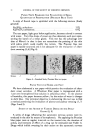
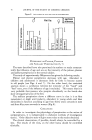
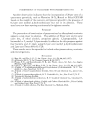
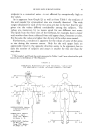
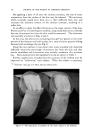
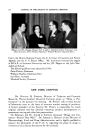
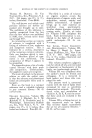
124 JOURNAL OF THE SOCIETY OF COSMETIC CHEMISTS :. L". .:•- ,•i!.: •':" ' •" .... " ' ir ..... i:'.' '. . ,.. i •-'i. :"- ½•:: ½' :•:' . .... •... 2 • . . .. .. ,, .... •:. : ..-..•- •"-' . . . .: ?: •:.•½', .... .,. ' • .... . ...:• • ....• ,. .... Officers for 1959, Chicago Chapter (left to right): Marshall Sorkin, Treasurer Lois Dow, Secretary Peter Parker, Chairman William Mueller, Chairman-Elect. Court, the Illinois Supreme Court, the U.S. Court of Customs and Patent Appeals and tile U.S. Patent Office. Mr. Lockwood received the degree of B.Ch.E. at Syracuse University and his J.D. Degree at the John Mar- shall Law School. The following officers were elected for 1959: Peter Parker, Chairman William Mueller, Chairman-Elect Lois Dow, Secretary Marshall Sorkin, Treasurer NEW YORK CHAPTER DR. Dos^Lt) H. Powv. Rs, Director of Toiletries and Cosmetic Research, Warner-Lambert Research Institute spoke on "Hope or Per- formance" at the January 7th meeting. Dr. Powers' talk covered the use of laboratory tests as the basis of accurate market testing of products. A former president of the Society, Dr. Powers is responsible for much original research and has directed numerous product developments in permanent waving and other hair preparations. On February 4th Dr. Arnold J. Lehman discussed "Drugs and Cos- roetics--Should They Mix?" Dr. Lehman is Director of the Division of Pharmacology, Food and Drug Administration and is highly qualified to present the philosophy of the F. D. A. regarding the place of drugs in cosmetics and to discuss the reasons for this attitude.
Purchased for the exclusive use of nofirst nolast (unknown)
From: SCC Media Library & Resource Center (library.scconline.org)