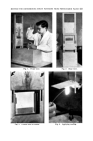
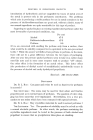
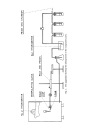
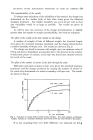
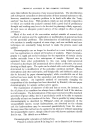
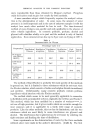
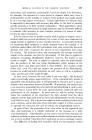
STUDYING STATIC ELECTRICITY PRODUCED ON HAIR BY COMBING 239 (ii) Both surfaces of the leaf and those of the backing plate were clean and free from grease. (iii) Apart from the portion in the clamp, the leaf was separated from the backing plate by as small a distance as practical. Separation was necessary to avoid the slight adhesion which otherwise caused the leaf to spring away rather violently from the backing plate during measure- ment. (iv) The leaf was then freed from creases and bends, and hung so that the bottom edge was a constant distance from the bottom of the backing strip. (v) The bottom of the leaf was exactly opposite the centre of the,tips of the comb's teeth during any part of the traverse movement of the comb. (vi) The utmost care was taken to avoid touching the leaf with the hair. The leaf was illuminated through the glass by a microscope lamp and viewed through a short-focus telescope, the leaf in silhouette being centred on the telescope cross wires as a reference point. To detect the charge, the rack and pinion was operated, moving the comb towards the leaf until the first detectable movement of the leaf towards the charged comb was observed. Readings were completed within ten seconds of the last stroke of the hair in the comb so as to avoid excessive charge leakage (see below). Charge removal Before a determination, it was obviously desirable to free the comb from any charge remaining from the previous test. The complete elimination of the charge was not easy where a number of determinations had to be carried out in quick succession. The best method used a number of 8" strands of thin wire tied together at one end and joined to a flexible wire connected to earth. The wire was drawn through the comb in a manner identical to that used in charging the hair. A large though variable portion of the charge was thus removed. Charge measurement The distance between the comb and leaf was measured to the nearest half-millimetre by the movement of a pointer, attached to the other end of the rack and pinion, moving across a centimetre scale. The zero reading was checked before each test, to ensure that the leaf had not become displaced. If the distance of the comb from the leaf, when the charge is first detect- able, is d, then the charge rr is given by rr = Kd 2 where K is a constant depending on the dimensions and design of the apparatus. Since this apparatus was used for comparative purposes only,

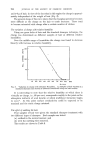
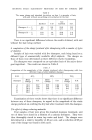
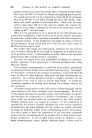
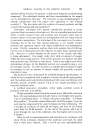
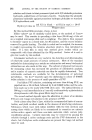
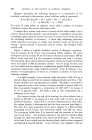
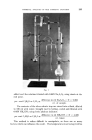
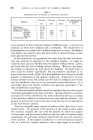
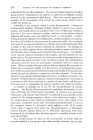
240 JOURNAL OF THE SOCIETY OF COSMETIC CHEMISTS and in any case a control treatment was included in any series of tests, the value of K is not of importance. Since it was difficult to remove the charge from the comb completely, it was necessary to take two readings in each determination. The first to ascertain the amount of residual charge on the comb from the previous determination, and the second to determine the amount of charge after the present determination. To correct for the residual charge the following relationship was used' Charge produced on the hair (a)= total charge- residual charge •:(do• -- d D where d r is the comb/leaf distance giving a just perceptible leaf movement before charge generation, and d o the corresponding distance after generation of the new charge. Humidity control Attempts to control the humidity using saturated salt solutions were not successful for the following reasons: (i) Since the chamber was not hermetically sealed, movement of the rack and pinion, or glove, caused uncontrollable changes in the relative humidity. (ii) A large amount of salt solution was required and a long time was needed to reach equilibrium. (iii) Circulation of air within the chamber is desirable to maintain a uniform humidity and it was difficult to incorporate a fan within the space available. A laboratory air compressor was used to circulate the air through the salt solutions, but removal of the last traces of oil and contamination in the air which derived from the pump and salt solu- tions was difficult. The presence of this contamination caused erratic results. Finally, air from a cylinder of compressed air was passed into the chamber through glass and polythene (not rubber) tubing only. A by-pass, through a series of water bubblers, was so arranged that any relative humidity was obtainable by varying the proportion of air passed through the bubblers. The gas was allowed to leak out of the chamber through a small orifice, a small positive pressure being main- tained at the inlet. The humidity was measured by a hair hygrometer, suspended in the chamber, and by another one placed in a small chamber on the inlet pipe which served as a check on the relative humidity and facilitated control of the incoming gas. By adjusting the flow of gas, whenever necessary, it was possible to maintain the relative humidity at a specified value, to within -+- 1 per cent.
Purchased for the exclusive use of nofirst nolast (unknown)
From: SCC Media Library & Resource Center (library.scconline.org)