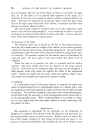
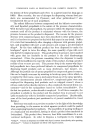
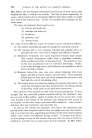
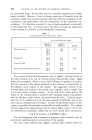
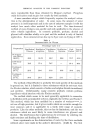
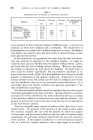
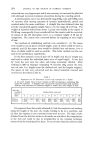
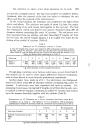
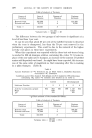
9•68 JOURNAL OF THE SOCIETY OF COSMETIC CHEMISTS Table $ •)ETERMINATION OF WATER IN GLYCEROL SOLUTION Per cent Per cent Per cent Per cent glycerin Method in distillate 1 hr. 2 hr. 3• hr. 1 hr. Calculation 71.75 Detn. of Glycerol 71.70 Distillation Toluene 71.3 73.3 76.3 1.2 ,, I-Ieptane 71-5 72.5 -- 3.0 ,, Xylene 75.6 76.0 -- 7.0 Benzene 71.9 -- -- 0.15 Ove•'drying 105 ø 72.3 series consisted of three cosmetic products of different types--a water-in-oil emulsion, an oil-in-water emulsion and a toothpaste. The second series of determinations were made with a solution of glycerol in water. Distillation with toluene was found to give the best results in almost all cases, except where glycerol was present. In the second series of experiments, the water from the Dean and Starke trap was analysed for glycerol by the periodate method. As might be expected, most glycerol distilled with the highest boiling solvent, xylene, and least with the lowest boiling solvent, benzene. Moreover, the longer the boiling is continued, the more glycerol is distilled. Obviously there is more scope for further experiments, but the tentative conclusion to be drawn from these results (Table 3) is that distillation with toluene for 45-60 minutes is satisfactory in the absence of glycerol. If glycerol is present, benzene should be used, but in that case the water is entrained more slowly and the distillation time has to be increased to about 90 minutes. It is noteworthy that even benzene entrains some glycerol, particularly if the time of distillation is prolonged. The Dean and Starke method cannot be employed directly with samples containing appreciable proportions of alcohol. Alcohol will also be entrained, and some of it will be dissolved in the water collected in the trap, according to the partition coefficient of alcohol between water and the entrainer. The amount of actual water in the lower layer from the trap can be determined by the Karl Fischer method. There are naturally many aspects of analysis other than those I have touched upon. The question of the accuracy of the results is often raised. The accuracy required will vary with the purpose for which the analysis is being made, and the accuracy attained will vary with the mixture under examination, the particular methods selected and the care and experience of the operator. If the purpose of analysis is to reveal the general composi- tion of a relatively complex unknown, then a high degree of accuracy is

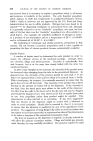
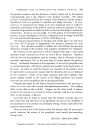
CHEMICAL ANALYSIS IN THE COSMETIC INDUSTR• 269 unnecessary and sometimes unattainable, but if the object is to determine, for example, the amount of a trace metal or element which may have a profound effect on the stability or toxicity of the product, the results should be of a very high degree of accuracy. Certain ingredients of a mixture may be impossible to determine with accuracy due either to the lack of suitably specific methods or to their variable composition. Other ingredients, which may be accurately determined in simple mixtures, may be extremely difficult to estimate with accuracy in more complex mixtures by reason of inter- ference by other components. It is not always easy to predict exactly what is going to happen when a method which has proved satisfactory for a more or less pure compound or simple mixture is applied to a more complex mixture. A convenient method for examining alkyl sulphates or simple shampoo bases, for example, is to hydrolyse under reflux with 2N hydrochloric acid, cool, extract the liberated alcohols with ether, evaporate the solvent at low temperature and weigh the residue. The hydroxyl value, and consequently the average molecular weight of the alcohols, can then be determined. If this plan is applied to shampoos containing alkylolamide additives, however, the matter is not nearly so simple. The acid, as might be expected, splits the alkylolamide also, the products in this case being alkylolamine, which remains in the aqueous layer, and fatty acid which is ether-soluble. The analyst would detect this, even if he did not suspect the presence of an alkylolamide, because he would naturally determine an acid value as well as a hydroxyl value, and the acid value would be high. In most cases, however, the acid value is not very high the hydroxyl value is practically always appreciably low. If the separated fatty matter is saponified with alcoholic potash, it will generally be found to have a saponi- fication value somewhere between 20 and 60. If persistent, the analyst may even succeed in separating this ester material and identifying it, and he may suspect that it is put there for some special purpose connected with the performance of the shampoo. In most cases he will be wrong, because under the conditions of the experiment the fatty alcohol from the alkyl sulphate and the fatty acid from the fatty acid alkylolamide esterify, leaving very little free acid. If it is desired to weigh the total combined alcohols from such a mixture, and to determine their molecular weight, it is first necessary to saponify the extracted fats and to extract the unsaponifiable matter. In point of fact, the possession of an ester value by the separated fats after acid hydrolysis is a reliable indication of the presence of a fatty acid alkylolamide. Alkylolamides are not easy to extract from shampoos by ordinary methods, as more or less alkyl sulphate is extracted at the same time, but a recent method •ø describes their separation on an ion exchange column. The difficulty of dealing with materials xvhich are not chemical entities
Purchased for the exclusive use of nofirst nolast (unknown)
From: SCC Media Library & Resource Center (library.scconline.org)