262 JOURNAL OF THE SOCIETY OF COSMETIC CHEMISTS solution and titrate to faint permanent pink with N/2 alcoholic potassium hydroxide, added from a 10 ml micro-burette. Standardize the alcoholic potassium hydroxide against potassium hydrogen phthalate or standard N/2 hydrochloric acid. Hydroxyl value _---- (ml N/2 in blank -- ml N/2 in expt.) x 28 05 Weight taken By this method little precision, if any, is lost. Iodine values •2 can be similarly scaled down, or the method of Toms •8 may be used. This consists in spreading a thin layer (20-40 mg) of the oil on a weighed microscope slide and re-weighing. The slide is then exposed to bromine vapour in a closed tube, for 30 minutes, and the excess bromine removed by gentle heating. The slide is cooled and re-weighed, the increase in weight representing the bromine absorbed, which is then calculated to iodine. If a thin film is used, this method gives results which are comparable with those obtained by the Wijs method. Castor oil is said to give low results by this method. Colorimetric.'methods are very useful in the detection and determination of relatively small amounts of certain substances. Most of the standard methods for determining trace metals are colorimetric and many biochemical estimations are also made in this way. The advent of physical instruments for measuring colour has increased the precision of colorimetric analysis, and a number of cosmetic materials can thus be rapidly determined. Two colorimetric methods are available for the determination of polyvinyl pyrrolidone. The first •4 depends upon the darkening in colour of 0.006N iodine solution in the presence of small quantities of PVP. 5 ml dilute PVP solution, containing not more than 0.8 mg PVP, are pipetted into a 25 ml flask, followed by 5 ml 0.006N iodine and the solu- tion made up to the mark with 0.4M citric acid. The optical density at 500 mt• is read immediately in a 1 cm cell, or alternatively a photoelectric absorptiometer with blue-green filters may be used. The second method depends upon the alteration in colour of an alkaline 0.01 per cent Congo red solution in the presence of PVP. Both colours obey Beer's Law, within the recommended limits of concen- tration, and yield excellent results in the absence of interfering substances. Substances which react with iodine interfere with the first method, and among those which are likely to be encountered in cosmetics are cationic surface-active agents and those non-ionic materials which contain poly- oxyalkylene groups. Cationic materials may be removed by passing the solution through a cation exchange resin and the PVP determined in the eluate, but if ethylene oxide condensates are present the Congo red method must be used.

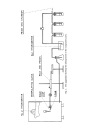
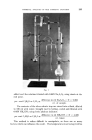
CHEMICAL ANALYSIS IN THE COSMETIC INDUSTRY 263 Ethylene diamine tetra-acetic acid, and its salts, may be determined by means of the colour produced with cobalt nitrate and hydrogen peroxide • 8, and this method is very satisfactory for small amounts of EDTA. It is quite sensitive, even in the presence of a large excess of alkyl sulphates. The details are as follows: Prepare a solution or dilution of the material, to contain approx. 0.2 per cent of ethylene diamine tetra-acetic acid, or its disodium salt. Pipette 5-10 ml of this solution into a test tube, add 0.5 ml glacial acetic acid and 1 ml of a 2 per cent cobalt nitrate solution and heat the tube in boiling water for exactly 15 minutes. Remove from the bath, cool to about 40 ø C and add 2 ml of 30 per cent (100 volumes) hydrogen peroxide. Heat for a further 5 minutes in boiling water, and cool to room temperature. Transfer to a 25 ml volumetric flask, make up to the mark with water and mix. Measure the optical density of the pink solution in a cm cell in a photoelectric absorptiometer, using Ilford Green No. 604 filters, taking care that no bubbles of oxygen adhere to the sides of the cell. A standard solution of disodium ethylene diamine tetra-acetate is used to prepare a calibration curve. Many cosmetic raw materials these days contain ethylene or propylene oxide condensed on to a reactive group, and most of them are very resistant to chemical attack, particularly if the linkage is of the ether type. Many methods have been proposed for their assay, but most of them are empirical and depend on a knowledge of the particular compound used. The identifica- tion of the type of condensate and the functional group, on which the alkylene oxide has been condensed, has been the subject of several papers and Rosen •6 has developed a method of detection and differentiation between polyoxy- propylene and polyoxyethylene, which is based on pyrolysis with syrupy phosphoric acid and a detection of the decomposition products by collecting them in a dilute solution of sodium nitroprusside containing diethanolamine. Several papers have been published which deal with the actual determina- tion of alkyloxy groups, and they all depend on a modification of the ordinary alkoxyl determination in which the compound is refluxed with hydriodic acid, and the alkyl iodide so formed is absorbed and titrated. In the case of polyglycol ethers, however, the reaction does not proceed in this simple way. Instead, the alkoxyl group is split into alkyl iodide and alkylene, and as there seems to be no strict proportionation between the amounts of each produced, each has to be absorbed and determined separately. The alkyl iodide is normally absorbed in alcoholic silver nitrate, and the excess silver deter- mined by titration with thiocyanate, while the alkylene is collected in a second trap containing a solution of bromine in acetic acid. A stream of inert gas is passed through the apparatus during the reflux period to sweep the products of the reaction out of the flask.
Purchased for the exclusive use of nofirst nolast (unknown)
From: SCC Media Library & Resource Center (library.scconline.org)