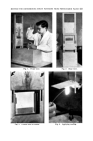
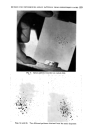
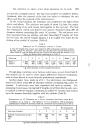
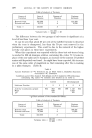
272 JOURNAL OF THE SOCIETY OF COSMETIC CHEMISTS THE SORPTION OF AMINO ACIDS FROM SHAMPOOS ON TO HAIR j. K. HERD, B.Sc., and R. H. MARRIOTT, D.Sc., F.R.I.C.* Methionine anal tyrosine have been shown to be sotbell on to hair from a shampoo solution containing these amino acids. The amino acids so sotbell can be •le-sorbe•l l•rogressively by washing with a shampoo containing no amino acid. The amount of amino acid remaining on the hair depends on the amount originally present on the hair and on the concentration of the amino acid in the shampoo. A radiochemical technique was employed. A•iNO ACIDS in the free state, and bound as polypeptides, have been shown to be present in the skin •,•,•,•,5,6,7, in sweat 8,9, and on the hair•. Their presence seems to be independent of the amount present in the blood, the latter varying with dietary intake and needs '. The specific function of these compounds in these surroundings is not known, though many have considered them to be by-products of cell metabolism. FleschT, however, considered that they were of importance in the water- binding capacity of the skin with particular weight on the water-soluble polypeptides. Removal, from the hair and scalp, of some of the water soluble materials in the form of amino acids and peptides in the process of shampooing the hair, might lead to a temporary deleterious state. With this in mind an investigation was carried out to study the removal of amino acids from human hair by shampoo solutions and the sorption by the hair from shampoo solutions containing amino acids and peptides. A radio- chemical technique was used, this offering the most direct approach to the problem. In the first place it was necessary to.deposit labelled amino acids on to hair and this was done by washing the hair, in a standard manner, in a shampoo solution containing methionine labelled with -'*S. Counts taken on the surface of the hair with a hand monitor, incorporating an MX 108 Geiger Muller tube, showed a significant difference from the background count. Extraction of the hair with hydrochloric acid reduced the counting rate to background level. Further preliminary experiments were carried out, in which labelled methionine was deposited on a tress of hair in the manner described above. A control sub-tress was removed and the remainder of the tress re-washed in a shampoo solution containing no added amino acid. The labelled methionine was removed from the hair tresses by * County Laboratories, Ltd., Stanmore, Middx.

THE SORPTION OF AMINO ACIDS FROM SHAMPOOS ON TO HAIR 273 extraction with 6N HC1 and repeated extraction with water. Up to 70 per cent of the deposited amino acid was found to be removed by the shampoo. An increase in the amount of amino acid in the shampoo led to an increase in the amount sorbed by the hair. Experiments of the same type using •4C tyrosine gave similar results but indicated that slight variations in the washing and rinsing techniques resulted in large variations in the absolute amount of the amino acid sorbed, thereby necessitating the use of internal controls. The human hair used in the experiments, having been washed in a mild soapless shampoo, was specially selected and blended in order to lessen hair variation between experiments. In the washing procedure used, a 12 g tress of hair was pre-wetted in 200 ml tap water at 35 ø C and washed in 200 ml of a standard shampoo solution, based on commercial lauryl sulphate at 35 ø C for 3 minutes, by continual total immersion followed by pulling between the forefinger and thumb to squeeze out excess solution. Rinsing was carried out three times in 200 ml tap water at 35 ø C for 1 minute each time, in the same manner as in the washing. In this process, about 11 ml of solution was carried over from each of the rinses, in a 12 g tress of hair, as calculated from the activity of the rinsing solutions. The activity of the final rinse was negligibly small compared with the activity remaining on the hair. After rinsing, the hair was blotted to remove excess water leaving about 5 ml water in a 12 g tress of hair, after which the hair was allowed to dry at room temperature. In the elution procedure, a weighed sample of hair (approx. 1 g) was gently stirred with 20 ml conc. HC1 for 15 minutes, the acid eluate trans- ferred by pipette into a Craig rotary evaporator and evaporated to dryness under reduced pressure at about 40 ø C. The extraction of the hair was' con- tinued with alternate 20 mi. portions of 6N HC1 and conc. HC1, each extract being combined and evaporated in the same flask. The use of alternate portions of conc. HC1 was found useful in that the hair was more limp and more easily handled than if 6N HC1 was used throughout. It was found in later experiments with tyrosine that 10 such extractions were necessary, so that in practice 12 extractions were given, followed by 4 more, these being evaporated separately in another flask. This latter could then be checked to ensure complete elution of the labelled amino acid. HC1 was removed from the extract by repeated evaporation with water, the dry residue taken up in 1.5 ml hot distilled water and transferred by pipette to a weighed counting planchet where the solution was dried by an infra-red lamp. The transfer was made quantitative by performing three such operations, rinsing the flask thoroughly in the process. The dried material was weighed and counted in a Labgear perspex castle, 0.15" from the window of a Mullard MX 123 Geiger Muller tube, operating at 700 volts. The material
Purchased for the exclusive use of nofirst nolast (unknown)
From: SCC Media Library & Resource Center (library.scconline.org)