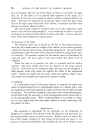
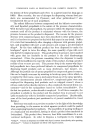
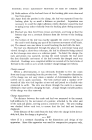
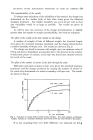
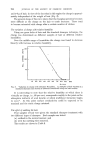
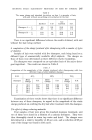
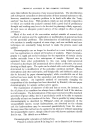
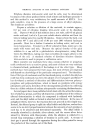
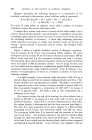
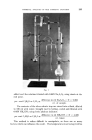
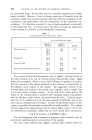
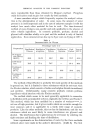
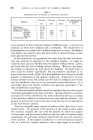
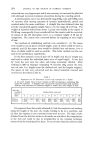
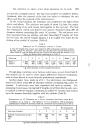
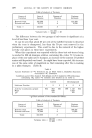
276 JOURNAL OF THE SOCIETY OF COSMETIC CHEMISTS Table of Analysis of Variance Source of Sum of Degrees of Variance Variation Squares Freedom Estimate Between tress 121,268 1 121,268 Between sub-tress 12,113 4 3,028 Total :-- 133,381 5 Variance ratio -- 121,268 _ 40 3,028 The difference between the two groups of sub-tresses is significant at a level of less than 1 per cent. It can be seen that about 37 per cent of the labelled tyrosine is desorbed when the tress is shampooed, less than the 70 per cent removed in the preliminary experiments. This could be due to the removal of the higher activity end pieces in these later experiments. When this experiment was repeated with the three test sub-tresses being re-washed in 100 ml shampoo solution containing 16• curies •C tyrosine in place of the non-radio-active shampoo, an increase in the amount of labelled amino acid deposited was found. As might have been expected, this increase was of the same order of magnitude as that remaining after the re-washing in a plain shampoo. (Table •l). Table 4 ADDED 8ORPTION OF •4C TYROSINE ON TO HAIR FROM A SHAMPOO SOLUTION CONTAINING 14C TYROSINE Conditions as in Tables 2 and 3. Sub-tresses 4 to 6 re-washed in 100 ml shampoo containing 16/• curies •4C tyrosine and treated as in Table 3. Control Re-shampooed Sub-tress Number 1 2 3 4 5 6 Activity (counts/min./g hair) 652 803 581 976 1,145 955 Mean 679 1,025 •-* 113 105 * c• Best estimate of the standard deviation. Table of Analysis of Variance Source of Sum of Degrees of Variance Variation Squares Freedom Estimate Between tress 180,267 1 180,267 Between sub-tress 47,409 4 11,852 Total: 227,676 5 Variance ratio -- 180,267 _ 15.2 11,852

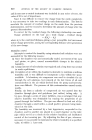
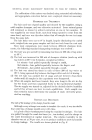
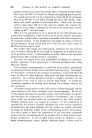
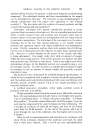
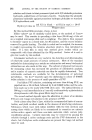
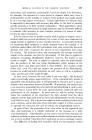
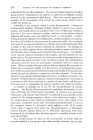
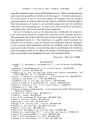
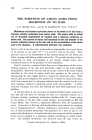
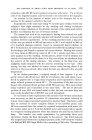
THE SORPTION OF AMINO ACIDS FROM SHAMPOOS ON TO HAIR 277 The difference between the two groups of sub-tresses is significant at a level of just above 1 per cent. CONCLUSIONS These results show that amino acids, and presumably peptides, can be deposited on hair from a shampoo solution. The same shampoo solution will also remove some of the previously deposited amino acid from the hair. The amount remaining on the hair after shampooing will thus depend on the amount present on the hair initially and the concentration of the amino acid in the shampoo. It is reasonable to presume that similar results would be obtained in the case of the keratinous epidermis and that some amino acids would be left on the scalp after washing the hair with a shampoo containing amino acids, though this has not been attempted experimentally for obvious reasons. [Received: 16th May 1958.• REFERENCES Leonhardi, G., et al. Hoppe-Seyler's Z. physiol. Chem., 292 (1953) 89. Van I-Ieusden, P. L. Ned. Tijdschr. Geneesk., 97 (1953) 3145. Spier, I-I. W., and Pascher, G. tflin. Wochschr., 31 (1953) 997. BollingeL A., and Gross, R..4ustralian J. $ci., 16 (1954) 190. Paschoud, J. 3I., and Schmidli, B. Dermatologica, 110 (3/5, 1955) 315. 31atoltsy, A. G., and Balsamo, C. A. J. Invest. Dermatol., 25 (2, 1956) 71. Flesch, P. Ibid, $1 (1, 1958) 63. I-Iier, W., et al../. Biol. Chem., 166 (1946) 327. Pankov, B.S. Vestnik Venerol. i Dermatol., 3 (1953) 18. THE JOURNAL Members will no doubt be pleased to learn that next year's volume of the Journal will consist of at least 8 issues. Three issues will be published in this country, five issues by our U.S. sister Society and possibly a ninth issue by the German Society. By increasing the frequency of pub- lication it is hoped to reduce the delay in publication of lectures, and other contributions. If it should be necessary to increase rates of subscription to non-members, due notice will be given when the renewal notices are sent. Members are also advised that henceforth the copyright of any paper, lecture, etc., which •is printed in the British edition of the Journal will be vested in the Society of Cosmetic Chemists of Great Britain.
Purchased for the exclusive use of nofirst nolast (unknown)
From: SCC Media Library & Resource Center (library.scconline.org)