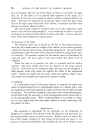
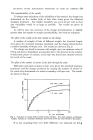
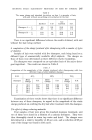
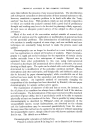
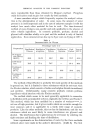
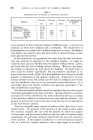
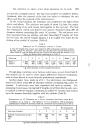
STUDYING STATIC ELECTRICITY PRODUCED ON HAIR BY COMBING •,43 The reproducibility of the results To obtain some indication of the reliability of the method, the charge was determined on five similar locks of hair after being given the identical shampoo treatment. The relative humidity was set at 40 per cent so that any variability would be as large as possible. The results are given in Table 1. As will be seen, the accuracy of the charge determinations is slightly greater than the sample to sample reproducibility, but both are adequate. The effect of the weight of the hair sample on the charge A number of samples of hair of different weights but identical length were given the standard shampoo treatment and the charge determined at a relative humidity of 40 per cent. The results are shown in Fig. 3. The charge was found to increase with weight, up to an optimum value of 0'75 g and then it diminished, presumably due to the decrease in the number of hair/comb points of contact, as the hair was forced into strands between the teeth of the comb. The effect of the number of strokes of the hair through the comb Half gram and gram samples of hair were given the standard shampoo treatment, and the charges produced by varying the number of strokes of the comb were determined at a relative humidity of 40 per cent. The resultq are shown in Fig. 4. 0'5 GM. HAIR n- 20 - U I0 i I I 5 IO 15 20 No, OF STROKES '!?ig. 4. Variation in charge with number of hair strokes. Two hair samples of different weight, washed in a standard shampoo and tested at 40 per cent Relative Humidity. It is not surprising that very little difference was obtained for 0.5 g

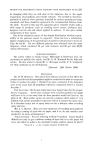
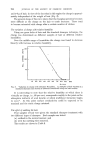
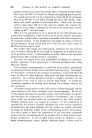
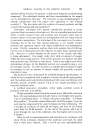
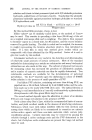
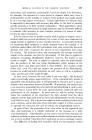
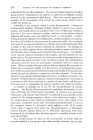
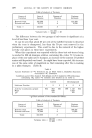
244 JOURNAL OF THE SOCIETY OF COSMETIC CHEMISTS and 1'0 g of hair, in view of the fact that in this region the charge is approxi- mately independent of the weight of hair (Fig. 8). The general shape of the curve shows that the charging operation becomes more difficult as the charge on the hair or comb increases. These tend to become saturated with charge after a certain number of strokes. The variation of charge with relative humidity Using one gram locks of hair and the standard shampoo technique, the charge was determined on different samples of hair at different relative humidities. Over the middle range of humidities the charge was found to decrease linearly with increase in relative humidity. u,) 30 20 i I I0 20 ß ß 30 40 50 60 70 BO 90 O0 % R.H. Fig. 5. Variation in charge with Relative Humidity. 1 g samples of hair washed in a standard shampoo and tested at different humidities using ten hair strokes. It is interesting to note that the relative humidity at which there is virtually no charge, i.e., 85 per cent, corresponds roughly to the point on the adsorption isotherm of wool keratin at which multilayer formation begins to occur 6. At this point surface conductivity could be expected to be maximal and the static charge minimal. The effect of earthing the hair Four samples of hair were given the standard shampoo treatment with two different types of shampoo. Each sample was tested (a) earthed in the normal manner, and (b) with the earthing wire removed. The results are shown in Table 8.
Purchased for the exclusive use of nofirst nolast (unknown)
From: SCC Media Library & Resource Center (library.scconline.org)