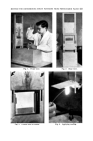
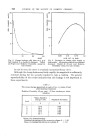
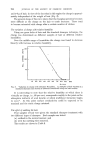
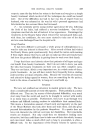
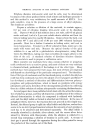
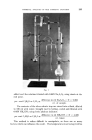
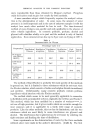
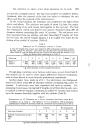
STUDYING STATIC ELECTRICITY PRODUCED ON HAIR BY COMBING 241 The calibration of the meters was checked using saturated salt solutions, and appropriate correction factors were employed wherever necessary. }V[ATERIALS AND TREATMENT The hair used was of good quality and cleaned by the suppliers, using a mild soapless shampoo, and was otherwise untreated. Some natural grease still remained, as shown by solvent extraction on one or two samples. It was supplied in one-ounce locks, each lock being reputed to come from the same head, and care was therefore taken that all samples for one test came from the same lock. The hair locks were cut to 8 '• in length, largely eliminating the curled ends, weighed into one gram samples and tied one inch from the root end. Since most comparisons were made between different shampoo treat- ments, the following standard shampooing technique was evolved: (a) The hair was pre-wetted by immersing ten times in 200 mls of tap water at 35 ø C. (b) The hair was immersed in 200 mls of shampoo solution (made up with tap water) at 35 ø C for 3 minutes, occupied as follows: l st minute--hair pulled repeatedly through a comb, 2nd minute-hair pulled repeatedly between the fingers, and 3rd minute--hair pulled repeatedly through a comb. (c) The hair was rinsed ten times in each of three 200 ml tap water at 35 ø C, being squeezed dry between the fingers after each lot of rinsing. (d) The wet hair was combed free of snags and put between clean linen cloths until all samples in the experiment were shampooed. (e) When all samples had been treated, they were hung in the air to dry for two hours and then suspended freely in the experimental chamber. The air supply was turned on, adjusted to the desired relative humidity and left for at least one hour to reach equilibrium. Each sample was then tested in turn to determine the amount of static electricity gener- ated on combing. RESULTS AND DISCUSSION The rate of the leakage of the charge from the comb Although every attempt was made to insulate the comb, it was inevitable that some loss of charge should occur with time. A 1 g lock of hair was shampooed using the standard technique. The hair was pulled through the comb ten times (i.e., ten strokes), and the charge on the comb determined at regular intervals. The relative humidity in the chamber was set at 70 per cent, so as to produce conditions most favourable to charge leakage. The results are shown plotted in Fig. 2.

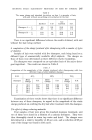
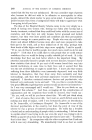
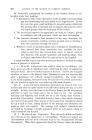
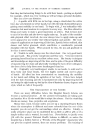
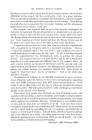
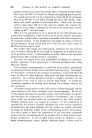
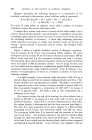
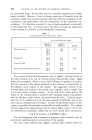
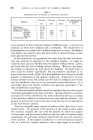
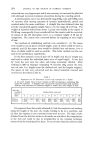
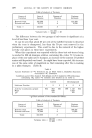
242 JOURNAL OF THE SOCIETY OF COSMETIC CHEMISTS 2O •,s IO IO 20 30 MINS Fig. 2. Charge leakage with time on 1 g of hair washed in a standard shampoo. Tested at 70 per cent Relative Humidity, using ten hair strokes. 25 20 15 IO - 5 - I I 0.25 0.5 0.75 I.O HAIR WT. IN GMS. Fig. 3. Variation in charge with weight of hair sample. All samples washed in a standard shampoo. Tested at 40 per cent Relative Humidity using ten hair strokes. As can be seen, the curve is a typical exponential decay curve. Although the charge leaks away fairly rapidly, its magnitude is sufficiently constant during the ten seconds required to take a reading. The general reproducibility of the results indicates that this leakage is not important in these experiments. Table 1 The mean charges generated on each of five 1 g locks of hair after identical treatment Relative Humidity 40 per cent ' 10 hair strokes per deter- mination *Mean Relative Charge Units Standard Deviation Lock A B 1 19.4 0.98 2 22.5 1.34 3 20.4 1.03 4 22.0 0.98 5 22.1 0.65 *Mean of 5 determinations Standard deviations of the means in column A 1.35 Mean of standard deviations in column B = 1.0
Purchased for the exclusive use of nofirst nolast (unknown)
From: SCC Media Library & Resource Center (library.scconline.org)