THE HOSPITAL BEAUTY SCHEME 247 of a cream or a lipstick which makes it desirable, it is the hidden signific- ance which it has for a woman which is really the important factor. That significance is not just a frivolous thing, it is something which has very far- reaching results. If people are going to have a little bit of their individuality annihilated by lack of sympathy then it presents a very difficult position. Indeed, it is that attitude which makes a tremendous number of women withdraw, get very little out of life and really suppress a part of their whole personality, 'often with long-term disastrous results. Unless they are extremely well balanced, mature people, they can think that this kind of happening proves them to be inadequate, different, unattractive, which lowers their morale, making them nervous and uncertain, or alternately, difficult or withdrawn. In point of fact, such feelings react just as badly on men's characters as on women's. One has only to think back historically to such people as Richard III with his hunchback, or Wilhelm I and his withered hand. These people, it is recognized to-day, would have been very different if they had not had some kind of physical defect to contend with. In another field, more recently, it has been shown that many of the youths who are admitted to Borstal institutions are people who suffer from some physical defect, either a hare lip, a limp, or a disfiguring scar. This has meant that they have always felt different, awkward and unwanted, and they say to themselves: "All right, if I am different, I will prove I am different." As a result their conduct becomes immensely anti-social and they grow either aggressive or resentful and so find their way to such places as Borstal, with a record of crime. The modern psychiatric approach to this is to do something positive about the defect. Quite often the defects can be removed either by surgery or some special kind of treatment, and the mere fact that outside people make an effort to help leads to a more responsive attitude. Statistics show that a much smaller proportion of boys are re-admitted to Borstal than previ- ously with this kind of defect, if they are treated. I think that 33 per cent of the youngsters with these difficulties who have been treated do not come back again, which is a very significant trend. It seems that defects on the nose have a very much more marked and disastrous effect on person- ality than any other type, and when these deformities are corrected only one in eight of the boys is re-admitted. Against this forward thinking and creative approach, reports of two deplorable cases of suicide have appeared in the newspapers just recently. One was a 15 year old schoolboy who gassed himself because he was terribly depressed with his pimply face, and following about five weeks after that, there was a girl who did likewise. They were both suffering from the very usual type of acne condition with which we are all familiar. You might say that these two youngsters were unbalanced anyway, but the Coroner clearly

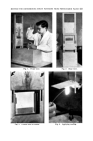
248 JOURNAL OF THE SOCIETY OF COSMETIC CHEMISTS stated that the boy was not unbalanced. He was a sensitive type of person who, because he did not wish to be offensive or unacceptable to other people, allowed the whole matter to prey on his mind. I mention all these points because they form a background which will help to appreciate what I am going to tell you later. The idea of the Hospital Beauty Scheme came to me very simply as a result of having seen women who, leaving our Salon after having had a beauty treatment, realized that they could look better with the correct use of cosmetics, and that they not only became better groomed and looked smarter, but they were more poised and confident and their personalities seemed to emerge in a more positive way. People who were shy and with- drawn and almost diffident became more alive and more prepared to take their part in the world, and as they walked out of the shop, perhaps with their heads a little higher and their steps more sprightly, I said to myself: "If we can do this for healthy people, how much more could we do for sick people ?" I felt that if we could show to sick people that we could restore confidence then we would be doing a really valuable job of work. It is the knowledge that they can look better which is the important thing. My attention naturally turned to people with nervous diseases, because I knew from statistics that about 14 per cent of all women found their way into mental institutions at some time in their lives and it seemed that this was the sort of field that we ought to tackle first. I knew also that women suffering from these difficulties were immensely depressed, took very little interest in themselves, that they drew away from normality and their surroundings, and that their personal appearance became tremendously neglected. I therefore contacted matrons, doctors and psychiatrists, who listened very courteously to me and said: "Oh, yes, this is a wonderful idea. Our great difficulty is getting these persons to take an interest in themselves." So I was very encouraged and I would say: "How do you think we can implement this scheme ?" And then, envisaging all the complications of organization and the scepticism that would be aroused, they would say: "Ah, yes, well, we will let you know about this. We will just think about it." And, of course, they never did. So it went on, and I did not seem to be making any kind of impact, until I was fortunately given an introduction to Dr. Somerville, of Goodmayes Hospital. Dr. Somerville is one of the foremost psychiatrists in the country, but from the point of view of the scheme he was a person of immense perception. He really has a breadth of mind and an understanding of people which is outstanding. I did not have to explain what I was trying to do, nor even the way I was trying to do it. Within a quarter of an hour of my having met him he just said: "Excellent, that is first class." By comparison with the other receptions that I had met with it was very stimulating. We immediately tried to see how we could
Purchased for the exclusive use of nofirst nolast (unknown)
From: SCC Media Library & Resource Center (library.scconline.org)