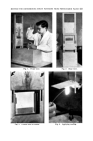
THE HOSPITAL BEAUTY SCHEME 257 the nurses, as I have said, is given free by our Company, so the•e are no money difficulties in this respect, but the second point--time--is a great problem. First, to get full co-ordination of hospital superintendents, matrons, hospital secretaries, so that they give full co-operation to the scheme. Then finding the staff who can be spared for the two weeks' training, and the subsequent maintenance of the service, is not easy. For example, one hospital that we go to has recently established an elaborate Occupational Therapy Department at considerable cost and yet is unable to keep it open all the week because they cannot afford the staff. The Beauty Room therefore has to take its turn on the list of hospital priori- ties. Some hospitals are better placed and keep the Beauty .Room open all the time, but in most cases one or two days a week is the maximum. I ought to tell you that not every time that we enter into negotiations with a hospital do we bring the plan to a successful conclusion. There is a maternity hospital where I was very keen to get established because it would have given a fresh scope for this work. It was a teaching hospital and the superintendent was tremendously keen on getting the scheme started. The hospital served a very poor district and he felt it would give stimulus at a very important and difficult time in the women's lives. In spite of great interest on the part of the doctors and the matron, and even approval from the Finance Committee, the Management Committee did not pursue the scheme because two members claimed that "girls should be taught to wash their faces, not to use lipstick!" And so the whole plan had to be dropped. Nevertheless, in addition to the 500-600 treatments we gave at Good- mayes Hospital, under the Scheme we have been instrumental in organizing more than 6,000 treatments since July 1957, and we intend to go on. Great credit is due to Miss Jeffree for the way in which she handled the pioneer work in this field. Her skill and sympathetic understanding has contributed greatly to the success of the Scheme. There have been people who criticized the idea of linking beauty and cosmetics with anything so drab as hospitals, particularly mental hospitals. They say that this is a bad thing because cosmetics are glamorous, chic things which ought not to be linked in this way. I think that is a very shallow point of view and one that I do not subscribe to at all. I am sure that women everywhere benefit by the use of cosmetics and I think that we as an industry can do a great deal by spreading the use of cosmetics, and indirectly of beauty, to every type of woman. I do not think, therefore, that it is damag- ing to the industry as a whole, but rather that we may have been instru- mental in opening up new avenues from which we can all benefit. Our work in this field has certainly been most rewarding. [Received ß 24th February 1959_•

258 JOURNAL OF THE SOCIETY OF COSMETIC CHEMISTS CHEMICAL ANALYSIS IN THE COSMETIC INDUSTRY S. J. BUSH, F.R.I.C.* Based on a lecture delivered before the Society on 14th November 1988 The problems and functions oi the non-routine analyst in the cosmetic industry are briefly discussed and some of the methods at his disposal are indicated with examples. TRE DICTIONARY defines analysis as "a resolving or separating of a thing into its elements or components", a definition which is sound enough except that analysis in the technical sense often stops short of this ideal. It does, however, provide a starting point for a rough classification of analysis into two main divisions according to the purpose for which it is undertaken. The first kind of analysis fits squarely into our definition. The analyst does not know the composition of the sample and he sets out to resolve it into its components--rather like the small boy who takes the clock to pieces to see what makes it go. The second type of analysis is that in which the analyst knows what the composition of the sample should be and he is concerned only with checking the composition, wholly or in part. Here he behaves more like the little boy's father who takes the clock to pieces to make sure that all the parts are there. The second class of analysis, often referred to as "quality control", is, of course, of the utmost importance in the cosmetic or any other industry, but the main purpose of this paper is to deal with non-routine analysis and the examination of unknowns. The analysis of unknowns, whatever their source, involves all the usual techniques of analysis and often some unusual ones, the employment of thought processes of a somewhat specialized--one might almost say tortuous ---kind, and the ability to adapt and modi[y a plan as the analysis unfolds. It also involves a considerable amount of research into methods. Each sample is a problem in its own right and there is no hard and fast scheme or set of rules which can be followed and which will with certainty lead one to the identity of every ingredient. In the case of strictly competitive samples the analyst will have special- ized knowledge which will enable him to formulate a scheme which will bring to light, fairly rapidly, the most likely components and will at the * County Laboratories Ltd., Startmore, Middx.
Purchased for the exclusive use of nofirst nolast (unknown)
From: SCC Media Library & Resource Center (library.scconline.org)