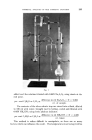
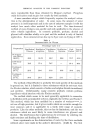
CHEMICAL ANALYSIS IN THE COSMETIC INDUSTRY 261 alcohols will be found to be present, n-dodecanol being the predominating compound. The individual alcohols and their concentration in the sample can be determined in this way. The literature on gas chromatography is already considerable and two papers have appeared in this Journal recently9,•0. The first deals with the analysis of aerosol products and the second with essential oils and synthetics •ø. Semi-micro techniques have gained considerable attention in recent years and they have many advantages over the corresponding macromethods. There is much saving in time and material, and processes which tend t•o become tedious on the macroscale are accomplished with ease when reduced to semi-micro proportions. The advantage of the semi-micro over the micro- technique lies in the fact that special apparatus is not usually needed, methods and apparatus require only slight modification and manipulation is easier. Strictly, semi-micro analysis deals with samples from 10-50 mg, but the term is frequently used with reference to rather larger amounts than this. However, it rather depends on the nature of the sample and what is being determined. One might easily start with an amount of sample within the macrorange and yet, when all the processes are finished, the final determination may still rank as semi-micro. Such a case might occur when determining nitrogen, by the Kieldahl method, on a sample having a very low nitrogen content. In order to achieve a suitable final titration it might be necessary to use an amount of sample outside the generally accepted semi-micro range. The hydroxyl value, determined by a British Standard Specification TM, in which the fat is acetylated with a mixture of acetic anhydride and pyridine, and the residual acetic anhydride is hydrolysed with water and titrated with alcoholic potash, normally requires 1-2 g of the sample according to the expected hydroxyl value. A modified semi-micro procedure, which yields excellent results if practised with care, is as follows ß Weigh accurately about 0.2 g of the sample into a 100 ml flat-bottomed flask, with a ground glass joint and add, from a 1 ml straight-tube pipette, 1 ml of acetylating agent. (1 volume AR acetic anhydride ß 4 volumes AR pyridine.) To another similar flask add 1 ml of the reagent, from the same pipette, using exactly the same technique and time of draining. Fit a straight air condenser of about 20 cm length, and heat on the boiling water bath for 45-60 minutes. At the end of this period, add 5 ml of water through the top of the condenser, mix thoroughly and re-heat for 5 minutes. Allow to cool to room temperature and wash down the condenser with about 20 ml n-butanol, disconnect the condenser and wash the joint with a little more butanol. Add 1 ml 0.1 per cent phenolphthalein

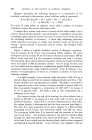
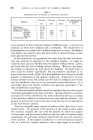
262 JOURNAL OF THE SOCIETY OF COSMETIC CHEMISTS solution and titrate to faint permanent pink with N/2 alcoholic potassium hydroxide, added from a 10 ml micro-burette. Standardize the alcoholic potassium hydroxide against potassium hydrogen phthalate or standard N/2 hydrochloric acid. Hydroxyl value _---- (ml N/2 in blank -- ml N/2 in expt.) x 28 05 Weight taken By this method little precision, if any, is lost. Iodine values •2 can be similarly scaled down, or the method of Toms •8 may be used. This consists in spreading a thin layer (20-40 mg) of the oil on a weighed microscope slide and re-weighing. The slide is then exposed to bromine vapour in a closed tube, for 30 minutes, and the excess bromine removed by gentle heating. The slide is cooled and re-weighed, the increase in weight representing the bromine absorbed, which is then calculated to iodine. If a thin film is used, this method gives results which are comparable with those obtained by the Wijs method. Castor oil is said to give low results by this method. Colorimetric.'methods are very useful in the detection and determination of relatively small amounts of certain substances. Most of the standard methods for determining trace metals are colorimetric and many biochemical estimations are also made in this way. The advent of physical instruments for measuring colour has increased the precision of colorimetric analysis, and a number of cosmetic materials can thus be rapidly determined. Two colorimetric methods are available for the determination of polyvinyl pyrrolidone. The first •4 depends upon the darkening in colour of 0.006N iodine solution in the presence of small quantities of PVP. 5 ml dilute PVP solution, containing not more than 0.8 mg PVP, are pipetted into a 25 ml flask, followed by 5 ml 0.006N iodine and the solu- tion made up to the mark with 0.4M citric acid. The optical density at 500 mt• is read immediately in a 1 cm cell, or alternatively a photoelectric absorptiometer with blue-green filters may be used. The second method depends upon the alteration in colour of an alkaline 0.01 per cent Congo red solution in the presence of PVP. Both colours obey Beer's Law, within the recommended limits of concen- tration, and yield excellent results in the absence of interfering substances. Substances which react with iodine interfere with the first method, and among those which are likely to be encountered in cosmetics are cationic surface-active agents and those non-ionic materials which contain poly- oxyalkylene groups. Cationic materials may be removed by passing the solution through a cation exchange resin and the PVP determined in the eluate, but if ethylene oxide condensates are present the Congo red method must be used.
Purchased for the exclusive use of nofirst nolast (unknown)
From: SCC Media Library & Resource Center (library.scconline.org)