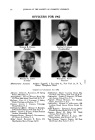
xiv JOURNAL OF THE SOCIETY OF COSMETIC CHEMISTS OFFICERS FOR 1962 •..• .... '.-'•.,.• .... 5½½' .., ,. WARREn B. Dr.•xs President . -,.• ß .'• L'' c':'L •.: -..:} "• ....... '•] =•.:- %.. .. :: .%½,. --•v .}• •, :• -- ß • .: -.:•.. RICHARD K. LEH•E Secretary RICHARD E. FAUST Treasurer Administrative Assistant: Anthony Zegarelli, 2 East 63rd St., New York 21, N.Y., Phone: TEmpleton 2-8665 COMMITTEE CHAIRMEN FOR 1962 Advisory: SOPHIE L. PLECHNER) 48 Spring Street, Metuchen, N.J. Arrangements: WALTER W¾SNE, Room 700, 321 West 44th Street, New York 36, N.Y. By-Laws: PAUL G.I. LAVVrER, 9 Ashley Road, Hastings-on-Hud•n, N.Y. Finance: LESTER I. CONRAD, Talmadge Road, Edison, N.J. International Affairs: ROBERT A. KRAMER, 250 East 43rd Street, New York 19, N.Y. Library: FR•NIC J. STEELE, 50 East Putnum Avenue, Greenwich, Conn. Literature Review: ROBERT L. GOLDEMBoeRO) 697 Route 46, Clifton, N.J. Medal Award: RAYMOND E. REED, 456 Merchandise Mart, Chicago 54, Ill. Membership: HARRY ISACOFF, Room 601, 521 West 57th Street, New York 19, N.Y. Nomination: SABBAT J. STRIANSE, 707 Sum- mit Avenue, Union City, N.J. Program: HYMAN HENICIN, 105 Hudson Street, Jersey City 2, N.J. Publications: MAISON G. DENAvARR•, 404 Lothrop Road, Grosse Pointe Farms 36, Mich. Public Relations: EDWARD L. SIL•CIN, 204-15 Foothill Avenue, Hollis 23, L. I., N.Y. Seminar: BARRY M. DASH, 685 Third Avenue, New York 17, N.Y. Special Award: HERMAN E. JAss, 2417 Third Avenue, New York 51, N.Y. Tour Director: SAMUEL COHEN, 160 East 48th Street, New York 17, N.Y.

PROTECTIVE LACQUER SYSTEMS i½0R ALUMINIUM CONTAINERS to hydroxyl groups 2e -+- O -+- H•O----•2(OH)- may, in the case of standard test pieces, mean very little. However, in the case of a container where the wall thickness rarely exceeds .015", and can be as low as .005", pitting may be synonymous with perforation. Even where this does not occur and the corrosion proceeds sluggishly, the cathodic areas become rich in OH groups, corresponding in certain cases to the formation of free alkali, until such time• as the product immediate to the cathode is alkaline enough to attack the metal directly, with rapid hydrogen evolution. These points should be borne in mind when consulting the literature concerning corrosion and corrosion resistance of aluminium, which is nearly always concerned with data derived from test pieces of solid metal. A vast range of products packed in aluminJure are "borderline" cases, and very minor changes in either pack or product can and do give rise to failures by corrosion. There are many examples where a product in unprotected aluminium has satisfied stringent packaging and test market trials, but which, in full scale distribution, give a percentage of failures by corrosion. The causes of this are difficult to detect, because examination very often shows that both the pack and the product are, on the face of it, unchanged. Minor changes have, however, taken place and as these are very often physical rather than chemical, it is not surprising that they are overlooked. Amongst the very many minor factors which can trigger off corrosion in the "borderline" products are changes associated with the surface of, and the oxide film present on, the aluminium container. For it is in fact this oxide film which mainly gives aluminium its corrosion resistance. The type and condition of the oxide film depend on the heat-treatment history of the container, and also to some extent on the period which the container has been standing empty. It follows, therefore, that changes in the heat-treat- ment--which are not readily detectable--profoundly affect the subsequent corrosion resistance. Again, maximum corrosion resistance presupposes minimum mechanical damage to the oxide film and the actual metal surface. Thus a deeply scratched container will corrode whereas a container identical in other respects will not corrode. Cases are known where deep scratch marks have given rise to failure of containers by corrosion. It is easy to demonstrate experimentally that scratched areas are anodic to surrounding smooth areas of metal. Both the points mentioned, which are two examples only, of a number of minor factors affecting the serviceability of a tube or can, have very direct practical significance. Nowadays, in the field of tube and can making, as in many industries, there is a big changeover to automatic or semi-automatic line production, which has meant that drastic reductions of processing times for every stage of manufacture have been made. In the tube industry, annealing times have been cut down from periods of 10 minutes to times of the order of 70 to
Purchased for the exclusive use of nofirst nolast (unknown)
From: SCC Media Library & Resource Center (library.scconline.org)