JOURNAL OF THE SOCIETY Oi•' COSMETIC (2HEMISTS .80 seconds, with consequent temperature variations, whilst the tubes them- selves are handled more violently from the mechanical point of view, i.e., speed of feeding on to and withdrawal from processing spindles, with a resultant increase in inner surface roughness. From this it can be seen that these minor factors are capable of ruining an otherwise satisfactory packaging line, and often internal lacquering is resorted to--the so-called "standard" internal lacquering of can and tubes--in order to cancel out these variables. Very many products, •vhich in the main would perform satisfactorily in unprotected metal if optimum conditions were satisfied, are packed in lacquered containers as a precaution only, but it is precisely this that has, from time to time, given the standard lacquered lines an evil name. Many instances have been experienced •vhere a customer has assumed that standard lacquering is a maximum protective system, and that products are marketed satisfactorily in this type of pack--which they are--and has then made the further assumption that his o•vn particular product, which is in fact quite corrosive to aluminium, would be satisfactory in a similar container, with disastrous results. Standard lacquered containers are not intended for such applications, and it may be of interest to know that until recently, it was standard practice in a number of continental factories to lacquer all aluminium tube pro- duction, not for the protection afforded, but because it is almost impossible to feed dry annealed aluminium on to steel printing or enamelling spindles, whereas lacquered aluminium is satisfactory in this respect. The protective lacquers in use today are invariably based on one of the following types of resins, these having largely superseded the older phenolic resins which were used extensively in the container field. TYPES OF LACQUER 1. Epoxy resin based, i.e. Epikote or Araldite resins cured by amines, phenols, etc. 2. Epoxy esters--esters produced by reacting epoxy resins with drying and non-drying oil fatty acids. 3. Vinyls--polymers or co-polymers based on vinyl chloride, e.g., vinyl chloride/vinyl acetate, vinyl chloride/vinyl acetate/vinyl alcohol, vinylidene chloride/vinyl chloride, etc. Lacquers based on (1) and (2) are generally referred to as high stoving lacquers, and the others as low stoving. All of these have excellent chemical resistance, mechanical flexibility and adhesion. Providing the inherent

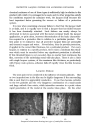
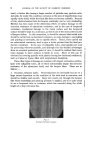
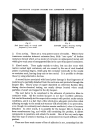
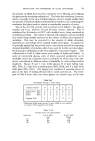
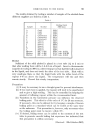
PROTECTIVE LACQUER SYSTEMS FOR ALUMINIUM CONTAINERS chemical resistance of one of these types is sufficiently high in relation to the product with which it is envisaged to be used, and its other properties satisfy the conditions required for container work, the lacquer itself becomes the least important factor governing the success or failure of a protective system. It is rare when examining a lacquer failure to find that the lacquer itself is at fault, and it is equally rare to find a lacquer that has failed because it has been chemically attacked. Such failures can nearly always be attributed to factors associated with the metal container itself, the lacquer application, or quite often, incorrect determination of the basic characteris- tics required in a protective film in relation to a particular product. The first point to be realised is that all protective lacquer films are permeable and transmit oxygen and water. Nevertheless, they do provide protection, if applied in the correct film thickness, for a particular product. For every lacquer, in relation to a specific product, there exists a minimum film thick- ness which must be exceeded before any significant protection is afforded. If this threshold figure is not exceeded, then no matter how continuous the film, corrosion of the underlying metal will take place. There is also a limit with single lacquer systems, of the maximum film thickness, as particularly with Epoxy resin systems, adhesion falls off rapidly when the film becomes thick. LACQUER DAMAGE The next point to be considered is the influence of minute pinholes. One or two imperfections in the film can be highly dangerous if the surrounding film is such that it is appreciably conductive. It can then become cathodic to the few pinholes and the very dangerous combination of a small anode and large cathode then exists, which intensifies corrosion to a point where rapid penetration of the metal at the anodes takes place. On the other Fig. 1. ½) (6) Lacquered aluminJure showing two types of underfilm corrosion.
Purchased for the exclusive use of nofirst nolast (unknown)
From: SCC Media Library & Resource Center (library.scconline.org)