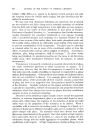
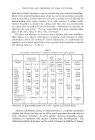
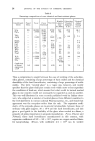
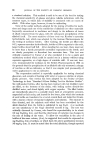
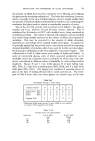
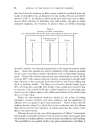
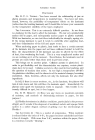
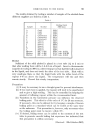
PRODUCTION AND PROPERTIES OF GLASS CONTAINERS 21 little lime is added, the glass is easy to melt but has poor chemical durability. Much of the Ancient Egyptian glass which has survived, probably represents their best product, yet their best was of so poor a quality as to be rejected by discriminating users today, because of its high content of sodium oxide. Greater durability is obtained by adding more lime, but too much results in a glass hard to melt and sure to devitrify. Increasing the quantity of silica has the same effect. The best composition for a pure soda-lime-silica glass is 73--74% Si02, 7--13% CaO, rest Na20. The glass manufacturer is, however, never dealing with pure soda-lime- silica glasses, but always with glasses containing small amounts of other constituents, which are introduced either deliberately, or accidentally by impurities in the batch ingredients or by corrosion of the refractories used in the melting furnaces. (Table 1.) Table 1 Percentage compositions of typical container and other glasses Soft Colourless Soda High Containers Constituent Window Tubing Press. Electric Thermometer Oxides Glass and Mercury Lamp Stem British U.S.A. U.S.A. Electric Vapour Tubing Tubing* Bulbs Lamp __ SiO2 73-400 72-10 71-82 70.12 54-25 56.60 55-700 13aOa -- 0.20 -- 0.78 7.50 0.20 -- T10• 0.040 -- -- } '( 22.00 • 0-80 0.030 AI20 a 0.750 1.90 1.40 2-58 f 0.220 FeaO a 0.045 0-05 0.07 -- 0'05 0.016 MnO ....... CaO 8.900 '( 10.40 8-90 5-40 13.25 -- 0-150 MgO 0-100 f 3-31 3.60 -- -- -- t3aO -- 0.30 -- -- 3-00 -- -- PbO ..... 30-20 31.400 Na•O 15.900 14-40 14.27 16-82 -- 5.10 0.100 1K•O 0.400 0-40 -- 0.35 -- 7'20 12.040 As•O• 0.010 ...... SO a -- 0-20 0.31 0.20 -- -- -- F• -- 0'20 ..... Coefficient of linear •---- probably 8-10 --• 9.60 4.60 9.10 probably expansion ca.9 x 10 • *This glass (or slight modifications of it) is the "English Lead Crystal Glass". Alumina (aluminium oxide), in small amounts, is a frequent constituent of glass and always has been, as one of the most important materials derived from refractory corrosion. It gives greater chemical durability, lower coefficient of expansion and greater freedom from devitrification. The deliberate addition of alumina was the result of research in 1887 by O. Schott,

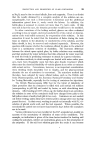
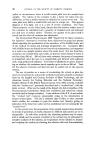
JOURNAL OF THE SOCIETY OF COSMETIC CHEMISTS who showed that the superiority of certain glasses, made in the Thuringian Forest, for table and blowpipe working, was caused by the presence of almost 4 % of alumina in the Martinsroda sand used, an d th at the addition of alumina to the usual glass batches greatly diminished the tendency towards devitri- fication of the resulting product. Too much alumina, however, increased the viscosity of the glass, making it difficult to melt and work. The high alumina content of some special glasses such as for fibres and discharge lamps (Table 1) greatly improves chemical and physical durability where ease of melting and appearance of the finished product are of secondary importance. The outstanding durability of natural glasses of igneous origin, referred to above, is largely the result of their being composed almost entirely of silica and alumina, obsidian usually being found to contain up to 20% of the latter. "Neutral" glass for ampoules, etc., occupies a position midway with respect to alumina contents, representing a compromise between conflicting require- merits. Another frequent constituent in commercial glasses, not so much in this country as in the U.S.A., is magnesium oxide. It can be substituted, with advantage, for lime provided the percentage is not too large. Its appear- ance in the American container glass in Table 1 is mainly on economic grounds, dolomitic limestone (approximate composition CaCOaMgCOa) of high purity frequently being easier to obtain than ordinary limestone, the normal source of lime in this country. As it usefully extends the glass working range and increases the durability and resistance to devitrification, magnesia frequently appears in "flat" glass (sheet and plate) and glass for tubing, etc. (Table 1.) The use of a small proportion of potassium oxide can be beneficial, but its appearance in container glasses is usually due to the use of potash felspar on economic grounds, in order to introduce alumina. Small amounts of barium oxide, boric oxide or fluorides are often added for various glass making purposes, e.g., controlling the rate of refining of the molten glass or altering the viscosity characteristics for manipulative purposes. These are comparatively expensive ingredients, however, and a large proportion of any one of them produces some unfavourable results. The composition of the glass used for all the great mass production industries is much the same. Window and p!ate glass is very similar to container glass with only minor modifications in the proportions of the major constituents to satisfy the requirements of the differing manufacturing processes. It follows then that the greatest volume of glass melted today is of the soda-lime-silica-magnesia type, but there are several other basically different groups, each of supreme importance in its own field of application. One such group which should be mentioned in passing is that based on lead oxide, usually in conjunction with potassium oxide. Container glasses, for
Purchased for the exclusive use of nofirst nolast (unknown)
From: SCC Media Library & Resource Center (library.scconline.org)