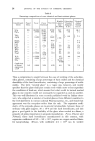
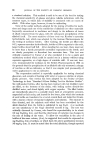
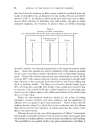
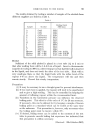
PRODUCTION AND PROPERTIES OF GLASS CONTAINERS 23 obvious reasons, rarely if ever contain lead except as a trace impurity, but Table I gives an example of the use of lead glass for electrical purposes and high quality table ware (English crystal cut glass). Glass for laboratory ware represents a type which must be especially resistant to decomposition by water and acids. The earlier types developed were, in general, improvements of existing bottle glasses, for example small amounts of boric oxide were added and magnesia and zinc oxide substituted for lime, ("Apparatus glass"). The improvement of glass melting tech- niques, leading to the easier attainment of the necessary high founding temperatures, led, however, to the appearance of the borosilicate glasses, of which the earliest was the well-known Pyrex range (1916). Pyrex, it must be noted, is not one glass alone but is a trade mark of the Corning Glass Works of U.S.A., covering a range of thermally, electrically or chemically resistant glasses. They are all fundamentally different from the usual soda-lime- silica composition, the type commonly used for chemical ware and cooking utensils having the typical analysis shown in Table 2. It can be considered as a glass, in which the melting point of the silica has been lowered by the addition of boric oxide and in smaller amounts, of alumina, with only the smallest possible amounts of alkali. It is intrinsically superior to the best glasses of the soda-lime group in its chemical durability and resistance to breakage from heat shock or mechanical strain, but is more difficult to manufacture and work. While Pyrex glasses occupy such an unassailed position in laboratory ware there are a number of other types available, both in this country and the U.S.A. These are characterised, however, by being generally more complex than Pyrex, with lower silica and boric oxide contents but higher alumina ("aluminosilicates" and "aluminoborosilicates"). Some of these are set out in Table 2, which also includes the composition of l•vcor, the product of an interesting new' technique in glass making, again due to Corning Glass Works. Glass chemical ware is moulded from an easily melted and worked glass of a special composition, such that on continued heating below its softening point, it splits up into two phases. The soluble phase is then leached out by the action of dilute acid, leaving behind a rigid but porous structure consisting almost entirely of silica. Reheating the article at 900-1,000øC results in the "skeleton" shrinking some 20% to gix'e a clear material approximating to fused silica, but which has been produced without the need for extremely high fusing and working temperatures. Ampoule glasses can be regarded as soft borosilicate glasses, the composi- tions shown in Table 2 containing less boric oxide and silica than Pyrex chemical ware but more alumina and alkali. In addition, the alkalis consist of part soda and part potash, which has a marked effect in increasing chemical durability, up to an optimum ratio of about 7:3 potash to soda by weight.

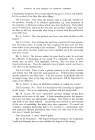
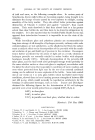
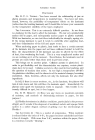
24 JOURNAL OF THE SOCIETY OF COSMETIC CHEMISTS Table 2 Percentage compositions of some chemical and heat resistant glasses Pyrex Kimble Colourless "NeutralAmber Constituent Fused Vycor Flamerex Labora- "Neutral" Oxide Silica Chemical tory Ampoule, Tubing No. N51A G.E.C. G.E.C. SiO2 100 96.300 80.70 57.52 74.7 67.0 64.1 ]3203 -- 2-900 12'00- 5-74 9.6 7'5 7.1 12.60 TiO• -- -- 0.05 -- • 3,. 8.5 } 7.1 AlcOa -- 0.400 2.20- 19.42 f 3-00 5.6 Fe2Oa -- -- 0.08 0.10 -- 4.1 MnO ...... 1.4 CoO -- -- -- 0.01 -- -- -- CaO -- -- 0.20 6.53 0-9 4.0 6.8 MgO -- -- -- 9.20 -- 0.3 0.1 BaO .... 2.2 -- -- ffnO .... 0.1 -- -- Na•O -- 0.020 3-90- 1.10 6.4 8.7 6.3 4.10 K20 I 0.020 I -- 0.5 4.0 3.0 A%O s -- 0.005 0.01 -- 0.03 I __ SO s SbaO a I I O'O09 Coefficient of linear 0-5 0-800 3.30 4.20 4.9 7.3 7.5 expansion x 106 Thus a compromise is sought between the ease of working of the soda-lime- silica glasses, containing a large percentage of basic oxides and the chemical durability of the hard borosilicates, containing a large percentage of acidic oxides. The term "neutral glass" is a vague one, however, and merely specifies that the glass shall pass certain tests which more or less reproduce the conditions of final use, which means that what would be termed neutral glass in one country would not necessarily be regarded as such in another. This was well illustrated in some recently published work by Italian obser- vers, who subjected a number of neutral glasses from different countries to the tests laid down in various national Pharmacopoeias, etc., and found that agreement was the exception rather than the rule. The expansion coeffi- cients of the ampoule glasses are in general intermediate between those of ordinary soda glass (approx. 10 x 10 -6) and the hard borosilicates, and this gives a good guide to the fusibility of the glass when worked in a flame, a property of prime importance in ampoule manufacture. Pyrex, Phoenix and Firrnasil, three hard borosilicates manufactured in this country, with expansion coefficients of 3.2 -- 3.3 x 10 -6, require an oxygen enriched flame for lampworking. Monax, with coefficient 4.4 x 10 -6 can be worked
Purchased for the exclusive use of nofirst nolast (unknown)
From: SCC Media Library & Resource Center (library.scconline.org)