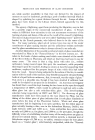
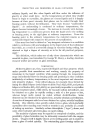
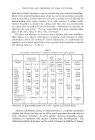
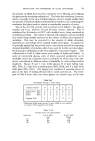
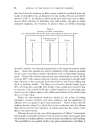
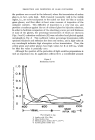
PRODUCTION AND PROPERTIES OF GLASS CONTAINERS 31 the amount of alkali that has been extracted, or by filtering and weighing the glass powder remaining undissolved. The latter has sometimes, however, shown, especially in the case of inferior glasses, a loss in weight smaller than the amount of dissolved alkali as determined by titration, thus confirming the conclusion that glass tends to absorb a considerable quantity of water. One of the A.S.T.M. powder tests is carried out as follows: The glass is crushed and 10 g, between 40 and 50 mesh screens, selected. This is autoclaved for 30 •ninutes at 121øC with distilled water, being contained in an Edenmeyer flask. The extract is titrated with sulphuric acid and methyl red, results being usually expressed as the volume of dilute acid required to neutrai/se. This may be converted to the amount of alkali extracted, expressed as a percentage of the original weight of the glass. It appears to be generally agreed that the powder test is a convenient method of comparing chemical durability of soda-I/me-silica types used for bottles and sheet glass, but it may give misleading results when applied to other types of glass. This is illustrated in Table $, which shows some results of Taylor and SmithL A series of commercial glasses, each of which appeared satisfactory as to .durability under the respective service conditions to which they were sub- jected, were placed in different orders of durability by each testing method employed. Glasses B and C were bottle glasses, D of lead tubing type (22% PbO), E a high lead containing glass (58% PbO), and F a high boric oxide glass (28ø,/0 B•O•). The fogging test consisted of exposing pieces of glass in the form of tubing alternatively to moist and dry air. The lower part of Table $ shows that even where glasses of a similar type, in this case Table 3 (a) x Durability Rating v Glass Type Powder Tests* B C D E F N/50 H•SO• 25øC 2 1 4 5 3 Water 25øC 5 2 3 1 4 Water 90øC 4 2 3 1 5 Fogging Test 5 1 4 3 2 *Sufficient 40/50 mesh powder to give 7,000 sq. cm. surface in contact with reagents for 4 hours. Table 3 (b) x Powder Tests on Lime Glasses Glass No. U.S.P. XIV U.S.P. XIV Acid Water 17 8.1 7.O 34 8.6 11.3 16 3.8 7.O

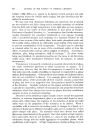
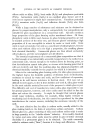
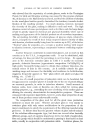
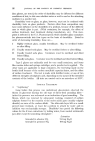
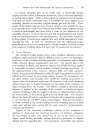
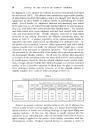
JOURNAL OF THE SOCIETY OF COSMETIC CHEMISTS lime glasses, are tested, the order of durability may be different for different conditions of test, in this case whether water or acid is used as the attacking medium in a powder test. I)urability tests on glass, as glass, however, must not be confused with durability tests on glass products. Factors other than composition may have some influence on the durability of a product, because of the different uses to which glass is put. (With containers, for example, the effect of surface treatment, heat treatment during manufacture, etc.) This view- point is reflected in the U.S. Pharmocopoeia which classifies glass containers for pharmaceuticals into four types on the basis of durability. Listed in order of decreasing durability, these are-- III Usually soda glass. I Highly resistant glass, usually borosilicate. May be sterilised before or after filling. IV Usually treated soda glass. May be sterilised before or after filling. II Usually treated soda glass. Containers must be sterilised and dried before filling. Container must be sterilised and dried before filling. Type I glasses are ordinarily used for very small containers, and items. like vaccine tubes and syringe cartridges, and a powder test is applied. The other types are applicable to large containers, the test being made on the bottle itself because of the surface area/fluid capacity factor, and the effect of surface treatment. The test is made with distilled water, or one of two. different strengths of sulphuric acid, depending on the nature of the intended contents of the bottles. All tests are carried out in an autoclave at 121øC.. SURFACE 1. "S,dphuring" Long before this process was understood, glassmakers observed the bloom on glassware leaving the old type of direct-fired annealing kilns-- indeed its presence was welcomed as an indication of good annealing. The bloom, which was removed by subsequent washing, consisted of sodium sulphate formed by the reaction of the moist acidic gases (mainly sulphur dioxide) on some of the surface alkali. The silica-rich layer left as a result proved more resistant, at least for a period, to attack by water and in addition was mechanically stronger. I)imbleby • has quoted the following values for the 5 hour extractions by boiling water, from washed widemoutl• jars alike except for annealing atmosphere: Extraction Annealed in absence SO• 2-9 mg Na•O Annealed in presence SO• 0-9 mg
Purchased for the exclusive use of nofirst nolast (unknown)
From: SCC Media Library & Resource Center (library.scconline.org)