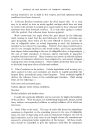
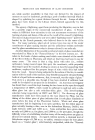
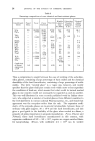
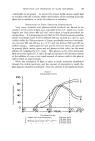
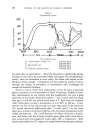
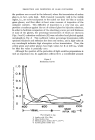
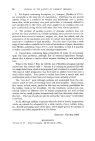
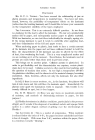
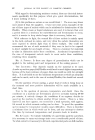
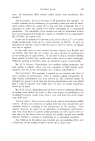
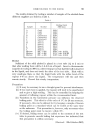
PRODUCTION AND PROPERTIES OF GLASS CONTAINERS 39 the positions are reversed in the infra-red, where the transmission of amber ,glass is, in fact, quite high. Both transmit reasonably well in the visible regior, i.e., are more transparent to the naked eye than the blue or actinic green glasses, and thus allow at least some measure of inspection of the container contents. This difficulty of inspection is a very real one, and provides a tendency against the use of coloured glass for injection solutions. In order to facilitate comparison of the absorbing powers per unit thickness {1 ram) of the glasses, the percentage transmission of which are shown in Figs. 1 and 2, extinction coefficients (K) were calculated and plotted. against wavelength in Fig. 8. This coefficient relates percentage transmission with specimen thickness and reflection loss from one surface, and a high value at ,any wavelength indicates high absorption or low transmission. Thus, the actinic green and amber glasses have high values for K at 400 m•, whilst for blue the value is practially zero. Although the question of the protection of light sensitive preparations is such an important one, its application still involves a considerable amount Figure $ Extinction Curves 4 Wavelength in m• 1. Amber vial (Fe--Mn) 2. Blue Bottle (Co) 3. Medium green bottle (Fe++--Fe +++) 4. Actinic green bottle (Cr) 400 600 800 I000 L, VISUAL ,i, NEAR r, • INFRA RED •

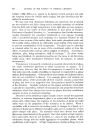
40 JOURNAL OF THE SOCIETY OF COSMETIC CHEMISTS of trial and error, as the following examples show. In various parts of Scandinavia, brown milk bottles are becoming popular, being brought in to el/minate the change of taste caused by over-exposure to sunlight, causing rancidity of the fatty matter. They also afford better protection against destruction of Vitamin C content and against "suntaste", than waxed cartons. Their main drawback is that they absorb heat to a far greater extent than clear bottles do, and thus have to be stored in refrigerators by the retailers. It is also reported that the Swedish Public Health Service has opposed their introduction because it is impossible to see the state of the contents. While borosilicate glass and polythene plastics are recommended for long term storage of all strengths of hydrogen peroxide, ordinary white soda container glasses are not satisfactory, as the alkalis leached from the surface exert a catalytic effect on the decomposition of the peroxide with the result- ant evolution of gas, and build up of pressure in the container. Decomposi- tion is further accelerated by the action of light and as a result, solutions of hydrogen peroxide are normally retailed in amber bottles with adequate headspace (usually 100%). Although decomposition of the peroxide still takes place, and the final result after prolonged storage would probably be the same whether amber or clear soda glass is employed, nevertheless with the latter the short term effect especially in conditions of warm weather, and even where protected from light rays by the use of an external cardboard casing, can be sufficient to cause explosion of the bottle. Some tests carried out at our works on 1 oz soda glass bottles which had failed under these conditions, showed them to have bursting pressure strengths of between 350' and 450 p.s.i.g. which would normally be regarded as satisfactory for the bottling of carbonated beverages, such as beer. Ivanov and I)ochikjan 7 obtained the following figures for the deterioration of 10 vol hydrogen peroxide over a four month period from an original 2.93ø/{, H202 to 0.02% in clear glass 0.48% in amber glass 2.71•/o in paraffin wax lined glass, whether clear or amber. (Received: 17th May 1961• REFERENCES Taylor, W. C. and Smith, R.D. J.Arn. Cerarn. Soc. 19 331 (1936) Dimbleby, V. J. Pharrn. and Pharrnacol. 5 969 (1953) Hughes, D.A. J.Soc. Glass Technol. 42 214T (1958) Turner, W. E. S. et al. J.Soc. Glass Technol. 19 171T (1935) Bacon, F. R. and Burch, O.G. J.Arn. Cerarn. Soc. 23 147 (1940) Lister, W.R. Glass Ind. (September 1940) Iranov, I. V. and Dochikjan, A. Sovet. Farrn. 6 26 (6) (1935)
Purchased for the exclusive use of nofirst nolast (unknown)
From: SCC Media Library & Resource Center (library.scconline.org)