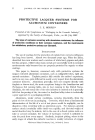
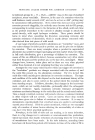
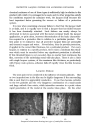
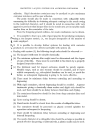
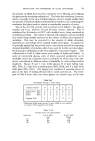
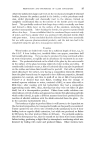
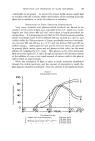
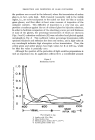
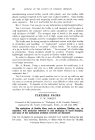
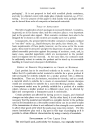
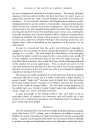
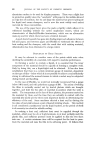
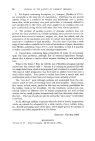
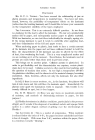
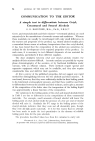
PRODUCTION AND PROPERTIES OF GLASS CONTAINERS 37 continually on his guard. An incorrectly chosen bottle closure might lead to reaction with the contents, whilst deterioration of the material may take place due to oxidation, or under the influence of radiation. PROTECTION OF LIGHT SENSITIVE PREPARATIONS Very many chemical and pharmaceutical products are known to be sensitive to the action of light rays, especially in the U.V. region (i.e., wave- lengths less than about 400 mt•) and amber glass is largely prescribed for storing them. It is interesting to note that the U.S. Pharmocopoeia considers all the wavelength band between 290 and 700 mt• harmful (i.e., all U.V. and visible) whilst the Pharmocopoeia of Japan specifically mentions two bands, one between 290 and 450 mt• (i.e., U.V.) and one between 590 and 610 (yellow-orange). Amber glass has not proved to be the best in all cases but in general, black, amber, green and red glasses in that order, are the most efficient in excluding the U.V. range. Blue glasses, on the other hand, give little protection against U.V. light, though an increase in the alumina content or the addition of even a very small amount of cerium oxide to the glass is said to effect an improvement. When the absorption of light in glass is fairly uniformly distributed through the visible spectrum, and the amount of absorption is small, the glass appears colourless and limpid when the amount of absorption increases lOO Figure 1 Transmission Curves 310 I I 3 Wavelength in 1. Amber vial (iron-manganese) 2. 3. Medium •'reen 'l•ottle (F•+*--Fe 0.94 mm thick 1-41 mm thick 2.16 mm thick 2.70 mm thick

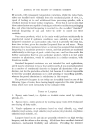
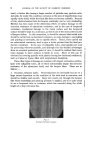
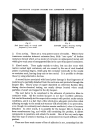
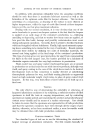
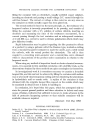
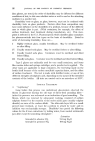
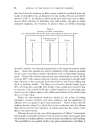
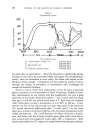
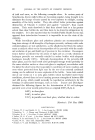
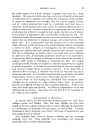
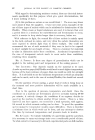
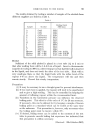
•8 JOURNAL OF THE SOCIETY OF COSMETIC CHEMISTS IOO Figure 2 Transmission Curves 7 80 I 40 • 20 I I O3oo 350 400 700 k u.v. Vra- Wavelength in mM 5. "Actinic green" bottles (Cr) 2.10 mm thick B. 3.25 mm thick 7. BI•} bottle"(Co) " 3.B5 mm thick 8. ,, •.80 mm thick •. Colourless medicine bottle •.57 mm thick the glass takes on a greyish hue. When the absorption is significantly greater for light of any colour, the transmitted light will appear of a complementary colour since the absorption is never sharp, the colour will depend on the thickness of the sample. Comparisons are best made by means of curves showing the change of absorption or transmission with wavelength for samples of standard thickness. _Figures I and oe, which show transmission curves for some commercial glasses measured at the Department of Glass Technology, Sheffield Univer- sity, unfortunately do not comply with this qualification, but give a good indication of the results obtained in practice. Fig. oe shows that the cobalt blue glass tested did not absorb much more U.V. light than the ordinary white bottle glass, having a transmission of over 80% at 400 m/•. Trans- mission was low in the visual range but quite high again in the infra-red. The special chromium yellow-green glass ("actinic green") on the other hand, gave a sharp cut-off above 400 m/•, with decreased transmission in the visible and infra-red. Fig. 1 well illustrates the effect of thickness of speci- men, and shows that the ordinary medium green glass (with colour due to iron content) and iron-manganese amber glass, offer a compromise. Both absorb quite well in the U.V. region, the amber better than the green, whereas
Purchased for the exclusive use of nofirst nolast (unknown)
From: SCC Media Library & Resource Center (library.scconline.org)