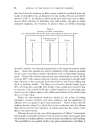
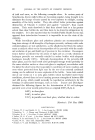
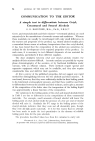
54 JOURNAL OF THE SOCIETY OF COSMETIC CHEMISTS, COMMUNICATION TO THE EDITOR A simple test to differentiate between Cetyl• Cetostearyl and Stearyl Alcohols G. E. MAPSTONE, M.S½., PH.D., F.iR.I.C.* CETYL and stearyl alcohols and their mixture--cetostearyl alcohol, are used extensively in the manufacture of cosmetic creams and emulsions. Whereas these materials can usually be interchanged with only small differences in the texture and properties of the product, e.g. stearyl alcohol usually gives a somewhat firmer cream at ordinary temperatures than does cetyl alcohol, it has been found that the composition of the alcohol can sometimes be critical for the development of the required properties of the product. In such cases, it is necessary to test different shipments of raw material for composition, particularly if from different suppliers. The close similarity between cetyl and steary! alcohols renders the analysis of their mixtures difficult. Accurate analyses are possible by vapour phase chromatography of the acetates, or by fractional distillation under vacuum, with an efficient column. These methods require special and expensive equipment which may not be available, and they also require considerable time and skill for their operation. At first a survey of the published properties did not suggest any rapid method for distinguishing between the two alcohols and their mixture. It was found, however, that they were sufficiently stable for their boiling points to be determined at atmospheric pressure, and that these could be used both to differentiate between the alcohols and their mixture, and to give a measure of the composition of the latter since the temperature of the boiling liquid was approximately a linear function of the composition. The variations in the boiling points of the cetyl and stearyl alcohols listed in Table 1 are due to differences in the compositions of these commercial materials. For example, small amounts of lauryl alcohol will lower the boiling point of cetyl alcohol while the presence of a few per cent of stearyl alcohol will raise it. Similarly the 5øC range in the boiling points of the stearyl alcohols indicates that they were not all chemically pure, though they were all high grade materials. It is for this reason that no attempt has been made to make the test quantitative in the absence of reliable boiling point data for thc pure alcohols. The procedure described takes less than five minutes to carry out. *Dermacult S.A. (Pry.) Ltd., Johannesburg, South Africa. At present with African Explosives and Chemical Industries, Johannesburg.

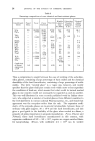
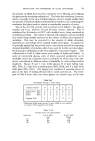
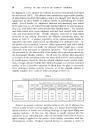
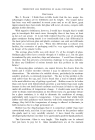
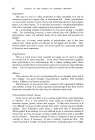
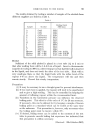
COMMUNICATION TO THE EDITOR The results obtained by testing a number of samples of the alcohols from different suppliers are listed in Table 1. Table 1 Boiling Point Sample Alcohol (620 mm) A Cetyl 305 øC B Cetyl 305 øC C Cetyl 306 øC D Cetostearvl 316 øC E Cetostear•l 321 øC F Cetosteary 1 317 øC G Stearyl 329 øC H Stearyl 332 øC I Stearyl 333 øC J Stearyl 331 øC K Stearyl 332 øC L Stearyl 328 øC Mixture 50C q- 50S 318øC (calc. 317.5) Mixture 55C -1- 45S 317øC (calc. 316.35) Mixture 60C q- 40S 315øC (calc. 315.2) Method Sufficient of the solid alcohol is placed in a test tube (1« to 2 cm) so that after melting there will be 1.0-0.3 cm of liquid. Insert a thermometer (capable of reading to 360 ø) in a slotted stopper so that half the bulb is inserted in the liquid, and does not touch the sides of the test tube. Heat with a very small gas flame so that the liquid boils with the reflux level of the vapour 4-6 cm above the liquid. The temperature will rise and then remain steady. Record this steady temperature. Precautions (i) It may be necessary to use a draught guard to prevent interference. (ii) If too much heat is applied, the vapours will tend to be superheated and so give a high reading. This can be controlled by keeping the amount of refluxing vapour within the recommended limit. (iii) Variations in the barometric pressure can influence the observed boiling point. This effect is of the order of 1 øC for 20 mm mercury. If necessary, this can be allowed for by keeping a sample of known boiling point as a standard which can be tested at the same time as the unknown. This precaution is, however, only necessary when the boiling point must be known xvithin 2øC. (iv) If desired, boiling stones can be added to the contents of the test tube to promote smooth boiling but experience has indicated that this precaution is seldom necessary. (Received: 23rd October 1961)
Purchased for the exclusive use of nofirst nolast (unknown)
From: SCC Media Library & Resource Center (library.scconline.org)