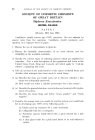
JOURNAL OF THE SOCIETY OF COSMETIC CHEMISTS SOCIETY OF COSMETIC CHEMISTS OF GREAT BRITAIN Diploma Examination BRUNEL COLLEGE PAPER I (Monday, 26th June 11161) Candidates should answer any FIVE questions. Do not attempt to answer more than five questions. Candidates should commence each question on a separate sheet of paper. 1. Discuss the use of antioxidants in lipsticks. 2. Discuss the desirable characteristics of an eosia solvent, and the suitability of the available materials. 3. Classify the various types of colouring matters which are employed in cosmetics. Give a brief description of the regulations laid down in the United States Food, Drug and Cosmetic Act which apply to "coal-tar colours", explaining this term. 4. Give an account of the main theories of the causes of dental decay and describe what attempts have been made to arrest decay. 5. (a) Describe the tests you would carry out to discover whether a face cream was adequately preserved. (b) How would you select a suitable preservative for a face cream ? 6. (a) Describe the general structure, reproduction and main growth require- ments of bacteria. (b) Describe the Gram Stain and define "Gram positive" and "Gram negative" 7. Describe the storage tests you would do, and the defects you would look for in developing any TWO of the following packs :. (a) Plastic push-up container for a stick deodorant. (b) Collapsible tube for a toothpaste. (c) Polythene squeeze bottle fitted with a spray fitment for a hair lacquer. (d) A clear glass bottle for a pink hand lotion to be sold without a carton.

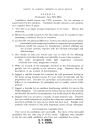
SOCIETY OF COSMETIC CHEMISTS OF GREAT BRITAIN 57 PAPER II (Wednesday, June 28th 1961) Candidates should answer any FIVE questions. Do not attempt to answer more the five questions. Candidates should commence each question on a separate sheet of paper. 1. "The skin is an organ of major importance to the body." Discuss this statement. 2. Discuss the possible hazards to the skin which must be considered when examining a substance for use in cosmetics. 3. (a) Describe the physical differences between two-phase and three-phase pressurized packs employing liquified or compressed gas propellants. (b) Discuss briefly the reasons for formulating a product utilizing any one of these systems, together with the relevant advantages and disadvantages. 4. Give details of tests you would carry out on three of the following materials to check their identity and suitability for use in face powders :- Zinc oxide, precipitated chalk, light magnesium carbonate, synthetic iron oxide, magnesium stearate. 5. Write an account of the principles involved in the determination of particle size of a powder in the sub-sieve range. Illustrate these by description of one method of determination. 6. Suggest a suitable formula for a product for cold permanent waving in the home, giving detailed reasons for your choice of materials and the proportions used. Describe the procedures and precautions you •vould follow in (a) manufacture, (b) packaging, and (c) quality control of the product. 7. Suggest a formula for an emulsion hairdressing suitable for men in the United Kingdom. Give details of your reasons for the choice of materials and describe the method of manufacture you would adopt for the product. 8. Imagine that you are given a sample of dark brunette hair. Describe how you would determine (a) whether the colour was natural or artificial, and (b) if artificial, the type of dye which had been used. Explain your methods with reference to the most important classes of hair colourants. SUCCESSFUL CANDIDA TES Five out of six candidates were successful. For three of the successful candidates this was only year B of the course. Diplomas were awarded to the two successful candidates who have now completed the course. R. F. BIRCH. H. A. KOBUS.
Purchased for the exclusive use of nofirst nolast (unknown)
From: SCC Media Library & Resource Center (library.scconline.org)