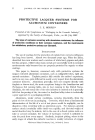
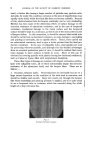
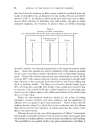
6 JOURNAL OF THE SOCIETY OF COSMETIC CHEMISTS hand, a thicker film having a larger number of pinholes may perform satis- factorily, for under this condition corrosion at the sites of imperfections may rapidly choke itself, whilst the thick film does not become cathodic. Because of this, electrochemical tests [or lacquer continuity can be very misleading. Mention has been made of the deleterious effects of surface damage on the corrosion resistance of aluminium containers, and in the case of lacquered containers, mechanical damage to the metal surface and the lacquered surface should be kept to a minimum, as this is one of the most potent causes of lacquer failure. In this connection, it shoald be stressed that initial tests should be carried out on decorated containers, as some darfiage to enamelling and printing is inevitable, due to spindle effects. Hence, tests carried out on undecorated containers, tend to give a better picture than the final pro- duction containers. In the case of collapsible tubes, steel spindles are used for processing wherever possible, and although this has decided advantages from an economic production point of view, it should be realised that maxi- mum damage to inner surfaces is likely to occur. Much of this can be obviated by covering spindles with plastics having low frictional coefficients, such as Tufnol or Nylon, filled with molybdenum disulphide. Three other types of damage are common with impact extrusions, particu- larly with collapsible tubes, all of which substantially impair the corrosion resistance of the aluminium itself, and the lacquer films. These are as follows :-- 1. Excessive extrusion marks. Processing lines are inevitable but are to a large extent dependent on the condition of the tools used in extrusion, and should be shallow and smooth. Deep torn marks cut through the lacquer film when enamelling and printing pressure is applied, and it is quite usual to see a lacquered tube or container which has corroded along the whole length of a deep extrusion line. Fig. oe. Normal Extruded Surface.

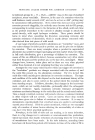
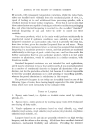
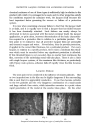
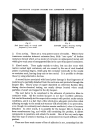
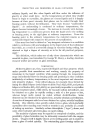
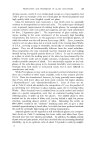
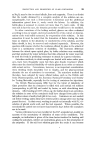
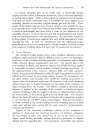
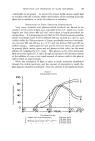
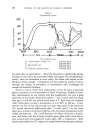
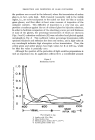
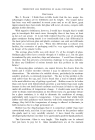
PROTECTIVE LACQUER SYSTEMS FOR ALUMINIUM CONTAINERS 7 ß !•' ' •'• r . •.. '"• ..... Fig. 3. Bad knurl mark in nozzle with fragment of loose metal. ? . . • : ., . .:. '5. '*: -•: ..... • i • ::. pig. 4. Extruded surface showing tearing and bad scoring 2. Cross scoring. These are a very potent source of trouble. Where these transverse scratches intersect extrusion lines, little "sore spots" of broken metal are formed which act as nuclei of corrosion on unlacquered metal, and which give weak areas of unsupported film in the case of lacquered containers. 3. Knurl rn. arks. These apply mainly to tubes, but can also occur with narrow necked rigid containers, and are caused by the use of steel knurled points or printing fingers, which grip the container internally in the nozzle or container neck, leaving deep cuts or torn metal. It is possible to obviate these by using alternative devices. A second factor associated with knurl point damage is that fragments of metal may be partially detached from the neck area and protrude through the lacquer film. Heavy areas of copper deposited on otherwise flawless films during electro-chemical testing, are nearly always located where small partides of swarf are trapped in the dry lacquer. The next factor to be considered is the adhesion of protective films to container walls. All the modern lacquers in use have excellent adhesion, but can fail drastically in this respect after contact with product under certain conditions, and it is a fact that a film which gives adequate protection when adhering strongly to the metal sub-stratum will afford little or no protection, even though its continuity and cohesion remain unaffected, when it becomes detached. In other words, it is possible for the lacquer film to become a loose membraneous bag, and whilst still containing the product, it allows components to penetrate and attack the metal. One of the very early signs that this type of attack is starting, is a pronounced increased stiffness of the product. There are three main causes of loss of adhesion in use, assuming that the
Purchased for the exclusive use of nofirst nolast (unknown)
From: SCC Media Library & Resource Center (library.scconline.org)