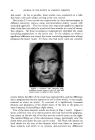
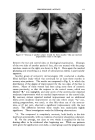
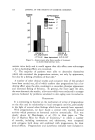
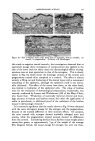
ULTRAVIOLET ABSORBERS 123 Para-aminobenzoic acid, benzophenone derivatives and acrylonitriles have been particularly effective absorbers, whereas we have been unimpressed with a recently popular cinnamate derivative. The extremely effective sunscreening formulations are not wastefully efficient, for, in an actual usage situation, there is considerable variation in the thickness of the applied film. Thereafter clothes, sweating, rubbing, etc., progressively decrease the effectiveness of a sun screen. It should not be difficult for any research laboratory to formulate a truly outstanding sunscreen. A variety of different types of formulations would be desirable since both doctors and patients will prefer different types of formulations for specific purposes. Considerable attention should be directed toward choosing the sun screen base as well as the active agent. A formulation that after normal application yields a thin film will, in all probability, require a higher concentration of ultraviolet absorber. Formu- lations that contain solid materials that can act as physical sunscreens may require less of the active material. At this point it should be emphasized that all formulations must be tested under controlled conditions, preferably on human beings. In our hands the most reliable data are obtained by using human volunteers and a high intensity artificial ultraviolet light source that emits energy within the sunburn range of the spectrum. Patient testimonials and the so-called "clinical usage tests" are of little practical value except from a standpoint of patient acceptance of the final formulation. Laudatory testimonials can be obtained on relative ineffec- tive sunscreens. Paired comparison tests, however, can be quite informa- tive. A company should not jeopardize its reputation by placing an in- adequately evaluated formulation on the market. It might be advisable to consider the possibility of adding ultraviolet absorbers to many types of routine cosmetics. Sun screens could be added to make-up bases, face powders, after-shave lotions, and many other widely used products. The cosmetic industry could do more for wrinkles and aging by advocating the use of protective sunscreens than it can by recommending various creams. SUMMARY Dermatologists have become increasingly conscious of the adverse effects of chronic exposure to sunlight. Apparently, the skin changes usually interpreted as aging are due largely, if not entirely, to sunlight. Also, fair skinned individuals who have been exposed to large amounts of sunlight have more skin cancers than any other group. The appropriate use of clothing and ultraviolet absorbers could provide protection. To date no truly satisfactory sun screen is commercially avail-

124 JOURNAL OF THE SOCIETY OF COSMETIC CHEMISTS able to the public. Fundamental principles relating to formulating and testing sun screens were discussed. (Received October 31, 1961) BIBLIOGP, APHY (1) Knox, John M., Cockerell, Earl G., and Freeman, Robert G., ,4.M.,4. ,4rvh. Dermatol. In Press. (2) Mackie, Bruce S., and McGovern, Vincent J., It}id., 78, 218 (1958). (3) Macdonald, E. J., •. Invest. Dermatol., 32, 379 (1959). (4) Blum, H. F., "Carcinogenesis by Ultraviolet Light: An Essay In Quantitative Biology," Princeton, Princeton University Press (1959). (5) Rusch, H. P., Kline, B. E., and Baumann, C. A., .4..1//..4..4rv/•. Patirol., 31• 135 (1941). (6) Kanofi N.H., .4rye. Der•atol. and $.•p•ilol., 74, 46 (1956). (7) Blum, H. F., "Photodynamic Action and Diseases Caused by Light," New York, Rein- hold Publishing Corporation (1941). (8) VanAllen, J., and Tinker, J. F., y. Or•. C•e•., 19, 1243 (1954). (9) Gantz, G. M., and Sumner, W. G., Textile Researv/• y., 27, No. 3 (1957). (10) Knox, John M., Guin, Jere, and Cockerell, Earl G., y. I, ve•t. Der•atol., 29, 435 (1957). (11) Riegelman, Sidney, and Penna, Richard P., y. Soy. Coimetiv C/•emi•t•, 11, No. $ (1960). (12) Rothman, S., and Rubin, Jack, $vi. Mo,t•l.•,/)2, 458 (1946). (13) Rothman, S., and Henningsen, A. B., y. I,•est. Der•atol., 9, 307 (1947).
Purchased for the exclusive use of nofirst nolast (unknown)
From: SCC Media Library & Resource Center (library.scconline.org)