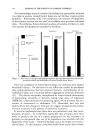
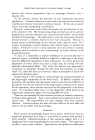
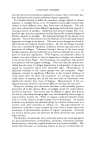
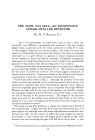
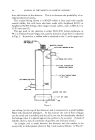
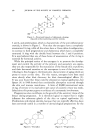
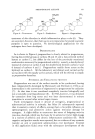
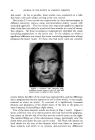
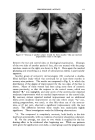
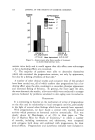
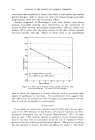
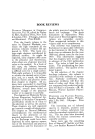
PREGNENOLONE ACETATE 131 CH•OH CHa I I cHOH cHCO CO :Hs HO ••.•' OH • 0 0 HO Figure 4.--Testosterone. Figure 5.--Prednisolone. Figure 6.--Pregnenolone. treatment of skin disorders in which inflammation plays a role (6). They are so potent, however, that their use in any preparation for purely cosmetic purposes is open to question. No dermatological applications for the androgens have been developed. PREGNENOLONE As is shown in Figure 6, pregnenolone is closely related to progesterone, having beta-methyl groups at carbons 10 and 13 and a beta-oriented methyl ketone at carbon 17, but differs by the loss of the previously mentioned conformation necessary for prosesrational activity: namely, a beta-hydroxyl instead of a ketone at carbon 3 and the double bond between carbons 5 and 6 instead of carbons 4 and 5. Pregnenolone readily forms esters at the hydroxyl on carbon 3. All the laboratory and clinical work carried out by us was done with the equally active acetate, which will be referred to simply as pregnenolone hereafter. SYNTHESIS AND THERAPEUTIC ACTIVITY Pregnenolone was one of the earliest steroids to be synthesized, having been independently developed by Butenandt and Fernholz in 1934 as an intermediate in the conversion of stigmasterol to progesterone by oxidation (7). At that time it was considered completely inactive biologically and not a naturally occurring substance (8). In 1943, however, it was obtained by extraction from hog testes and was later demonstrated in minute quantities in several other animal organ tissues. Early investigators found it devoid of estrogenic, prosesrational or adrenocortical activity in animals but Selye (9) subsequently reported that it exerted a variety of effects, among them a favorable influence on spermatogenesis and protective action against testicular damage by estrogens. A slight ability to counteract the stress of fatiguing activity was also observed, which was the basis for its extensive trial at high dosage in a variety of arthritic and chronic inflammatory conditions (8). Both negative and positive results were reported, but no evidence of any systemic toxicity on oral or parenteral administration ever developed. Interest in this application faded away with the subsequent development of the

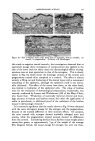
132 JOURNAL OF THE SOCIETY OF COSMETIC CHEMISTS previously mentioned corticosteroids, which were found to be far more effective as anti-inflammatory agents (10). DERMATOLOGICAL ACTIVITY In the early 1950's, Schaaf and Gross (11), in the course of screening a variety of steroids for dermatological activity, found pregnenolone to exert an estrogen-like action on the skin when topically applied. In a series of experiments on guinea pigs, in which the effects of a cream con- taining pregnenolone in concentrations varying from one-tenth to one-half per cent were tested, they found a definite increase in the thickness of the skin beyond that produced by the cream base alone. The skin receiving pregnenolone became firmer, plumper and smoother. This was accom- panied by a moderate degree of acanthosis, which is the characteristic response to stimulation of the guinea pig skin. On the basis of these observations, they initiated clinical trials of pregnenolone in cosmetic creams, which indicated its effectiveness in combating various changes associated with aging and formed the basis for the issuance of a patent for pregnenolone in cosmetic preparations (12). Since then, these creams have been on the European market for a four-year period with no reports of adverse reactions. This reported effectiveness of pregnenolone in cosmetic creams led to our exploration of its potentialities in the United States. If, as the data indicated, pregnenolone could be shown to have, by dermal application, estrogen-like effects upon the skin without any systemic effects whatsoever, there was a possibility of a significant cosmetic development. TOXICOLOGY Our first step was to assure ourselves of the safety of this compound. Fortunately, its use in high dosage for the treatment of arthritis had conclusively demonstrated its lack of toxicity from prolonged adminis- tration at doses of up to two grams a day. This was extensively reviewed in a paper by Henderson, Weinberg and Wright (8) in 1950, and discussed in detail at the Symposium on Steroids (13) held in Cuernavaca in Jan- uary, 1951, at which over twelve research groups reported on their exten- sive experience with the compound. Even the slight hormonal effects at high dosage attributed to it at that time were questioned at this con- ference, and were believed to be due either to the presence of other steroids as impurities in the pregnenolone used at that time for clinical trials, or to the extreme difficulty in evaluating the effect of any drug in arthritis, particularly in uncontrolled studies, because of the marked tendency of this disease to variation in severity and spontaneous remission. Many of the pharmacological studies which had indicated slight systemic hor- monal effects were completely negative when repeated with purified
Purchased for the exclusive use of nofirst nolast (unknown)
From: SCC Media Library & Resource Center (library.scconline.org)