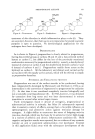
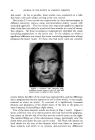
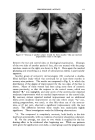
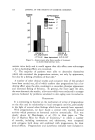
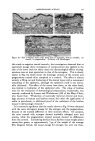
ULTRAVIOLET ABSORBERS 121 and the destructive procedures employed to remove them eventually pro- duce deformities and cosmetic problems of great magnitude. In a further attempt to define the cutaneous changes related to chronic exposure to sunlight, Knox, et al. (1) biopsied twenty-eight normal indi- viduals in three different sites--face, lower arm and buttocks. The sub- jects were selected from three different age groups and had been exposed to varying amounts of sunlight. Epidermal and dermal changes were com- pared by age, race, sex, complexion and the historically estimated degree of lifetime exposure to sunlight. The following findings for the dermis were reported. None of the sections from the buttocks of any individual showed degenerative change in the dermis. The most severe damage was found in skin from the arm and face of older patients. For the arm biopsy material, there was a statistically significant correlation between age and actinic de- generation of collagen. Volunteers having a history of the most severe sunlight exposure, demonstrated the most extensive damage but not to the point of statistical significance. With Negroes, the protective effect of melanin was quite evident in that no degenerative changes were observed in the dermis of any Negro. For Caucasians, the complexion type showed no correlation with the degree of damage. From this data the authors con- cluded that the onset of collagen degeneration is independent of age and is caused by cumulative injury from ultraviolet light. Measurements of epidermal thickness in the various groups were also compared. Negro epidermis revealed no significant differences in the maximal thickness of viable layers from the three sites measured. In contrast, the maximal viable layers of exposed skin of the face and arms of Caucasians were significantly thinner than those of Negroes. Measurements of the un- exposed buttocks showed no statistical difference between the two races. Protective clothing and ultraviolet absorbers could probably prevent practically all of the adverse effects of sunlight except for certain photo- sensitivity reactions. Sun screens may be defined as agents that protect the skin by absorbing damaging light rays and dissipating their energy in some harmless manner (6). When an organic compound absorbs irradi- ation it is either raised to a higher energy level or dissociated. An excited molecule may dissipate the absorbed energy by collision, fluorescence or a reaction with other molecules at collision (7). The photochemistry ot polyatomic molecules is quite complex and very little is known about the mechanism of photochemical reactions of organic compounds. Certainly not much is known about the pathways by which ultraviolet rays actually injure the skin. The families of compounds most commonly used as sun screening agents are para-aminobenzoates, anthranilates, salicylates, cinnamates, pyrones, benzimidazoles, carbazoles, naphtholsulfonates and quinine bisulfate. Re- cently there has been an increasing interest in the use of ultraviolet ab-

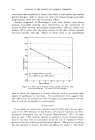
122 JOURNAL OF THE SOCIETY OF COSMETIC CHEMISTS sorbers in industry. This interest has resulted in the development of several new noteworthy ultraviolet absorbers. Included in this category are the benzophenones, benzotriazoles and acrylonitriles. Agents of this type are being used industrially to protect objects and materials that are subject to discoloration or deterioration from exposure to ultraviolet irradiation. This includes transparent and translucent plastics, liquids and solutions. Ultraviolet absorbers are used to guard against changes in appearance or properties and paints, varnishes, etc. and to prevent the fading of colors. By absorbing ultraviolet light these chemicals can prevent photochemical degradation. A number of benzophenones were studied by VanAllen and Tinker (8) these compounds were found to be exceptionally good ultraviolet absorbers. The strong absorption found in the near ultraviolet was attributed to a con- jugate chelation between the orthohydroxy and the carbonyl group. Gantz and Sumner (9) suggest the possibility that ultraviolet radiation raises molecules to a higher electronic energy level and that this energy is quickly converted internally to higher vibrational levels and finally is dis- sipated as thermal energy by collisions. For dermatological purposes a sunscreen should absorb strongly in the sun- burn range (2900 to 3170 A with the greatest effect at 2970 A) and be highly effective in a very thin film. The effectiveness of an ultraviolet absorber varies with its concentration and the thickness of the applied film (10). In addition to its absorption spectrum, the efficiency of an ultraviolet ab- sorbing agent is dependent upon several other factors, for some compounds with nearly identical laboratory absorption spectra, will vary greatly in their actual performance under a clinical test situation. Riegelman and Penna (11) have shown that the absorption spectra for para-aminoben- zoic acid changes with different solvents. The agent must be stable, soluble in appropriate materials, nonsensitizing and nonirritating to the skin and capable of being formulated into an esthetically pleasing prepa- ration. A practical point is that the chemical should not be prohibitively expensive. To date there is no truly satisfactory sun screening formulation com- mercially available to the public. With modern technology and the ob- vious need for such a product it is quite surprising that this void exists. Most commercially available suntan and sun screening formulations will only provide protection for three to six times the usual minimal erythema dose (MED) for the control vehicle although a few superior products pro- vide protection in the range of ten times the MED. On the surface this may sound good and appear to be adequate. However, Rothman has shown that 15 per cent para-aminobenzoic acid in Ruggles cream will pro- vide 50 to 100 times the protection yielded by the plain vehicle (12, 13). In our laboratories we are able to prepare similar outstanding sun screens.
Purchased for the exclusive use of nofirst nolast (unknown)
From: SCC Media Library & Resource Center (library.scconline.org)