ULTRAVIOLET ABSORBERS By JoHN M. Kox, M.D.* Presented September 26, I96I, Seminar, New York City ALTHOUGH the first commercial sun screen appeared in 1928 and numerous suntanning and sunscreening formulations are currently on the market, only the surface has been touched in regard to the actual potential usefulness for products of this type. Dermatologically speaking, the topical use of ultraviolet absorbers is still in its infancy. Across the coun- try, dermatologists have become increasingly conscious of the adverse effects of chronic exposure to sunlight. It is hoped that the public will also become aware of sunlight as a potential hazard. Although interest in the past has focused primarily around the prevention of sunburn and the pro- motion of suntanning, the greatest potential usefulness for ultraviolet absorbers is in all probability the prevention of aging and carcinogenesis. Protection from this hazard is particularly important in view of the pro- gressive increase in life expectancy. At the present time there is considerable evidence that sunlight is re- sponsible for most of the visible cutaneous degenerative changes that occur with the passage of time (1). Such phenomena have been erroneously at- tributed to inevitable aging. Apparently skin changes usually interpreted as aging are due largely, if not entirely, to sunlight. Ultraviolet damage is dependent upon the degree of exposure and the extent of natural and arti- ficial protection afforded an individual's skin. Cutaneous degenerative changes are the result of injury by repeated and prolonged ultraviolet light exposure. This type of injury appears to be cumulative. Mackie and McGovern (2) indicate that collagen degeneration is due to ultraviolet light, as is shown by its geographical and anatomical occurrence and by its increasing incidence, both in fair skinned persons and in those with greater solar exposure. In these features degenerative changes are parallel to skin cancer. Macdonald (3) in an excellent study of the epidemiology of skin cancer further substantiated the fact that fair skinned individuals who have been exposed to large amounts of sunshine develop more skin cancers than any other group. The large amount of melanin in Negro epidermis pro- vides excellent protection for this race which is amazingly resistant to the * Baylot University, College of Medicine, Houston, Tex. 119

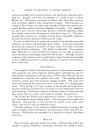
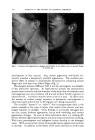
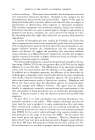
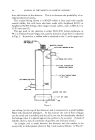
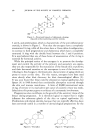
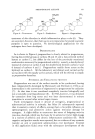
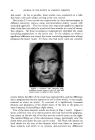
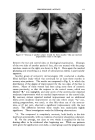
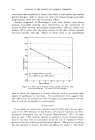
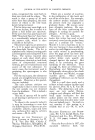
12(} JOURNAL OF THE SOCIETY OF COSMETIC CHEMISTS . .'5 .. .:.:' : Fig. 1.--Contrast the degenerative changes and wrinkles in an albino versus a normal Negro of similar age. development of skin cancers. Also, darkly pigmented individuals fre- quently manifest a deceptively youthful appearance. The excellent pro- tective effect of melanin is dramatically illustrated by comparing normal Negro skin with that of an albino Negro (Fig. l). Wavelengths between 2900 and 3341 A are the carcinogenic wavelengths of the ultraviolet spectrum. In experimental animals the precancerous period varies inversely with the intensity of the daily dose of irradiation and carcinogenesis, but once initiated, will proceed without further exposure to ultraviolet (4). A similar situation seems to exist in man. In albino mice the amount of radiant energy necessary to precipitate carcinogenesis is relatively small, with 6.3-8.4 X 10⁸ ergs per cm. 2 being required (5). The so-called "farmer's" or "sailor's" skin (chataigne-type skin) is the classic example of the type of injury that results from chronic and pro- longed exposure to sunlight. Gross findings in actinically damaged skin are dry, coarse, leathery appearance, laxity with wrinkling, and various pigmentary changes. In most of these individuals there is a striking dif- ference between light exposed regions and those areas protected by clothing. With time, premalignant and malignant lesions develop in the damaged areas. With severe actinic injury innumerable lesions appear and continue to develop. In addition to the threat of life itself, skin lesions of this type
Purchased for the exclusive use of nofirst nolast (unknown)
From: SCC Media Library & Resource Center (library.scconline.org)