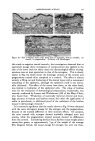
144 JOURNAL OF THE SOCIETY OF COSMETIC CHEMISTS The many contributions of E. H. Mercer to the knowledge of skin, hair and wool are well known. In this remarkable volume Mercer reviews his own studies as well as those of hundreds of other scien- tists. What makes this book so unusual and valuable is Mercer's ability to simplify and correlate results from many scientific disci- plines. As a result, Mercer has created a definitive volume on the subject of keratin. This book covers every aspect of keratin from its raison d'etre in nature to the unraveling of its com- plicated structure. Mercer presents this material in a lucid and under- standable fashion. His terms are carefully defined, and he avoids entrapment in the semantic mumbo jumbo of nomenclature. Typical of this effort is the tabulation on page 48 of names given to cyto- plasmic membranes. Knowing that his readers will include dermatolo- gists, chemists, zoologists and phys- icists, he has added explanations of specialized scientific techniques to aid those not familiar with all disci- plines. The range of explanatory discourses--optical rotatory dis- persion, electron microscopy, x-ray diffraction, thermodynamics of fiber elongation and biological staining is indicative of the scope of the discussion. In order to facilitate under- standing of the complexities of keratin, Mercer has included many simple diagrams. Those who have read Mercer's publications have had an opportunity to follow his own investigations with the aid of these diagrams. Now, Mercer renders a most valuable service by offering the reader diagrammatical explana- tions of the work of other scientists. In addition, the book includes many splendid photomicrographs faith- fully reproduced on glossy paper plates. Finally, Mercer is to be congrat- ulated for rigorous exclusion of all references to imperfect (diseased) keratinization. All too frequently, studies of diseased keratin have been used to explain theories of keratini- zation. This is a most undesirable procedure, since it is akin to judging an artist by his occasional failure to achieve perfection. Throughout the book, the author tries to impress the reader with the similarity of keratin, whether it be of..mammalian, avian or reptilian ong•n. Perhaps Mercer can be accused of overemphasizing the biogenesis of keratin and the histol- ogy of the keratinizing tissue. Per- haps he should have devoted more space to fiber physics and keratin chemistry. Nevertheless, anyone who reads this book will find much of interest, regardless of his back- ground. The reviewer considers this book "must reading" for every- body concerned with skin or hair.. M. M. RIEOER, Warner-Lambert Pharmaceutical Co.
Purchased for the exclusive use of nofirst nolast (unknown)
From: SCC Media Library & Resource Center (library.scconline.org)