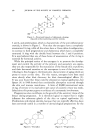
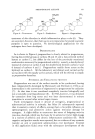
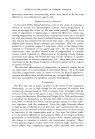
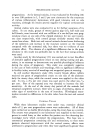
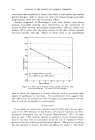
THE FLOW GAS CELL--AN INEXPENSIVE GEIGER-MUELLER DETECTOR 127 rubber "Sanicap," used to cover wide mouth nursing bottles, is cut as shown. The resultant rubber ring is positioned so that the side walls are slipped around the bottom of the detector. If the inner lip does not fit snugly against the bottom of the detector as a result of interference of the gas input tubing, a notch is cut in the side wall of the gasket to allow ,clearance. Preliminary to actual assay, a Geiger-Mueller curve is run by placing a few drops of radioactive solution on a flat surface, such as a piece of plate glass or metal, the solvent is evaporated, and the detector is positioned over the radioactive spot. An arbitrary setting of 1400 to 1800 volts is placed on the detector, and the air is removed by preflushing at a rate of about 250-300 bubbles per minute until counts begin to register on the scaler or rate meter. The gas flow is then decreased to a slower constant rate (60 to 120 bubbles per minute), and successive count periods are taken for each assay desired. The plateau is determined in the usual fashion and the operating voltage is selected. Assay of the sample is undertaken in the same manner--that is, a preflush period is again used. In the interest of safety, although danger of shock is not great, the operating voltage is generally turned on after the cell has been positioned over the area to be assayed. It is pertinent to point out that the surface to be assayed must not cause drastic changes in the composition of the detector gas, or else severe shifts in the Geiger-Mueller plateau will occur. For example, if materials are being tested on living skin and the formulations contain appreciable quantities of volatile ingredients such as perfumes, these materials should be allowed to vaporize before assays are attempted. (A longer flushing with Q gas can often aid in removal of the volatile components.) Care should also be taken to be sure that the surface to be assayed is reasonably dry and does not vary appreciably in moisture content during the assay period. For example, if prolonged count periods are undertaken on human or animal skin studies, severe sweating may occur and result in changes in counting characteristics of the detector. Several detectors have been designed and used by the author. One typical detector was made as follows: A cell made from 11/2 inch copper tubing with a No. 32 copper wire anode, using 99.05/0.95 helium-isobutane Q gas, possessed a plateau of 650 volts length with a starting voltage of 1200 volts and a plateau slope of less than 2%/100 volts. This detector, in comparison with an end window tube (1.2 mg./cm. mica) which was held 3 min. from the assay surface, possessed about ten times the sensitivity with carbon-14. The background of the cell was 50-60 c.p.m. Small areas of large surfaces have been selectively scanned and radio- active distribution of the entire surface was also determined by sealing a copper plate over the open end, cutting a slot of the desired size in the

128 JOURNAL OF THE SOCIETY OF COSMETIC CHEMISTS plate, and gluing a rubber gasket around the aperture. This is the basic principle which is in use in the detection devices in present autoradiogram scaFIFIerS. (Received December 23, 1961) REFERENt2ES (1) Nelson, MMi . F., Jr, Nuckonics, 14 (5), 43 (1956). (2) Nelson, .1•., Jr., J. Soc. Cos•tET•c CHE•t., 10, 320 (1959). (3) Amphenol Corp., Chicago 50, Ill, supplier of coaxial fittings and cable.
Purchased for the exclusive use of nofirst nolast (unknown)
From: SCC Media Library & Resource Center (library.scconline.org)