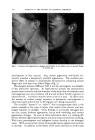
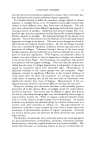
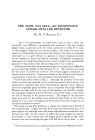
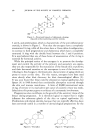
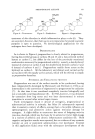
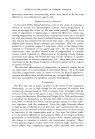
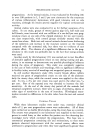
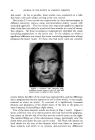
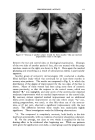
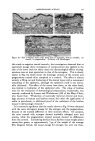
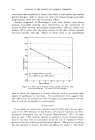
PREGNENOLONE ACETATE 137 .. -.:Z • il-a•.• .."• . • -•, • • :.- • : •.*•..•-•.• •_•'•. '•: .•. ..:. ': . • • •-•::.•--•z .• •. •'"=• ::.: •'•..• :• .•.• .. •' • '-• •"• .. .•. • . * • • . •.: • • ..: •..•:..:.:• , .: . •..... •.• .:- •::. • • '" .. * :... ':• •...:.-• . . -- .•-.*.' .... : Figure 10.--Skin of hairless mouse after thirty days of treatment, with (a) estradiol (b) control (c) pregnenolone. (Courtesy of F. Hornburger.) this study as negative steroid controls the investigators observed that at equivalent dosage (forty micrograms of compound per day applied to the skin of the lower back for thirty days) the dermatological effects of preg- nenolone were at least equivalent to that of the estrogens. This is clearly shown in Fig. 10, which shows the histologic sections of the estrone and pregnenolone treated skins compared to a control. The effect is almost entirely a filling out and thickening of the dermal layers with a consequent smoothing of the epidermis, although the epidermis itself is not notice- ably thickened. The effect of the cream base alone, on the other hand, was limited to hydradon of the epidermal cells. The value of hairless mice for the evaluation of dermatological preparations, incidentally, was recently confirmed by Lorenc and Winkelmann (20) of the Mayo Clinic, who found that: "Production of essentially identical clinical and histo- logic pictures in human and hairless mouse skin after the application of sulfur in petrolatum, is additional proof of the usefulness of the hairless mouse in dermatologic research." It is extremely significant that the results shown in Fig. 10 were obtained with the same microgram dosage for the estrogen and the pregnenolone, because of the marked difference in their systemic effects. On autopsy, the mice treated with estrogen showed markedly enlarged uteri and ovaries, while the pregnenolone treated animals showed no differences from the controls. Considering the fact that a hairless mouse weighs about twenty-five grams, or approximately 1/2000 of the weight of the average fifty kilogram female, the mouse dosage for estrogen was over one thou-

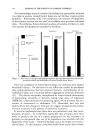
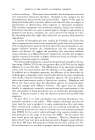
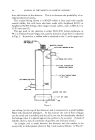
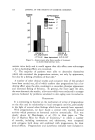
138 JOURNAL OF THE SOCIETY OF COSMETIC CHEMISTS sand times that employed for human use, which would explain the marked genital changes while at almost ten times the human dosage used with pregnenolone, there were still no systemic effects. Another outgrowth of Homburger's work with hairless mice shows promise of possibly eliciting more information on the mechanism of action of these steroids, particularly pregnenolone. He has carried out studies (22) to show that the water content of the skin of these animals decreases steadily with age. Figure 11 shows some as yet unpublished 80 70 65 60- 55- 5.0- 45 _F•,t5 of Slope -- 34. I$ (S.S. of I•) FM5 of Meons fo Line. 0.83 (N.S.S.) Aqe in Monfhs Figure 11.--Decrease in moisture content of skin of hairless mice with increasing age. (Courtesy ofF. Hornburger.) data in which this regression is clearly indicated, with an extremely high degree of significance to the slope. Very preliminary trials suggest that this effect may be reversed by both estrogens and pregnenolone but the data is still too incomplete for presentation. CONCLUSION To conclude, we quote some remarks made by Saul, when he was chair- man of the 1959 Seminar of the Society of Cosmetic Chemists on "Per- cutaneous Absorption and the Cosmetic Manufacturer" (22). At that time he said: "The cosmetic chemist in seeking to create products bene- ficial to the skin will not necessarily avoid the use of ingredients which penetrate the skin if they provide beneficial effects. His goal is to produce the best product so long as harmful side effects are absent." We think
Purchased for the exclusive use of nofirst nolast (unknown)
From: SCC Media Library & Resource Center (library.scconline.org)