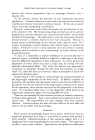
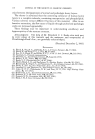
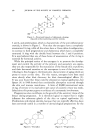
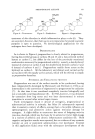
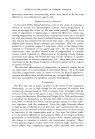
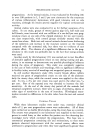
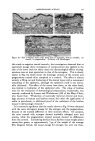
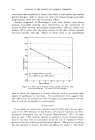
PREGNENOLONE ACETATE--A DERMATOLOGICALLY ACTIVE STEROID By E. SIL$ON, M.D., M.P.H.* Presented September 26, 1961, New York City FOR ABOUT 200 years, chemists have been fascinated by the prop- erties of a white crystalline substance originally isolated as the principal constituent of gallstones (1). First named cholesterine, after the Greek words for bile and solid, the name was changed to cholesterol when the substance was found to have an alcoholic radical. Interest in it increased with the discovery that it was the principal non-saponifiable fraction of animal fats, especially those of the brain, blood cells and plasma, and egg yolk. As knowledge about it grew, it was found to be structurally related to a great many other organic molecules essential to life, such as certain other fatty constituents comprising the group called sterols, the bile acids, and recently a large number of hormones, particularly those secreted by the adrenogenital system and their derivatives. This group of compounds, which has been of steadily increasing biochemical interest, is collectively known as the steroids (meaning sterol-like). In recent years, steroid chemistry has developed into a highly specialized field of investigation which, in addition to isolating naturally existing compounds, has turned to synthesizing modifications unknown in nature, many with extremely potent biological activity. The structural formula of cholesterol is shown in Figure 1, which also indicates the ring and carbon numbering system used uniformly for all steroids. Of the many hundreds of biologically or synthetically produced compounds which have been identified by the steroid chemists, only a few have been shown to have hormonal activity (2). STEROID HORMONES The steroids which have been of principal interest in cosmetics because of their dermatological activity have been those closely related to the hormones. Of these, the estrogens have until now undoubtedly been the most important. Estradiol, whose structure is typical of the estrogens, is shown in Figure 2. Progesterone and testosterone are illustrated in Figures * Revlon, Inc., New York 51, N.Y. 129

130 JOURNAL OF THE SOCIETY OF COSMETIC CHEMISTS Figure 1.--Structural formula of cholesterol, showing ring and carbon numbering used for steroids. 3 and 4, and prednisolone, which is characteristic of the anti-inflammatory steroids, is shown in Figure 5. Note that the estrogens have a completely unsaturated A ring, while all the others have a 3-keto delta-4 configuration, in contrast to both pregnenolone and cholesterol, which have a completely saturated A ring with the double bond between the 5 and 6 positions. it is now believed that one of these forms of unsaturation of the A ring is essential for hormonal activity. While the principal action of the estrogens is to promote the develop- ment and control the activity of the primary and secondary sex organs, they are also responsible for the maturation of the female skin at puberty and their decreased secretion at the menopause is one of the factors con- tributing to the changes in the female skin characteristic of aging .which are prone to occur at this time. For this reason, estrogens have been used since shortly after their discovery for their dermatological effects (3). It was soon found that these could be obtained on topical application, but Speert (4) in 1948 showed that considerable absorption occurred through the skin and mucous membranes. A limit of 10,000 international units (1 rag. of estrone or its equivalent) per ounce of cosmetic cream was estab- lished since this potency gave no evidence of a systematic involvement. Progesterone also contributes to the growth of the secretory tissue of the breast during pregnancy. It is therefore logical to expect that it might influence the sebaceous glands of the skin on topical application (5). Prednisolone and related steroids, because they are topically effective, have been extremely useful in a number of dermatological preparations for the CH a OH I co .o Ol Figure 2.--Estradiol. Figure 3.--Progesterone.
Purchased for the exclusive use of nofirst nolast (unknown)
From: SCC Media Library & Resource Center (library.scconline.org)